

nents of pathogens instead of the complete microorganism to
trigger an immune response in the host.
Vaccination is a well-recognized cost-effective contribution to
quality and prolongation of life expectancy, mortality, child survival, morbidity, and disability [2–4]. Most of the countries in the
world have adopted an effective immunization program to deliver
particular vaccines to selected beneficiaries, mainly infants, children, and pregnant women. It is supposed that vaccines are available against at least 27 causative agents, and more agents are being
identified for the development of vaccines. The number of targeted
antigens through immunization programs varies among different
countries; however, vaccines against diarrhea due to rotavirus,
diphtheria, hepatitis B, measles, pertussis, poliomyelitis, Streptococcus pneumoniae, and tetanus are involved in immunization programs of most of the countries in the world [3, 5].
The success of a vaccine depends on many factors, and of them
some important factors are mentioned below [6]:
l
Type and dose of vaccine.
l
The use of adjuvant or excipients in the preparation of the
vaccine.
l
The schedule of immunization.
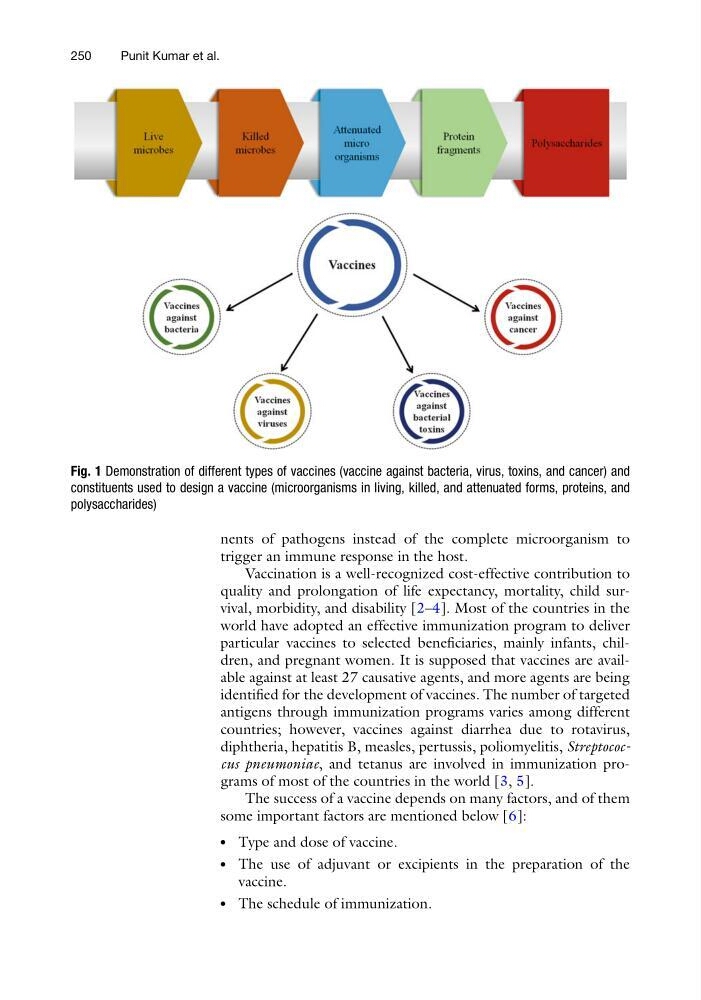
Fig. 1 Demonstration of different types of vaccines (vaccine against bacteria, virus, toxins, and cancer) and
constituents used to design a vaccine (microorganisms in living, killed, and attenuated forms, proteins, and
polysaccharides)
250
Punit Kumar et al.
trigger an immune response in the host.
Vaccination is a well-recognized cost-effective contribution to
quality and prolongation of life expectancy, mortality, child survival, morbidity, and disability [2–4]. Most of the countries in the
world have adopted an effective immunization program to deliver
particular vaccines to selected beneficiaries, mainly infants, children, and pregnant women. It is supposed that vaccines are available against at least 27 causative agents, and more agents are being
identified for the development of vaccines. The number of targeted
antigens through immunization programs varies among different
countries; however, vaccines against diarrhea due to rotavirus,
diphtheria, hepatitis B, measles, pertussis, poliomyelitis, Streptococcus pneumoniae, and tetanus are involved in immunization programs of most of the countries in the world [3, 5].
The success of a vaccine depends on many factors, and of them
some important factors are mentioned below [6]:
l
Type and dose of vaccine.
l
The use of adjuvant or excipients in the preparation of the
vaccine.
l
The schedule of immunization.
Fig. 1 Demonstration of different types of vaccines (vaccine against bacteria, virus, toxins, and cancer) and
constituents used to design a vaccine (microorganisms in living, killed, and attenuated forms, proteins, and
polysaccharides)
250
Punit Kumar et al.