

604
14 Basic Measurement and Monitoring Techniques
14.7.1 Network Management Systems and Functions
Once the hardware and software elements of an optical network have been installed
properly and integrated successfully, they need to be managed to ensure that the
required level of network performance is being met. In addition, the network devices
must be monitored to verify that they are configured properly and to ensure that
corporate policies regarding network use and security procedures are being followed.
This is carried out through network management, which is a service that uses a variety
of hardware and software tools, applications, and devices to assist human network
managers in monitoring and maintaining networks.
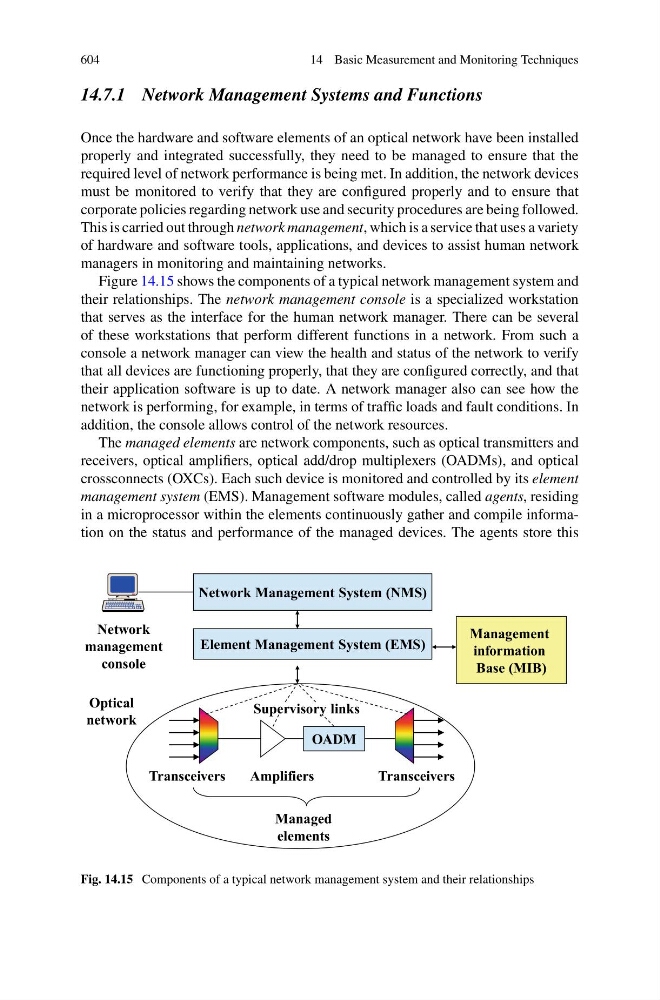
Figure 14.15 shows the components of a typical network management system and
their relationships. The network management console is a specialized workstation
that serves as the interface for the human network manager. There can be several
of these workstations that perform different functions in a network. From such a
console a network manager can view the health and status of the network to verify
that all devices are functioning properly, that they are configured correctly, and that
their application software is up to date. A network manager also can see how the
network is performing, for example, in terms of traffic loads and fault conditions. In
addition, the console allows control of the network resources.
The managed elements are network components, such as optical transmitters and
receivers, optical amplifiers, optical add/drop multiplexers (OADMs), and optical
crossconnects (OXCs). Each such device is monitored and controlled by its element
management system (EMS). Management software modules, called agents, residing
in a microprocessor within the elements continuously gather and compile information on the status and performance of the managed devices. The agents store this
Network Management System (NMS)
Element Management System (EMS)
Network
management
console
Optical
network
OADM
Supervisory links
Managed
elements
Transceivers
Transceivers
Amplifiers
Management
information
Base (MIB)
Fig. 14.15 Components of a typical network management system and their relationships