

78
J. Zhou and S. Chang
(b) 2035
(a) 2017
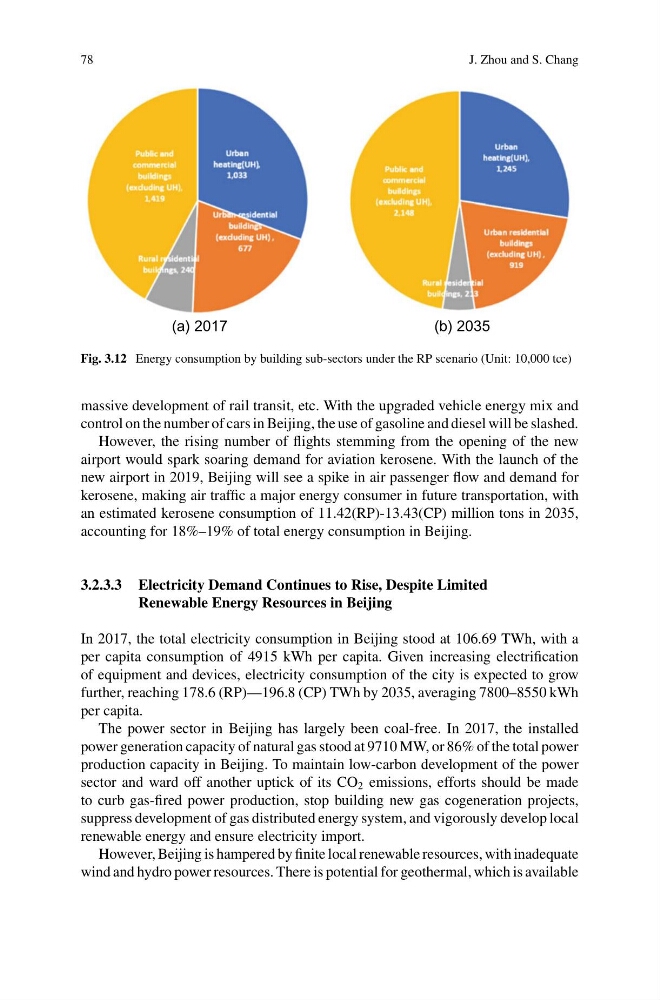
Fig. 3.12 Energy consumption by building sub-sectors under the RP scenario (Unit: 10,000 tce)
massive development of rail transit, etc. With the upgraded vehicle energy mix and
control on the number of cars in Beijing, the use of gasoline and diesel will be slashed.
However, the rising number of flights stemming from the opening of the new
airport would spark soaring demand for aviation kerosene. With the launch of the
new airport in 2019, Beijing will see a spike in air passenger flow and demand for
kerosene, making air traffic a major energy consumer in future transportation, with
an estimated kerosene consumption of 11.42(RP)-13.43(CP) million tons in 2035,
accounting for 18%–19% of total energy consumption in Beijing.
3.2.3.3 Electricity Demand Continues to Rise, Despite Limited
Renewable Energy Resources in Beijing
In 2017, the total electricity consumption in Beijing stood at 106.69 TWh, with a
per capita consumption of 4915 kWh per capita. Given increasing electrification
of equipment and devices, electricity consumption of the city is expected to grow
further, reaching 178.6 (RP)—196.8 (CP) TWh by 2035, averaging 7800–8550 kWh
per capita.
The power sector in Beijing has largely been coal-free. In 2017, the installed
power generation capacity of natural gas stood at 9710 MW, or 86% of the total power
production capacity in Beijing. To maintain low-carbon development of the power
sector and ward off another uptick of its CO 2 emissions, efforts should be made
to curb gas-fired power production, stop building new gas cogeneration projects,
suppress development of gas distributed energy system, and vigorously develop local
renewable energy and ensure electricity import.
However, Beijing is hampered by finite local renewable resources, with inadequate
wind and hydro power resources. There is potential for geothermal, which is available
J. Zhou and S. Chang
(b) 2035
(a) 2017
Fig. 3.12 Energy consumption by building sub-sectors under the RP scenario (Unit: 10,000 tce)
massive development of rail transit, etc. With the upgraded vehicle energy mix and
control on the number of cars in Beijing, the use of gasoline and diesel will be slashed.
However, the rising number of flights stemming from the opening of the new
airport would spark soaring demand for aviation kerosene. With the launch of the
new airport in 2019, Beijing will see a spike in air passenger flow and demand for
kerosene, making air traffic a major energy consumer in future transportation, with
an estimated kerosene consumption of 11.42(RP)-13.43(CP) million tons in 2035,
accounting for 18%–19% of total energy consumption in Beijing.
3.2.3.3 Electricity Demand Continues to Rise, Despite Limited
Renewable Energy Resources in Beijing
In 2017, the total electricity consumption in Beijing stood at 106.69 TWh, with a
per capita consumption of 4915 kWh per capita. Given increasing electrification
of equipment and devices, electricity consumption of the city is expected to grow
further, reaching 178.6 (RP)—196.8 (CP) TWh by 2035, averaging 7800–8550 kWh
per capita.
The power sector in Beijing has largely been coal-free. In 2017, the installed
power generation capacity of natural gas stood at 9710 MW, or 86% of the total power
production capacity in Beijing. To maintain low-carbon development of the power
sector and ward off another uptick of its CO 2 emissions, efforts should be made
to curb gas-fired power production, stop building new gas cogeneration projects,
suppress development of gas distributed energy system, and vigorously develop local
renewable energy and ensure electricity import.
However, Beijing is hampered by finite local renewable resources, with inadequate
wind and hydro power resources. There is potential for geothermal, which is available