

2 Research on Urbanization and Low-Carbon Development in China
51
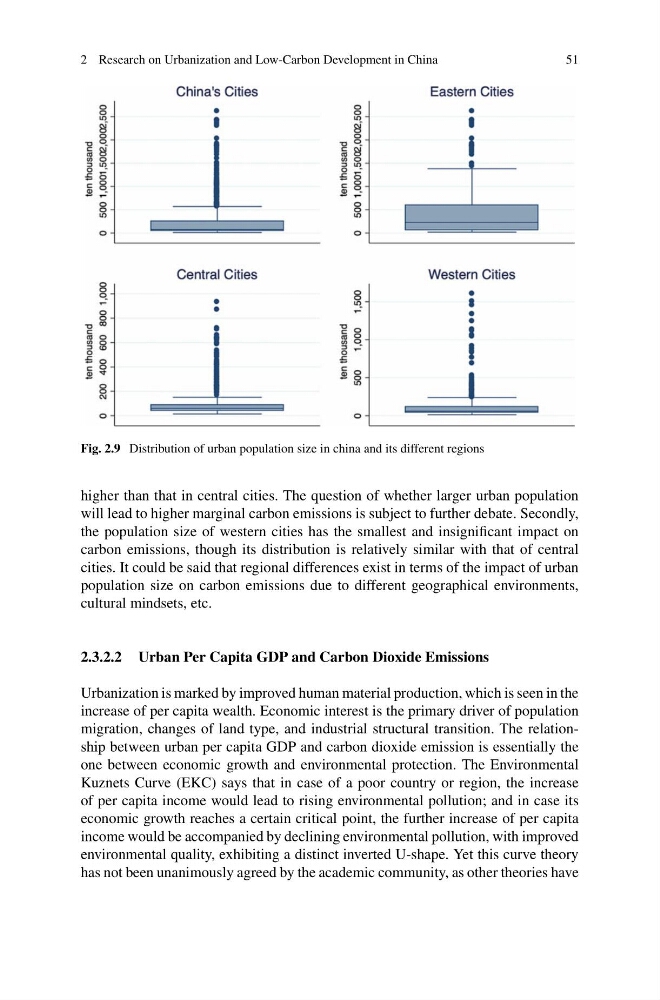
Fig. 2.9 Distribution of urban population size in china and its different regions
higher than that in central cities. The question of whether larger urban population
will lead to higher marginal carbon emissions is subject to further debate. Secondly,
the population size of western cities has the smallest and insignificant impact on
carbon emissions, though its distribution is relatively similar with that of central
cities. It could be said that regional differences exist in terms of the impact of urban
population size on carbon emissions due to different geographical environments,
cultural mindsets, etc.
2.3.2.2 Urban Per Capita GDP and Carbon Dioxide Emissions
Urbanization is marked by improved human material production, which is seen in the
increase of per capita wealth. Economic interest is the primary driver of population
migration, changes of land type, and industrial structural transition. The relationship between urban per capita GDP and carbon dioxide emission is essentially the
one between economic growth and environmental protection. The Environmental
Kuznets Curve (EKC) says that in case of a poor country or region, the increase
of per capita income would lead to rising environmental pollution; and in case its
economic growth reaches a certain critical point, the further increase of per capita
income would be accompanied by declining environmental pollution, with improved
environmental quality, exhibiting a distinct inverted U-shape. Yet this curve theory
has not been unanimously agreed by the academic community, as other theories have
51
Fig. 2.9 Distribution of urban population size in china and its different regions
higher than that in central cities. The question of whether larger urban population
will lead to higher marginal carbon emissions is subject to further debate. Secondly,
the population size of western cities has the smallest and insignificant impact on
carbon emissions, though its distribution is relatively similar with that of central
cities. It could be said that regional differences exist in terms of the impact of urban
population size on carbon emissions due to different geographical environments,
cultural mindsets, etc.
2.3.2.2 Urban Per Capita GDP and Carbon Dioxide Emissions
Urbanization is marked by improved human material production, which is seen in the
increase of per capita wealth. Economic interest is the primary driver of population
migration, changes of land type, and industrial structural transition. The relationship between urban per capita GDP and carbon dioxide emission is essentially the
one between economic growth and environmental protection. The Environmental
Kuznets Curve (EKC) says that in case of a poor country or region, the increase
of per capita income would lead to rising environmental pollution; and in case its
economic growth reaches a certain critical point, the further increase of per capita
income would be accompanied by declining environmental pollution, with improved
environmental quality, exhibiting a distinct inverted U-shape. Yet this curve theory
has not been unanimously agreed by the academic community, as other theories have