

258
L. Ren et al.
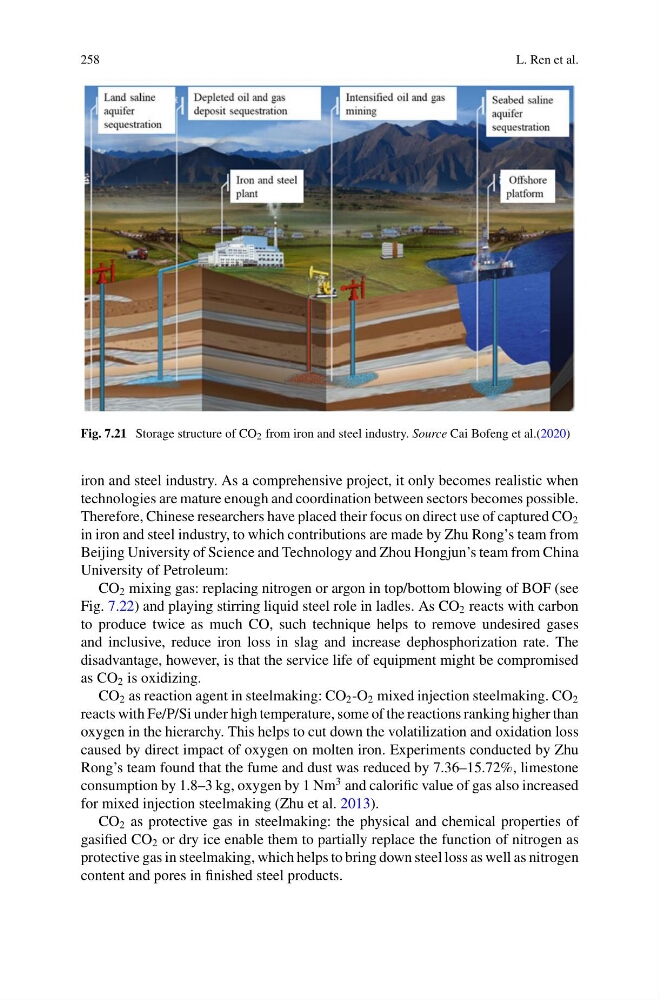
Fig. 7.21 Storage structure of CO 2 from iron and steel industry. Source Cai Bofeng et al.(2020)
iron and steel industry. As a comprehensive project, it only becomes realistic when
technologies are mature enough and coordination between sectors becomes possible.
Therefore, Chinese researchers have placed their focus on direct use of captured CO 2
in iron and steel industry, to which contributions are made by Zhu Rong’s team from
Beijing University of Science and Technology and Zhou Hongjun’s team from China
University of Petroleum:
CO 2 mixing gas: replacing nitrogen or argon in top/bottom blowing of BOF (see
Fig. 7.22) and playing stirring liquid steel role in ladles. As CO 2 reacts with carbon
to produce twice as much CO, such technique helps to remove undesired gases
and inclusive, reduce iron loss in slag and increase dephosphorization rate. The
disadvantage, however, is that the service life of equipment might be compromised
as CO 2 is oxidizing.
CO 2 as reaction agent in steelmaking: CO 2 -O 2 mixed injection steelmaking. CO 2
reacts with Fe/P/Si under high temperature, some of the reactions ranking higher than
oxygen in the hierarchy. This helps to cut down the volatilization and oxidation loss
caused by direct impact of oxygen on molten iron. Experiments conducted by Zhu
Rong’s team found that the fume and dust was reduced by 7.36–15.72%, limestone
consumption by 1.8–3 kg, oxygen by 1 Nm
3 and calorific value of gas also increased
for mixed injection steelmaking (Zhu et al. 2013).
CO 2 as protective gas in steelmaking: the physical and chemical properties of
gasified CO 2 or dry ice enable them to partially replace the function of nitrogen as
protective gas in steelmaking, which helps to bring down steel loss as well as nitrogen
content and pores in finished steel products.
L. Ren et al.
Fig. 7.21 Storage structure of CO 2 from iron and steel industry. Source Cai Bofeng et al.(2020)
iron and steel industry. As a comprehensive project, it only becomes realistic when
technologies are mature enough and coordination between sectors becomes possible.
Therefore, Chinese researchers have placed their focus on direct use of captured CO 2
in iron and steel industry, to which contributions are made by Zhu Rong’s team from
Beijing University of Science and Technology and Zhou Hongjun’s team from China
University of Petroleum:
CO 2 mixing gas: replacing nitrogen or argon in top/bottom blowing of BOF (see
Fig. 7.22) and playing stirring liquid steel role in ladles. As CO 2 reacts with carbon
to produce twice as much CO, such technique helps to remove undesired gases
and inclusive, reduce iron loss in slag and increase dephosphorization rate. The
disadvantage, however, is that the service life of equipment might be compromised
as CO 2 is oxidizing.
CO 2 as reaction agent in steelmaking: CO 2 -O 2 mixed injection steelmaking. CO 2
reacts with Fe/P/Si under high temperature, some of the reactions ranking higher than
oxygen in the hierarchy. This helps to cut down the volatilization and oxidation loss
caused by direct impact of oxygen on molten iron. Experiments conducted by Zhu
Rong’s team found that the fume and dust was reduced by 7.36–15.72%, limestone
consumption by 1.8–3 kg, oxygen by 1 Nm
3 and calorific value of gas also increased
for mixed injection steelmaking (Zhu et al. 2013).
CO 2 as protective gas in steelmaking: the physical and chemical properties of
gasified CO 2 or dry ice enable them to partially replace the function of nitrogen as
protective gas in steelmaking, which helps to bring down steel loss as well as nitrogen
content and pores in finished steel products.