

7 Development of Low Carbon Technology in China’s Iron …
259
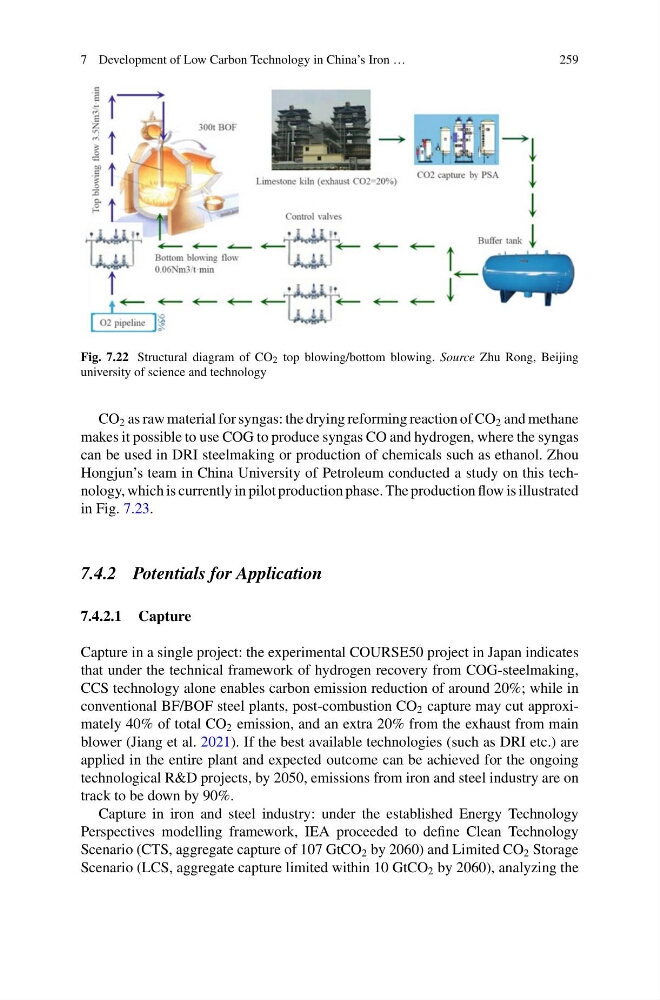
Fig. 7.22 Structural diagram of CO 2 top blowing/bottom blowing. Source Zhu Rong, Beijing
university of science and technology
CO 2 as raw material for syngas: the drying reforming reaction of CO 2 and methane
makes it possible to use COG to produce syngas CO and hydrogen, where the syngas
can be used in DRI steelmaking or production of chemicals such as ethanol. Zhou
Hongjun’s team in China University of Petroleum conducted a study on this technology, which is currently in pilot production phase. The production flow is illustrated
in Fig. 7.23.
7.4.2 Potentials for Application
7.4.2.1 Capture
Capture in a single project: the experimental COURSE50 project in Japan indicates
that under the technical framework of hydrogen recovery from COG-steelmaking,
CCS technology alone enables carbon emission reduction of around 20%; while in
conventional BF/BOF steel plants, post-combustion CO 2 capture may cut approximately 40% of total CO 2 emission, and an extra 20% from the exhaust from main
blower (Jiang et al. 2021). If the best available technologies (such as DRI etc.) are
applied in the entire plant and expected outcome can be achieved for the ongoing
technological R&D projects, by 2050, emissions from iron and steel industry are on
track to be down by 90%.
Capture in iron and steel industry: under the established Energy Technology
Perspectives modelling framework, IEA proceeded to define Clean Technology
Scenario (CTS, aggregate capture of 107 GtCO 2 by 2060) and Limited CO 2 Storage
Scenario (LCS, aggregate capture limited within 10 GtCO 2 by 2060), analyzing the
259
Fig. 7.22 Structural diagram of CO 2 top blowing/bottom blowing. Source Zhu Rong, Beijing
university of science and technology
CO 2 as raw material for syngas: the drying reforming reaction of CO 2 and methane
makes it possible to use COG to produce syngas CO and hydrogen, where the syngas
can be used in DRI steelmaking or production of chemicals such as ethanol. Zhou
Hongjun’s team in China University of Petroleum conducted a study on this technology, which is currently in pilot production phase. The production flow is illustrated
in Fig. 7.23.
7.4.2 Potentials for Application
7.4.2.1 Capture
Capture in a single project: the experimental COURSE50 project in Japan indicates
that under the technical framework of hydrogen recovery from COG-steelmaking,
CCS technology alone enables carbon emission reduction of around 20%; while in
conventional BF/BOF steel plants, post-combustion CO 2 capture may cut approximately 40% of total CO 2 emission, and an extra 20% from the exhaust from main
blower (Jiang et al. 2021). If the best available technologies (such as DRI etc.) are
applied in the entire plant and expected outcome can be achieved for the ongoing
technological R&D projects, by 2050, emissions from iron and steel industry are on
track to be down by 90%.
Capture in iron and steel industry: under the established Energy Technology
Perspectives modelling framework, IEA proceeded to define Clean Technology
Scenario (CTS, aggregate capture of 107 GtCO 2 by 2060) and Limited CO 2 Storage
Scenario (LCS, aggregate capture limited within 10 GtCO 2 by 2060), analyzing the