

246
L. Ren et al.
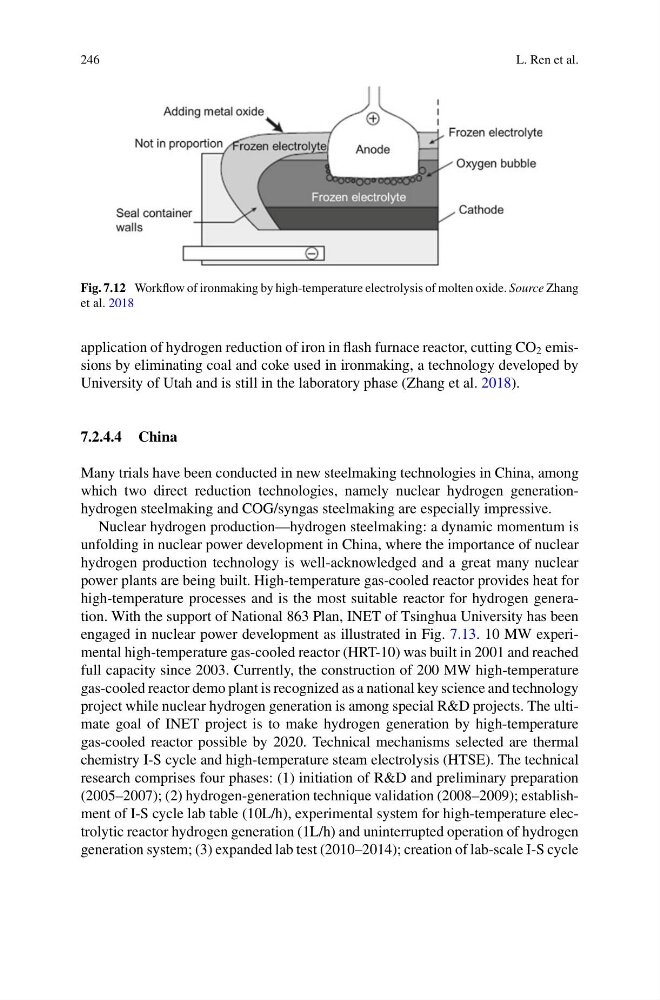
Fig. 7.12 Workflow of ironmaking by high-temperature electrolysis of molten oxide. Source Zhang
et al. 2018
application of hydrogen reduction of iron in flash furnace reactor, cutting CO 2 emissions by eliminating coal and coke used in ironmaking, a technology developed by
University of Utah and is still in the laboratory phase (Zhang et al. 2018).
7.2.4.4 China
Many trials have been conducted in new steelmaking technologies in China, among
which two direct reduction technologies, namely nuclear hydrogen generationhydrogen steelmaking and COG/syngas steelmaking are especially impressive.
Nuclear hydrogen production—hydrogen steelmaking: a dynamic momentum is
unfolding in nuclear power development in China, where the importance of nuclear
hydrogen production technology is well-acknowledged and a great many nuclear
power plants are being built. High-temperature gas-cooled reactor provides heat for
high-temperature processes and is the most suitable reactor for hydrogen generation. With the support of National 863 Plan, INET of Tsinghua University has been
engaged in nuclear power development as illustrated in Fig. 7.13. 10 MW experimental high-temperature gas-cooled reactor (HRT-10) was built in 2001 and reached
full capacity since 2003. Currently, the construction of 200 MW high-temperature
gas-cooled reactor demo plant is recognized as a national key science and technology
project while nuclear hydrogen generation is among special R&D projects. The ultimate goal of INET project is to make hydrogen generation by high-temperature
gas-cooled reactor possible by 2020. Technical mechanisms selected are thermal
chemistry I-S cycle and high-temperature steam electrolysis (HTSE). The technical
research comprises four phases: (1) initiation of R&D and preliminary preparation
(2005–2007); (2) hydrogen-generation technique validation (2008–2009); establishment of I-S cycle lab table (10L/h), experimental system for high-temperature electrolytic reactor hydrogen generation (1L/h) and uninterrupted operation of hydrogen
generation system; (3) expanded lab test (2010–2014); creation of lab-scale I-S cycle
L. Ren et al.
Fig. 7.12 Workflow of ironmaking by high-temperature electrolysis of molten oxide. Source Zhang
et al. 2018
application of hydrogen reduction of iron in flash furnace reactor, cutting CO 2 emissions by eliminating coal and coke used in ironmaking, a technology developed by
University of Utah and is still in the laboratory phase (Zhang et al. 2018).
7.2.4.4 China
Many trials have been conducted in new steelmaking technologies in China, among
which two direct reduction technologies, namely nuclear hydrogen generationhydrogen steelmaking and COG/syngas steelmaking are especially impressive.
Nuclear hydrogen production—hydrogen steelmaking: a dynamic momentum is
unfolding in nuclear power development in China, where the importance of nuclear
hydrogen production technology is well-acknowledged and a great many nuclear
power plants are being built. High-temperature gas-cooled reactor provides heat for
high-temperature processes and is the most suitable reactor for hydrogen generation. With the support of National 863 Plan, INET of Tsinghua University has been
engaged in nuclear power development as illustrated in Fig. 7.13. 10 MW experimental high-temperature gas-cooled reactor (HRT-10) was built in 2001 and reached
full capacity since 2003. Currently, the construction of 200 MW high-temperature
gas-cooled reactor demo plant is recognized as a national key science and technology
project while nuclear hydrogen generation is among special R&D projects. The ultimate goal of INET project is to make hydrogen generation by high-temperature
gas-cooled reactor possible by 2020. Technical mechanisms selected are thermal
chemistry I-S cycle and high-temperature steam electrolysis (HTSE). The technical
research comprises four phases: (1) initiation of R&D and preliminary preparation
(2005–2007); (2) hydrogen-generation technique validation (2008–2009); establishment of I-S cycle lab table (10L/h), experimental system for high-temperature electrolytic reactor hydrogen generation (1L/h) and uninterrupted operation of hydrogen
generation system; (3) expanded lab test (2010–2014); creation of lab-scale I-S cycle