

7 Development of Low Carbon Technology in China’s Iron …
245
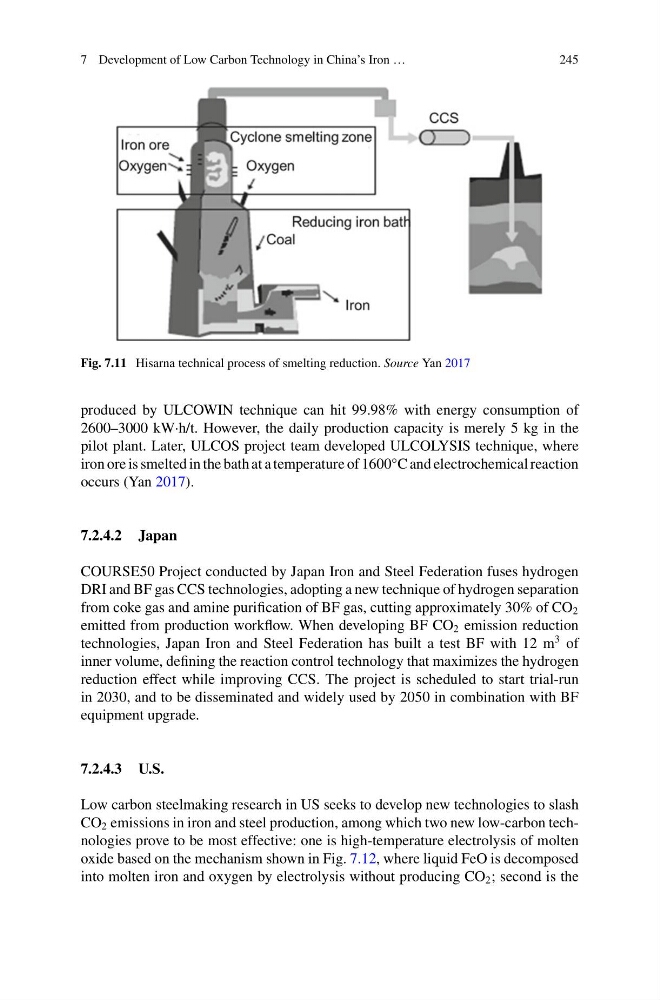
Fig. 7.11 Hisarna technical process of smelting reduction. Source Yan 2017
produced by ULCOWIN technique can hit 99.98% with energy consumption of
2600–3000 kW·h/t. However, the daily production capacity is merely 5 kg in the
pilot plant. Later, ULCOS project team developed ULCOLYSIS technique, where
iron ore is smelted in the bath at a temperature of 1600°C and electrochemical reaction
occurs (Yan 2017).
7.2.4.2 Japan
COURSE50 Project conducted by Japan Iron and Steel Federation fuses hydrogen
DRI and BF gas CCS technologies, adopting a new technique of hydrogen separation
from coke gas and amine purification of BF gas, cutting approximately 30% of CO 2
emitted from production workflow. When developing BF CO 2 emission reduction
technologies, Japan Iron and Steel Federation has built a test BF with 12 m
3 of
inner volume, defining the reaction control technology that maximizes the hydrogen
reduction effect while improving CCS. The project is scheduled to start trial-run
in 2030, and to be disseminated and widely used by 2050 in combination with BF
equipment upgrade.
7.2.4.3 U.S.
Low carbon steelmaking research in US seeks to develop new technologies to slash
CO 2 emissions in iron and steel production, among which two new low-carbon technologies prove to be most effective: one is high-temperature electrolysis of molten
oxide based on the mechanism shown in Fig. 7.12, where liquid FeO is decomposed
into molten iron and oxygen by electrolysis without producing CO 2 ; second is the
245
Fig. 7.11 Hisarna technical process of smelting reduction. Source Yan 2017
produced by ULCOWIN technique can hit 99.98% with energy consumption of
2600–3000 kW·h/t. However, the daily production capacity is merely 5 kg in the
pilot plant. Later, ULCOS project team developed ULCOLYSIS technique, where
iron ore is smelted in the bath at a temperature of 1600°C and electrochemical reaction
occurs (Yan 2017).
7.2.4.2 Japan
COURSE50 Project conducted by Japan Iron and Steel Federation fuses hydrogen
DRI and BF gas CCS technologies, adopting a new technique of hydrogen separation
from coke gas and amine purification of BF gas, cutting approximately 30% of CO 2
emitted from production workflow. When developing BF CO 2 emission reduction
technologies, Japan Iron and Steel Federation has built a test BF with 12 m
3 of
inner volume, defining the reaction control technology that maximizes the hydrogen
reduction effect while improving CCS. The project is scheduled to start trial-run
in 2030, and to be disseminated and widely used by 2050 in combination with BF
equipment upgrade.
7.2.4.3 U.S.
Low carbon steelmaking research in US seeks to develop new technologies to slash
CO 2 emissions in iron and steel production, among which two new low-carbon technologies prove to be most effective: one is high-temperature electrolysis of molten
oxide based on the mechanism shown in Fig. 7.12, where liquid FeO is decomposed
into molten iron and oxygen by electrolysis without producing CO 2 ; second is the