

72
J. Setsune
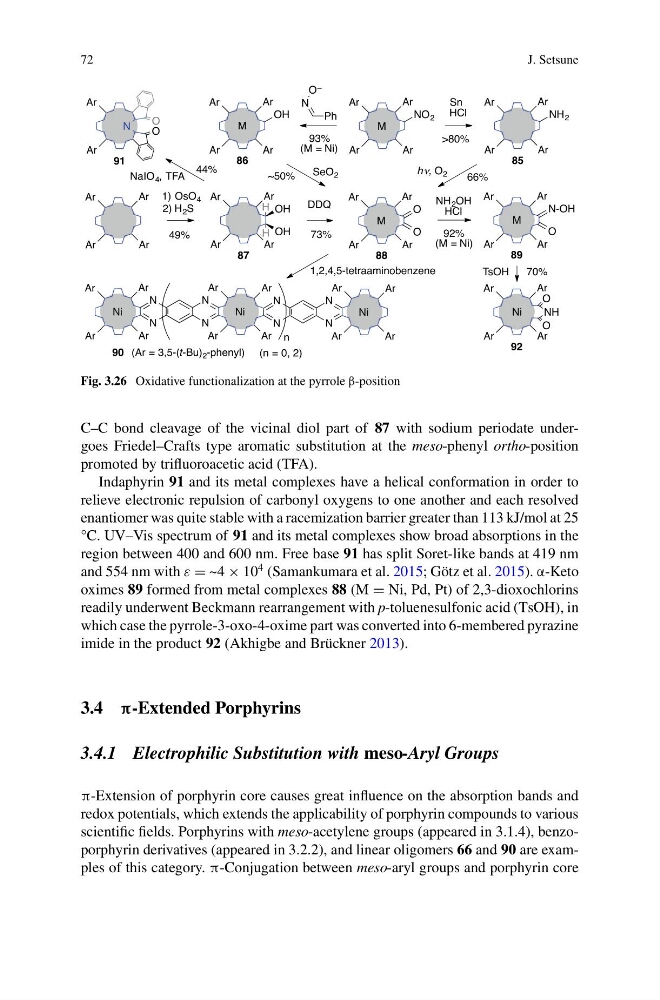
Fig. 3.26 Oxidative functionalization at the pyrrole β-position
C–C bond cleavage of the vicinal diol part of 87 with sodium periodate undergoes Friedel–Crafts type aromatic substitution at the meso-phenyl ortho-position
promoted by trifluoroacetic acid (TFA).
Indaphyrin 91 and its metal complexes have a helical conformation in order to
relieve electronic repulsion of carbonyl oxygens to one another and each resolved
enantiomer was quite stable with a racemization barrier greater than 113 kJ/mol at 25
°C. UV–Vis spectrum of 91 and its metal complexes show broad absorptions in the
region between 400 and 600 nm. Free base 91 has split Soret-like bands at 419 nm
and 554 nm with ε = ~4 × 10
4 (Samankumara et al. 2015; Götz et al. 2015). α-Keto
oximes 89 formed from metal complexes 88 (M = Ni, Pd, Pt) of 2,3-dioxochlorins
readily underwent Beckmann rearrangement with p-toluenesulfonic acid (TsOH), in
which case the pyrrole-3-oxo-4-oxime part was converted into 6-membered pyrazine
imide in the product 92 (Akhigbe and Brückner 2013).
3.4 π-Extended Porphyrins
3.4.1 Electrophilic Substitution with meso-Aryl Groups
π-Extension of porphyrin core causes great influence on the absorption bands and
redox potentials, which extends the applicability of porphyrin compounds to various
scientific fields. Porphyrins with meso-acetylene groups (appeared in 3.1.4), benzoporphyrin derivatives (appeared in 3.2.2), and linear oligomers 66 and 90 are examples of this category. π-Conjugation between meso-aryl groups and porphyrin core
J. Setsune
Fig. 3.26 Oxidative functionalization at the pyrrole β-position
C–C bond cleavage of the vicinal diol part of 87 with sodium periodate undergoes Friedel–Crafts type aromatic substitution at the meso-phenyl ortho-position
promoted by trifluoroacetic acid (TFA).
Indaphyrin 91 and its metal complexes have a helical conformation in order to
relieve electronic repulsion of carbonyl oxygens to one another and each resolved
enantiomer was quite stable with a racemization barrier greater than 113 kJ/mol at 25
°C. UV–Vis spectrum of 91 and its metal complexes show broad absorptions in the
region between 400 and 600 nm. Free base 91 has split Soret-like bands at 419 nm
and 554 nm with ε = ~4 × 10
4 (Samankumara et al. 2015; Götz et al. 2015). α-Keto
oximes 89 formed from metal complexes 88 (M = Ni, Pd, Pt) of 2,3-dioxochlorins
readily underwent Beckmann rearrangement with p-toluenesulfonic acid (TsOH), in
which case the pyrrole-3-oxo-4-oxime part was converted into 6-membered pyrazine
imide in the product 92 (Akhigbe and Brückner 2013).
3.4 π-Extended Porphyrins
3.4.1 Electrophilic Substitution with meso-Aryl Groups
π-Extension of porphyrin core causes great influence on the absorption bands and
redox potentials, which extends the applicability of porphyrin compounds to various
scientific fields. Porphyrins with meso-acetylene groups (appeared in 3.1.4), benzoporphyrin derivatives (appeared in 3.2.2), and linear oligomers 66 and 90 are examples of this category. π-Conjugation between meso-aryl groups and porphyrin core