

68
J. Setsune
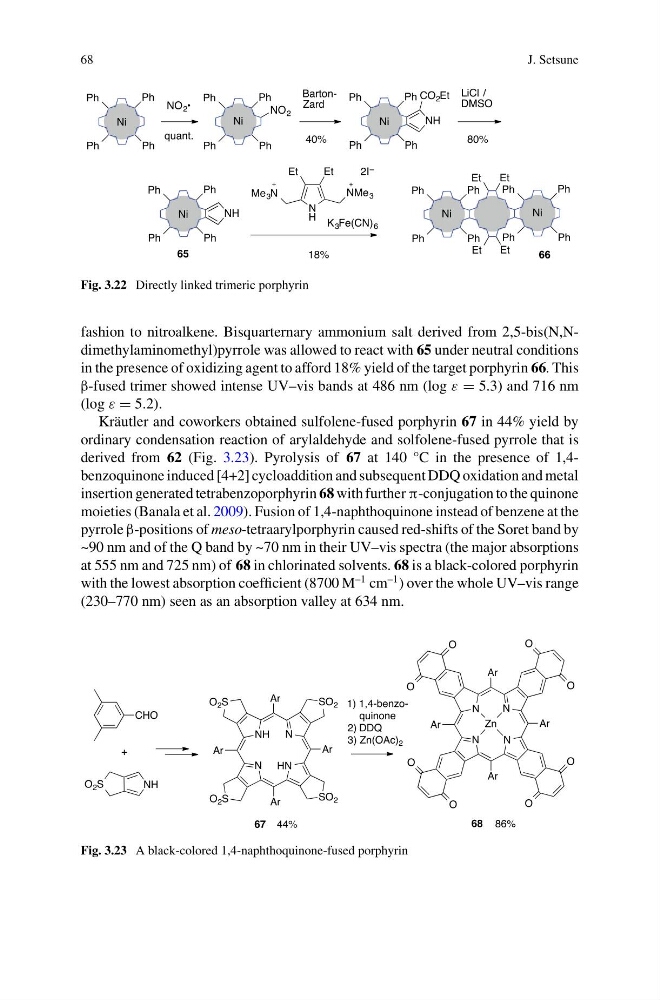
Fig. 3.22 Directly linked trimeric porphyrin
fashion to nitroalkene. Bisquarternary ammonium salt derived from 2,5-bis(N,Ndimethylaminomethyl)pyrrole was allowed to react with 65 under neutral conditions
in the presence of oxidizing agent to afford 18% yield of the target porphyrin 66. This
β-fused trimer showed intense UV–vis bands at 486 nm (log ε = 5.3) and 716 nm
(log ε = 5.2).
Kräutler and coworkers obtained sulfolene-fused porphyrin 67 in 44% yield by
ordinary condensation reaction of arylaldehyde and solfolene-fused pyrrole that is
derived from 62 (Fig. 3.23). Pyrolysis of 67 at 140 °C in the presence of 1,4benzoquinone induced [4+2] cycloaddition and subsequent DDQ oxidation and metal
insertion generated tetrabenzoporphyrin 68 with further π-conjugation to the quinone
moieties (Banala et al. 2009). Fusion of 1,4-naphthoquinone instead of benzene at the
pyrrole β-positions of meso-tetraarylporphyrin caused red-shifts of the Soret band by
~90 nm and of the Q band by ~70 nm in their UV–vis spectra (the major absorptions
at 555 nm and 725 nm) of 68 in chlorinated solvents. 68 is a black-colored porphyrin
with the lowest absorption coefficient (8700 M
–1 cm
–1 ) over the whole UV–vis range
(230–770 nm) seen as an absorption valley at 634 nm.
Fig. 3.23 A black-colored 1,4-naphthoquinone-fused porphyrin
J. Setsune
Fig. 3.22 Directly linked trimeric porphyrin
fashion to nitroalkene. Bisquarternary ammonium salt derived from 2,5-bis(N,Ndimethylaminomethyl)pyrrole was allowed to react with 65 under neutral conditions
in the presence of oxidizing agent to afford 18% yield of the target porphyrin 66. This
β-fused trimer showed intense UV–vis bands at 486 nm (log ε = 5.3) and 716 nm
(log ε = 5.2).
Kräutler and coworkers obtained sulfolene-fused porphyrin 67 in 44% yield by
ordinary condensation reaction of arylaldehyde and solfolene-fused pyrrole that is
derived from 62 (Fig. 3.23). Pyrolysis of 67 at 140 °C in the presence of 1,4benzoquinone induced [4+2] cycloaddition and subsequent DDQ oxidation and metal
insertion generated tetrabenzoporphyrin 68 with further π-conjugation to the quinone
moieties (Banala et al. 2009). Fusion of 1,4-naphthoquinone instead of benzene at the
pyrrole β-positions of meso-tetraarylporphyrin caused red-shifts of the Soret band by
~90 nm and of the Q band by ~70 nm in their UV–vis spectra (the major absorptions
at 555 nm and 725 nm) of 68 in chlorinated solvents. 68 is a black-colored porphyrin
with the lowest absorption coefficient (8700 M
–1 cm
–1 ) over the whole UV–vis range
(230–770 nm) seen as an absorption valley at 634 nm.
Fig. 3.23 A black-colored 1,4-naphthoquinone-fused porphyrin