

3 Porphyrins: Syntheses and Properties
69
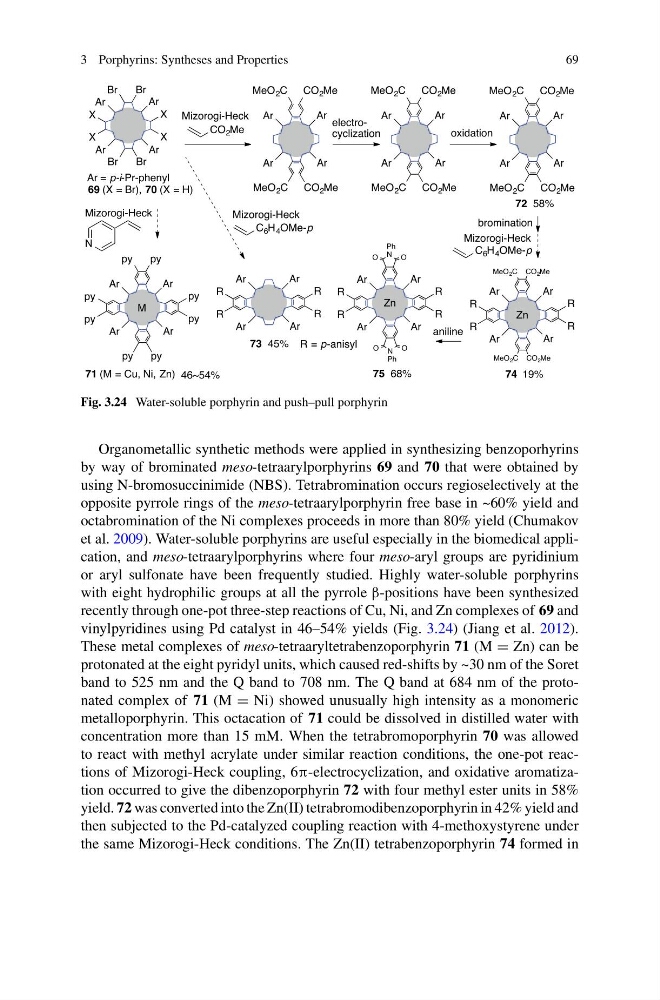
Fig. 3.24 Water-soluble porphyrin and push–pull porphyrin
Organometallic synthetic methods were applied in synthesizing benzoporhyrins
by way of brominated meso-tetraarylporphyrins 69 and 70 that were obtained by
using N-bromosuccinimide (NBS). Tetrabromination occurs regioselectively at the
opposite pyrrole rings of the meso-tetraarylporphyrin free base in ~60% yield and
octabromination of the Ni complexes proceeds in more than 80% yield (Chumakov
et al. 2009). Water-soluble porphyrins are useful especially in the biomedical application, and meso-tetraarylporphyrins where four meso-aryl groups are pyridinium
or aryl sulfonate have been frequently studied. Highly water-soluble porphyrins
with eight hydrophilic groups at all the pyrrole β-positions have been synthesized
recently through one-pot three-step reactions of Cu, Ni, and Zn complexes of 69 and
vinylpyridines using Pd catalyst in 46–54% yields (Fig. 3.24) (Jiang et al. 2012).
These metal complexes of meso-tetraaryltetrabenzoporphyrin 71 (M = Zn) can be
protonated at the eight pyridyl units, which caused red-shifts by ~30 nm of the Soret
band to 525 nm and the Q band to 708 nm. The Q band at 684 nm of the protonated complex of 71 (M = Ni) showed unusually high intensity as a monomeric
metalloporphyrin. This octacation of 71 could be dissolved in distilled water with
concentration more than 15 mM. When the tetrabromoporphyrin 70 was allowed
to react with methyl acrylate under similar reaction conditions, the one-pot reactions of Mizorogi-Heck coupling, 6π-electrocyclization, and oxidative aromatization occurred to give the dibenzoporphyrin 72 with four methyl ester units in 58%
yield. 72 was converted into the Zn(II) tetrabromodibenzoporphyrin in 42% yield and
then subjected to the Pd-catalyzed coupling reaction with 4-methoxystyrene under
the same Mizorogi-Heck conditions. The Zn(II) tetrabenzoporphyrin 74 formed in
69
Fig. 3.24 Water-soluble porphyrin and push–pull porphyrin
Organometallic synthetic methods were applied in synthesizing benzoporhyrins
by way of brominated meso-tetraarylporphyrins 69 and 70 that were obtained by
using N-bromosuccinimide (NBS). Tetrabromination occurs regioselectively at the
opposite pyrrole rings of the meso-tetraarylporphyrin free base in ~60% yield and
octabromination of the Ni complexes proceeds in more than 80% yield (Chumakov
et al. 2009). Water-soluble porphyrins are useful especially in the biomedical application, and meso-tetraarylporphyrins where four meso-aryl groups are pyridinium
or aryl sulfonate have been frequently studied. Highly water-soluble porphyrins
with eight hydrophilic groups at all the pyrrole β-positions have been synthesized
recently through one-pot three-step reactions of Cu, Ni, and Zn complexes of 69 and
vinylpyridines using Pd catalyst in 46–54% yields (Fig. 3.24) (Jiang et al. 2012).
These metal complexes of meso-tetraaryltetrabenzoporphyrin 71 (M = Zn) can be
protonated at the eight pyridyl units, which caused red-shifts by ~30 nm of the Soret
band to 525 nm and the Q band to 708 nm. The Q band at 684 nm of the protonated complex of 71 (M = Ni) showed unusually high intensity as a monomeric
metalloporphyrin. This octacation of 71 could be dissolved in distilled water with
concentration more than 15 mM. When the tetrabromoporphyrin 70 was allowed
to react with methyl acrylate under similar reaction conditions, the one-pot reactions of Mizorogi-Heck coupling, 6π-electrocyclization, and oxidative aromatization occurred to give the dibenzoporphyrin 72 with four methyl ester units in 58%
yield. 72 was converted into the Zn(II) tetrabromodibenzoporphyrin in 42% yield and
then subjected to the Pd-catalyzed coupling reaction with 4-methoxystyrene under
the same Mizorogi-Heck conditions. The Zn(II) tetrabenzoporphyrin 74 formed in