

64
J. Setsune
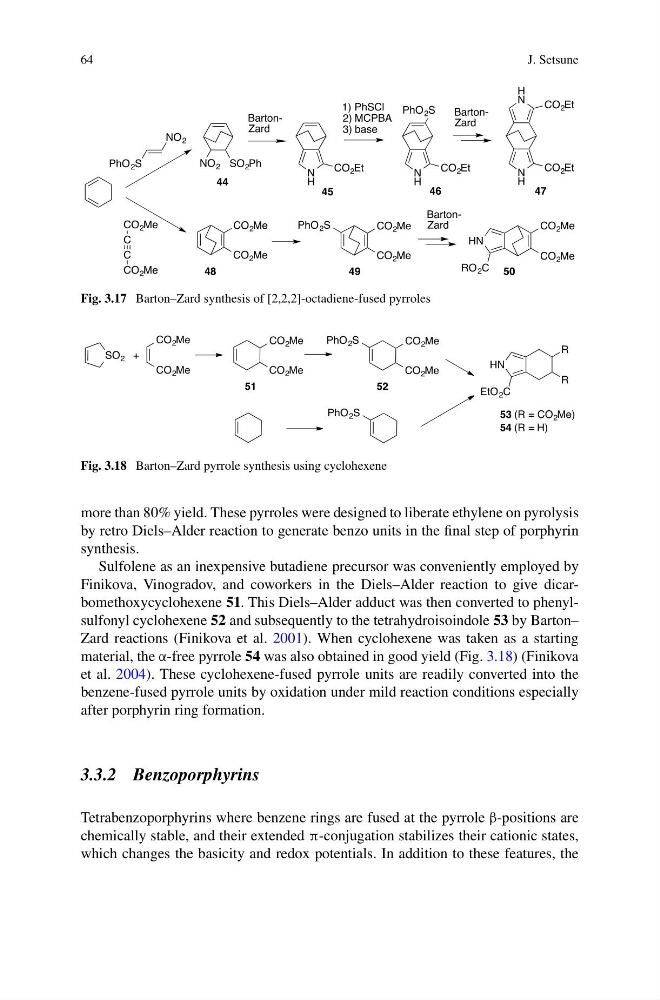
Fig. 3.17 Barton–Zard synthesis of [2,2,2]-octadiene-fused pyrroles
Fig. 3.18 Barton–Zard pyrrole synthesis using cyclohexene
more than 80% yield. These pyrroles were designed to liberate ethylene on pyrolysis
by retro Diels–Alder reaction to generate benzo units in the final step of porphyrin
synthesis.
Sulfolene as an inexpensive butadiene precursor was conveniently employed by
Finikova, Vinogradov, and coworkers in the Diels–Alder reaction to give dicarbomethoxycyclohexene 51. This Diels–Alder adduct was then converted to phenylsulfonyl cyclohexene 52 and subsequently to the tetrahydroisoindole 53 by Barton–
Zard reactions (Finikova et al. 2001). When cyclohexene was taken as a starting
material, the α-free pyrrole 54 was also obtained in good yield (Fig. 3.18) (Finikova
et al. 2004). These cyclohexene-fused pyrrole units are readily converted into the
benzene-fused pyrrole units by oxidation under mild reaction conditions especially
after porphyrin ring formation.
3.3.2 Benzoporphyrins
Tetrabenzoporphyrins where benzene rings are fused at the pyrrole β-positions are
chemically stable, and their extended π-conjugation stabilizes their cationic states,
which changes the basicity and redox potentials. In addition to these features, the
J. Setsune
Fig. 3.17 Barton–Zard synthesis of [2,2,2]-octadiene-fused pyrroles
Fig. 3.18 Barton–Zard pyrrole synthesis using cyclohexene
more than 80% yield. These pyrroles were designed to liberate ethylene on pyrolysis
by retro Diels–Alder reaction to generate benzo units in the final step of porphyrin
synthesis.
Sulfolene as an inexpensive butadiene precursor was conveniently employed by
Finikova, Vinogradov, and coworkers in the Diels–Alder reaction to give dicarbomethoxycyclohexene 51. This Diels–Alder adduct was then converted to phenylsulfonyl cyclohexene 52 and subsequently to the tetrahydroisoindole 53 by Barton–
Zard reactions (Finikova et al. 2001). When cyclohexene was taken as a starting
material, the α-free pyrrole 54 was also obtained in good yield (Fig. 3.18) (Finikova
et al. 2004). These cyclohexene-fused pyrrole units are readily converted into the
benzene-fused pyrrole units by oxidation under mild reaction conditions especially
after porphyrin ring formation.
3.3.2 Benzoporphyrins
Tetrabenzoporphyrins where benzene rings are fused at the pyrrole β-positions are
chemically stable, and their extended π-conjugation stabilizes their cationic states,
which changes the basicity and redox potentials. In addition to these features, the