

3 Porphyrins: Syntheses and Properties
59
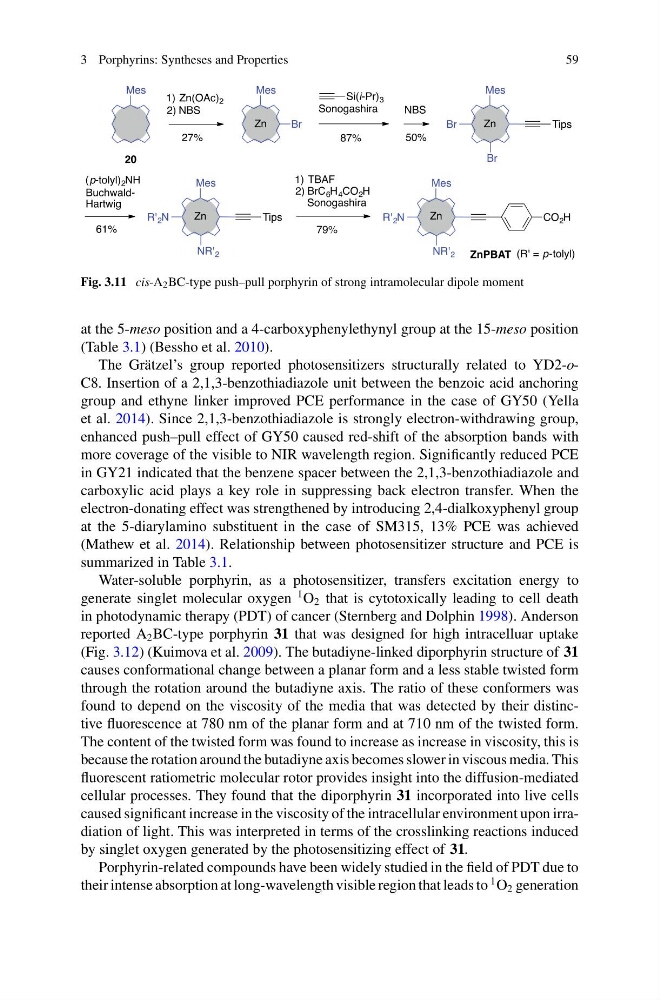
Fig. 3.11 cis-A 2 BC-type push–pull porphyrin of strong intramolecular dipole moment
at the 5-meso position and a 4-carboxyphenylethynyl group at the 15-meso position
(Table 3.1) (Bessho et al. 2010).
The Grätzel’s group reported photosensitizers structurally related to YD2-oC8. Insertion of a 2,1,3-benzothiadiazole unit between the benzoic acid anchoring
group and ethyne linker improved PCE performance in the case of GY50 (Yella
et al. 2014). Since 2,1,3-benzothiadiazole is strongly electron-withdrawing group,
enhanced push–pull effect of GY50 caused red-shift of the absorption bands with
more coverage of the visible to NIR wavelength region. Significantly reduced PCE
in GY21 indicated that the benzene spacer between the 2,1,3-benzothiadiazole and
carboxylic acid plays a key role in suppressing back electron transfer. When the
electron-donating effect was strengthened by introducing 2,4-dialkoxyphenyl group
at the 5-diarylamino substituent in the case of SM315, 13% PCE was achieved
(Mathew et al. 2014). Relationship between photosensitizer structure and PCE is
summarized in Table 3.1.
Water-soluble porphyrin, as a photosensitizer, transfers excitation energy to
generate singlet molecular oxygen
1 O 2 that is cytotoxically leading to cell death
in photodynamic therapy (PDT) of cancer (Sternberg and Dolphin 1998). Anderson
reported A 2 BC-type porphyrin 31 that was designed for high intracelluar uptake
(Fig. 3.12) (Kuimova et al. 2009). The butadiyne-linked diporphyrin structure of 31
causes conformational change between a planar form and a less stable twisted form
through the rotation around the butadiyne axis. The ratio of these conformers was
found to depend on the viscosity of the media that was detected by their distinctive fluorescence at 780 nm of the planar form and at 710 nm of the twisted form.
The content of the twisted form was found to increase as increase in viscosity, this is
because the rotation around the butadiyne axis becomes slower in viscous media. This
fluorescent ratiometric molecular rotor provides insight into the diffusion-mediated
cellular processes. They found that the diporphyrin 31 incorporated into live cells
caused significant increase in the viscosity of the intracellular environment upon irradiation of light. This was interpreted in terms of the crosslinking reactions induced
by singlet oxygen generated by the photosensitizing effect of 31.
Porphyrin-related compounds have been widely studied in the field of PDT due to
their intense absorption at long-wavelength visible region that leads to
1 O 2 generation
59
Fig. 3.11 cis-A 2 BC-type push–pull porphyrin of strong intramolecular dipole moment
at the 5-meso position and a 4-carboxyphenylethynyl group at the 15-meso position
(Table 3.1) (Bessho et al. 2010).
The Grätzel’s group reported photosensitizers structurally related to YD2-oC8. Insertion of a 2,1,3-benzothiadiazole unit between the benzoic acid anchoring
group and ethyne linker improved PCE performance in the case of GY50 (Yella
et al. 2014). Since 2,1,3-benzothiadiazole is strongly electron-withdrawing group,
enhanced push–pull effect of GY50 caused red-shift of the absorption bands with
more coverage of the visible to NIR wavelength region. Significantly reduced PCE
in GY21 indicated that the benzene spacer between the 2,1,3-benzothiadiazole and
carboxylic acid plays a key role in suppressing back electron transfer. When the
electron-donating effect was strengthened by introducing 2,4-dialkoxyphenyl group
at the 5-diarylamino substituent in the case of SM315, 13% PCE was achieved
(Mathew et al. 2014). Relationship between photosensitizer structure and PCE is
summarized in Table 3.1.
Water-soluble porphyrin, as a photosensitizer, transfers excitation energy to
generate singlet molecular oxygen
1 O 2 that is cytotoxically leading to cell death
in photodynamic therapy (PDT) of cancer (Sternberg and Dolphin 1998). Anderson
reported A 2 BC-type porphyrin 31 that was designed for high intracelluar uptake
(Fig. 3.12) (Kuimova et al. 2009). The butadiyne-linked diporphyrin structure of 31
causes conformational change between a planar form and a less stable twisted form
through the rotation around the butadiyne axis. The ratio of these conformers was
found to depend on the viscosity of the media that was detected by their distinctive fluorescence at 780 nm of the planar form and at 710 nm of the twisted form.
The content of the twisted form was found to increase as increase in viscosity, this is
because the rotation around the butadiyne axis becomes slower in viscous media. This
fluorescent ratiometric molecular rotor provides insight into the diffusion-mediated
cellular processes. They found that the diporphyrin 31 incorporated into live cells
caused significant increase in the viscosity of the intracellular environment upon irradiation of light. This was interpreted in terms of the crosslinking reactions induced
by singlet oxygen generated by the photosensitizing effect of 31.
Porphyrin-related compounds have been widely studied in the field of PDT due to
their intense absorption at long-wavelength visible region that leads to
1 O 2 generation