

54
J. Setsune
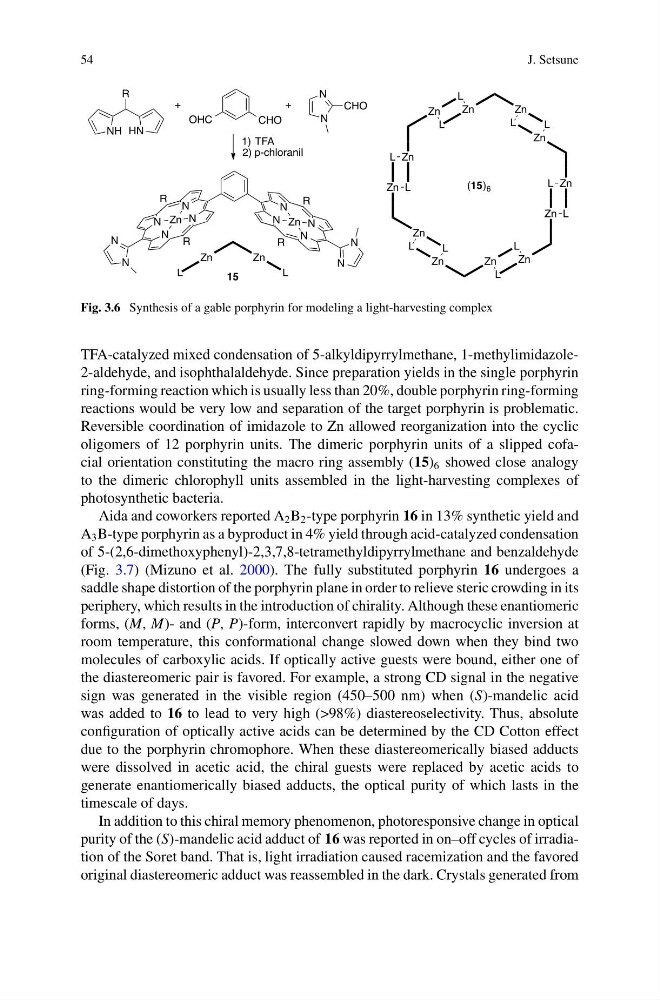
Fig. 3.6 Synthesis of a gable porphyrin for modeling a light-harvesting complex
TFA-catalyzed mixed condensation of 5-alkyldipyrrylmethane, 1-methylimidazole2-aldehyde, and isophthalaldehyde. Since preparation yields in the single porphyrin
ring-forming reaction which is usually less than 20%, double porphyrin ring-forming
reactions would be very low and separation of the target porphyrin is problematic.
Reversible coordination of imidazole to Zn allowed reorganization into the cyclic
oligomers of 12 porphyrin units. The dimeric porphyrin units of a slipped cofacial orientation constituting the macro ring assembly (15) 6 showed close analogy
to the dimeric chlorophyll units assembled in the light-harvesting complexes of
photosynthetic bacteria.
Aida and coworkers reported A 2 B 2 -type porphyrin 16 in 13% synthetic yield and
A 3 B-type porphyrin as a byproduct in 4% yield through acid-catalyzed condensation
of 5-(2,6-dimethoxyphenyl)-2,3,7,8-tetramethyldipyrrylmethane and benzaldehyde
(Fig. 3.7) (Mizuno et al. 2000). The fully substituted porphyrin 16 undergoes a
saddle shape distortion of the porphyrin plane in order to relieve steric crowding in its
periphery, which results in the introduction of chirality. Although these enantiomeric
forms, (M, M)- and (P, P)-form, interconvert rapidly by macrocyclic inversion at
room temperature, this conformational change slowed down when they bind two
molecules of carboxylic acids. If optically active guests were bound, either one of
the diastereomeric pair is favored. For example, a strong CD signal in the negative
sign was generated in the visible region (450–500 nm) when (S)-mandelic acid
was added to 16 to lead to very high (>98%) diastereoselectivity. Thus, absolute
configuration of optically active acids can be determined by the CD Cotton effect
due to the porphyrin chromophore. When these diastereomerically biased adducts
were dissolved in acetic acid, the chiral guests were replaced by acetic acids to
generate enantiomerically biased adducts, the optical purity of which lasts in the
timescale of days.
In addition to this chiral memory phenomenon, photoresponsive change in optical
purity of the (S)-mandelic acid adduct of 16 was reported in on–off cycles of irradiation of the Soret band. That is, light irradiation caused racemization and the favored
original diastereomeric adduct was reassembled in the dark. Crystals generated from
J. Setsune
Fig. 3.6 Synthesis of a gable porphyrin for modeling a light-harvesting complex
TFA-catalyzed mixed condensation of 5-alkyldipyrrylmethane, 1-methylimidazole2-aldehyde, and isophthalaldehyde. Since preparation yields in the single porphyrin
ring-forming reaction which is usually less than 20%, double porphyrin ring-forming
reactions would be very low and separation of the target porphyrin is problematic.
Reversible coordination of imidazole to Zn allowed reorganization into the cyclic
oligomers of 12 porphyrin units. The dimeric porphyrin units of a slipped cofacial orientation constituting the macro ring assembly (15) 6 showed close analogy
to the dimeric chlorophyll units assembled in the light-harvesting complexes of
photosynthetic bacteria.
Aida and coworkers reported A 2 B 2 -type porphyrin 16 in 13% synthetic yield and
A 3 B-type porphyrin as a byproduct in 4% yield through acid-catalyzed condensation
of 5-(2,6-dimethoxyphenyl)-2,3,7,8-tetramethyldipyrrylmethane and benzaldehyde
(Fig. 3.7) (Mizuno et al. 2000). The fully substituted porphyrin 16 undergoes a
saddle shape distortion of the porphyrin plane in order to relieve steric crowding in its
periphery, which results in the introduction of chirality. Although these enantiomeric
forms, (M, M)- and (P, P)-form, interconvert rapidly by macrocyclic inversion at
room temperature, this conformational change slowed down when they bind two
molecules of carboxylic acids. If optically active guests were bound, either one of
the diastereomeric pair is favored. For example, a strong CD signal in the negative
sign was generated in the visible region (450–500 nm) when (S)-mandelic acid
was added to 16 to lead to very high (>98%) diastereoselectivity. Thus, absolute
configuration of optically active acids can be determined by the CD Cotton effect
due to the porphyrin chromophore. When these diastereomerically biased adducts
were dissolved in acetic acid, the chiral guests were replaced by acetic acids to
generate enantiomerically biased adducts, the optical purity of which lasts in the
timescale of days.
In addition to this chiral memory phenomenon, photoresponsive change in optical
purity of the (S)-mandelic acid adduct of 16 was reported in on–off cycles of irradiation of the Soret band. That is, light irradiation caused racemization and the favored
original diastereomeric adduct was reassembled in the dark. Crystals generated from