

3 Porphyrins: Syntheses and Properties
55
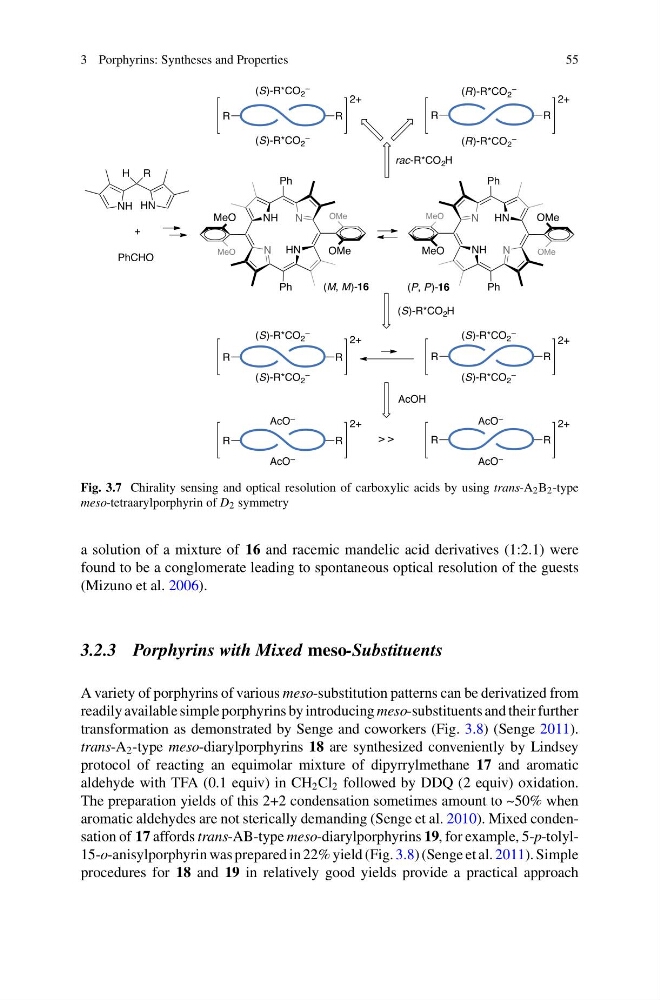
Fig. 3.7 Chirality sensing and optical resolution of carboxylic acids by using trans-A 2 B 2 -type
meso-tetraarylporphyrin of D 2 symmetry
a solution of a mixture of 16 and racemic mandelic acid derivatives (1:2.1) were
found to be a conglomerate leading to spontaneous optical resolution of the guests
(Mizuno et al. 2006).
3.2.3 Porphyrins with Mixed meso-Substituents
A variety of porphyrins of various meso-substitution patterns can be derivatized from
readily available simple porphyrins by introducing meso-substituents and their further
transformation as demonstrated by Senge and coworkers (Fig. 3.8) (Senge 2011).
trans-A 2 -type meso-diarylporphyrins 18 are synthesized conveniently by Lindsey
protocol of reacting an equimolar mixture of dipyrrylmethane 17 and aromatic
aldehyde with TFA (0.1 equiv) in CH 2 Cl 2 followed by DDQ (2 equiv) oxidation.
The preparation yields of this 2+2 condensation sometimes amount to ~50% when
aromatic aldehydes are not sterically demanding (Senge et al. 2010). Mixed condensation of 17 affords trans-AB-type meso-diarylporphyrins 19, for example, 5-p-tolyl15-o-anisylporphyrin was prepared in 22% yield (Fig. 3.8) (Senge et al. 2011). Simple
procedures for 18 and 19 in relatively good yields provide a practical approach
55
Fig. 3.7 Chirality sensing and optical resolution of carboxylic acids by using trans-A 2 B 2 -type
meso-tetraarylporphyrin of D 2 symmetry
a solution of a mixture of 16 and racemic mandelic acid derivatives (1:2.1) were
found to be a conglomerate leading to spontaneous optical resolution of the guests
(Mizuno et al. 2006).
3.2.3 Porphyrins with Mixed meso-Substituents
A variety of porphyrins of various meso-substitution patterns can be derivatized from
readily available simple porphyrins by introducing meso-substituents and their further
transformation as demonstrated by Senge and coworkers (Fig. 3.8) (Senge 2011).
trans-A 2 -type meso-diarylporphyrins 18 are synthesized conveniently by Lindsey
protocol of reacting an equimolar mixture of dipyrrylmethane 17 and aromatic
aldehyde with TFA (0.1 equiv) in CH 2 Cl 2 followed by DDQ (2 equiv) oxidation.
The preparation yields of this 2+2 condensation sometimes amount to ~50% when
aromatic aldehydes are not sterically demanding (Senge et al. 2010). Mixed condensation of 17 affords trans-AB-type meso-diarylporphyrins 19, for example, 5-p-tolyl15-o-anisylporphyrin was prepared in 22% yield (Fig. 3.8) (Senge et al. 2011). Simple
procedures for 18 and 19 in relatively good yields provide a practical approach