

418
Y. Kubo
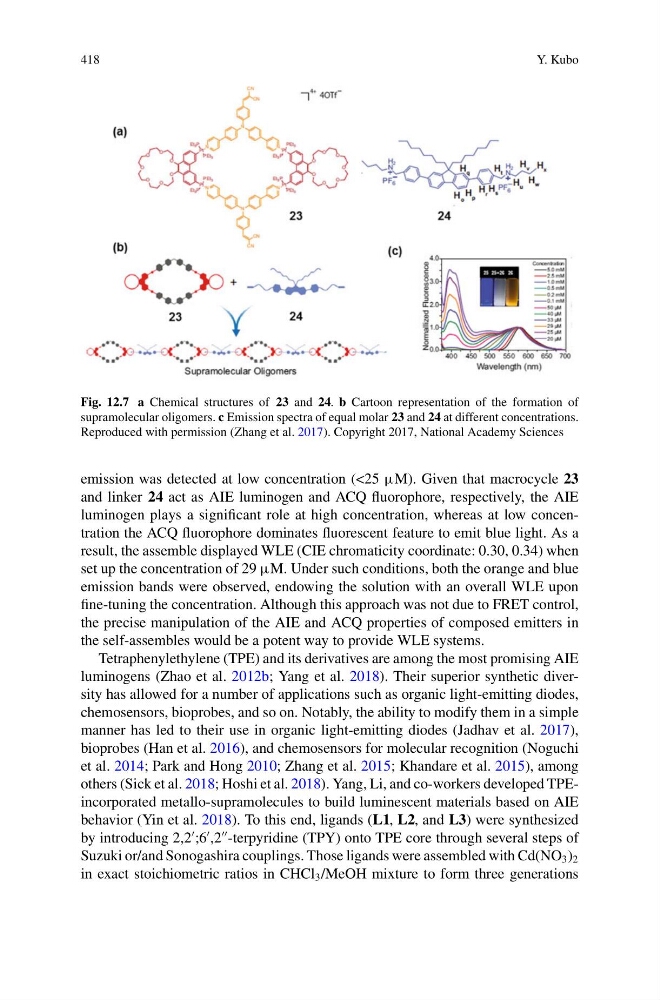
Fig. 12.7 a Chemical structures of 23 and 24. b Cartoon representation of the formation of
supramolecular oligomers. c Emission spectra of equal molar 23 and 24 at different concentrations.
Reproduced with permission (Zhang et al. 2017). Copyright 2017, National Academy Sciences
emission was detected at low concentration (<25 μM). Given that macrocycle 23
and linker 24 act as AIE luminogen and ACQ fluorophore, respectively, the AIE
luminogen plays a significant role at high concentration, whereas at low concentration the ACQ fluorophore dominates fluorescent feature to emit blue light. As a
result, the assemble displayed WLE (CIE chromaticity coordinate: 0.30, 0.34) when
set up the concentration of 29 μM. Under such conditions, both the orange and blue
emission bands were observed, endowing the solution with an overall WLE upon
fine-tuning the concentration. Although this approach was not due to FRET control,
the precise manipulation of the AIE and ACQ properties of composed emitters in
the self-assembles would be a potent way to provide WLE systems.
Tetraphenylethylene (TPE) and its derivatives are among the most promising AIE
luminogens (Zhao et al. 2012b; Yang et al. 2018). Their superior synthetic diversity has allowed for a number of applications such as organic light-emitting diodes,
chemosensors, bioprobes, and so on. Notably, the ability to modify them in a simple
manner has led to their use in organic light-emitting diodes (Jadhav et al. 2017),
bioprobes (Han et al. 2016), and chemosensors for molecular recognition (Noguchi
et al. 2014; Park and Hong 2010; Zhang et al. 2015; Khandare et al. 2015), among
others (Sick et al. 2018; Hoshi et al. 2018). Yang, Li, and co-workers developed TPEincorporated metallo-supramolecules to build luminescent materials based on AIE
behavior (Yin et al. 2018). To this end, ligands (L1, L2, and L3) were synthesized
by introducing 2,2
;6
,2
-terpyridine (TPY) onto TPE core through several steps of
Suzuki or/and Sonogashira couplings. Those ligands were assembled with Cd(NO 3 ) 2
in exact stoichiometric ratios in CHCl 3 /MeOH mixture to form three generations
Y. Kubo
Fig. 12.7 a Chemical structures of 23 and 24. b Cartoon representation of the formation of
supramolecular oligomers. c Emission spectra of equal molar 23 and 24 at different concentrations.
Reproduced with permission (Zhang et al. 2017). Copyright 2017, National Academy Sciences
emission was detected at low concentration (<25 μM). Given that macrocycle 23
and linker 24 act as AIE luminogen and ACQ fluorophore, respectively, the AIE
luminogen plays a significant role at high concentration, whereas at low concentration the ACQ fluorophore dominates fluorescent feature to emit blue light. As a
result, the assemble displayed WLE (CIE chromaticity coordinate: 0.30, 0.34) when
set up the concentration of 29 μM. Under such conditions, both the orange and blue
emission bands were observed, endowing the solution with an overall WLE upon
fine-tuning the concentration. Although this approach was not due to FRET control,
the precise manipulation of the AIE and ACQ properties of composed emitters in
the self-assembles would be a potent way to provide WLE systems.
Tetraphenylethylene (TPE) and its derivatives are among the most promising AIE
luminogens (Zhao et al. 2012b; Yang et al. 2018). Their superior synthetic diversity has allowed for a number of applications such as organic light-emitting diodes,
chemosensors, bioprobes, and so on. Notably, the ability to modify them in a simple
manner has led to their use in organic light-emitting diodes (Jadhav et al. 2017),
bioprobes (Han et al. 2016), and chemosensors for molecular recognition (Noguchi
et al. 2014; Park and Hong 2010; Zhang et al. 2015; Khandare et al. 2015), among
others (Sick et al. 2018; Hoshi et al. 2018). Yang, Li, and co-workers developed TPEincorporated metallo-supramolecules to build luminescent materials based on AIE
behavior (Yin et al. 2018). To this end, ligands (L1, L2, and L3) were synthesized
by introducing 2,2
;6
,2
-terpyridine (TPY) onto TPE core through several steps of
Suzuki or/and Sonogashira couplings. Those ligands were assembled with Cd(NO 3 ) 2
in exact stoichiometric ratios in CHCl 3 /MeOH mixture to form three generations