

392
Y. Niko and S. Watanabe
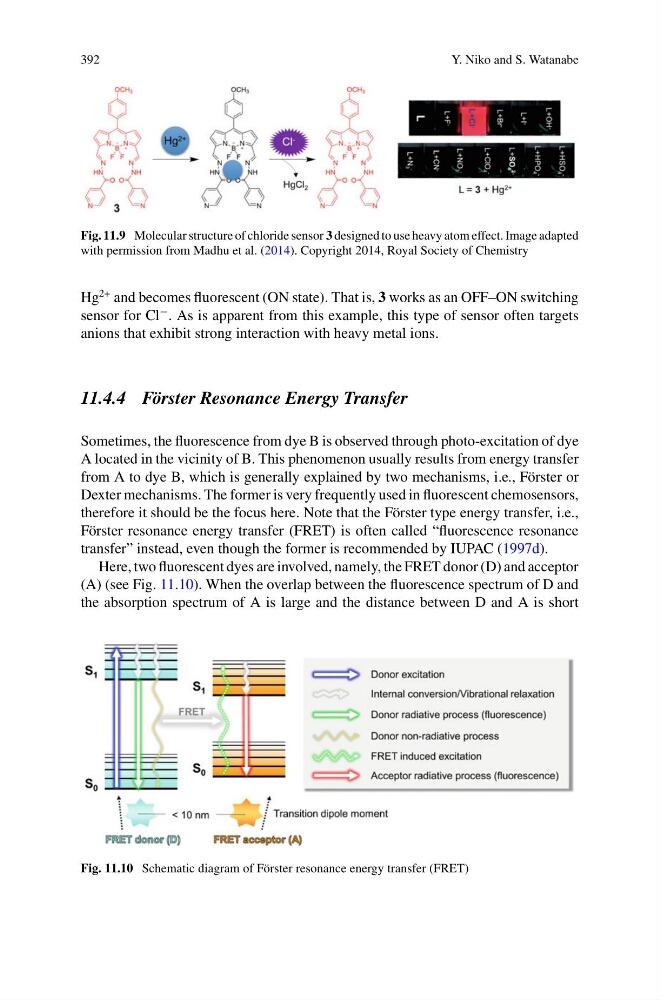
Fig. 11.9 Molecular structure of chloride sensor 3 designed to use heavy atom effect. Image adapted
with permission from Madhu et al. (2014). Copyright 2014, Royal Society of Chemistry
Hg
2+ and becomes fluorescent (ON state). That is, 3 works as an OFF–ON switching
sensor for Cl
− . As is apparent from this example, this type of sensor often targets
anions that exhibit strong interaction with heavy metal ions.
11.4.4 Förster Resonance Energy Transfer
Sometimes, the fluorescence from dye B is observed through photo-excitation of dye
A located in the vicinity of B. This phenomenon usually results from energy transfer
from A to dye B, which is generally explained by two mechanisms, i.e., Förster or
Dexter mechanisms. The former is very frequently used in fluorescent chemosensors,
therefore it should be the focus here. Note that the Förster type energy transfer, i.e.,
Förster resonance energy transfer (FRET) is often called “fluorescence resonance
transfer” instead, even though the former is recommended by IUPAC (1997d).
Here, two fluorescent dyes are involved, namely, the FRET donor (D) and acceptor
(A) (see Fig. 11.10). When the overlap between the fluorescence spectrum of D and
the absorption spectrum of A is large and the distance between D and A is short
Fig. 11.10 Schematic diagram of Förster resonance energy transfer (FRET)
Y. Niko and S. Watanabe
Fig. 11.9 Molecular structure of chloride sensor 3 designed to use heavy atom effect. Image adapted
with permission from Madhu et al. (2014). Copyright 2014, Royal Society of Chemistry
Hg
2+ and becomes fluorescent (ON state). That is, 3 works as an OFF–ON switching
sensor for Cl
− . As is apparent from this example, this type of sensor often targets
anions that exhibit strong interaction with heavy metal ions.
11.4.4 Förster Resonance Energy Transfer
Sometimes, the fluorescence from dye B is observed through photo-excitation of dye
A located in the vicinity of B. This phenomenon usually results from energy transfer
from A to dye B, which is generally explained by two mechanisms, i.e., Förster or
Dexter mechanisms. The former is very frequently used in fluorescent chemosensors,
therefore it should be the focus here. Note that the Förster type energy transfer, i.e.,
Förster resonance energy transfer (FRET) is often called “fluorescence resonance
transfer” instead, even though the former is recommended by IUPAC (1997d).
Here, two fluorescent dyes are involved, namely, the FRET donor (D) and acceptor
(A) (see Fig. 11.10). When the overlap between the fluorescence spectrum of D and
the absorption spectrum of A is large and the distance between D and A is short
Fig. 11.10 Schematic diagram of Förster resonance energy transfer (FRET)