

28
T. Maeda
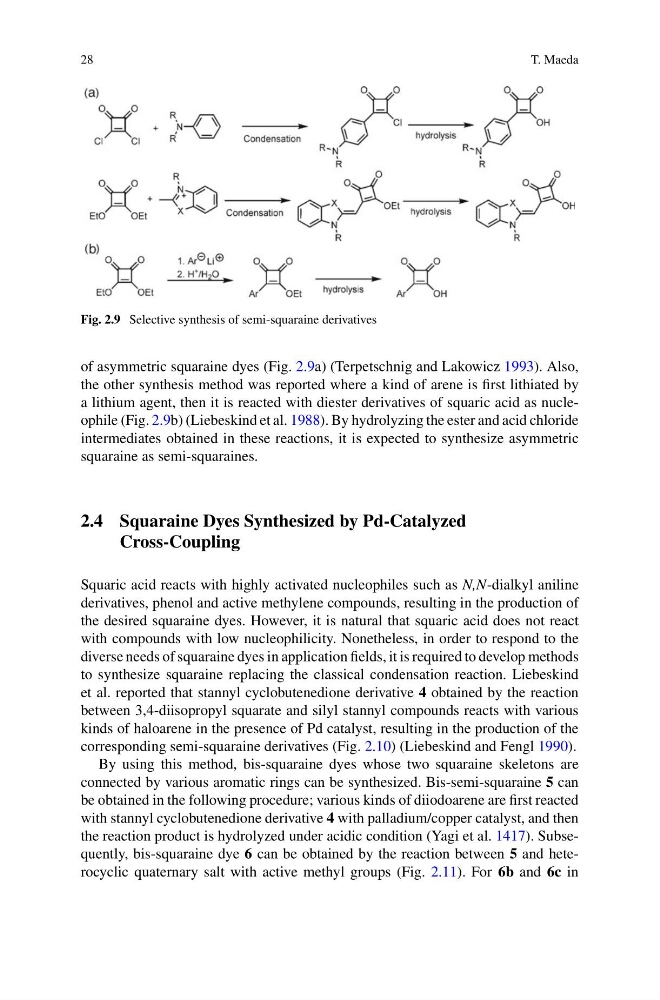
Fig. 2.9 Selective synthesis of semi-squaraine derivatives
of asymmetric squaraine dyes (Fig. 2.9a) (Terpetschnig and Lakowicz 1993). Also,
the other synthesis method was reported where a kind of arene is first lithiated by
a lithium agent, then it is reacted with diester derivatives of squaric acid as nucleophile (Fig. 2.9b) (Liebeskind et al. 1988). By hydrolyzing the ester and acid chloride
intermediates obtained in these reactions, it is expected to synthesize asymmetric
squaraine as semi-squaraines.
2.4 Squaraine Dyes Synthesized by Pd-Catalyzed
Cross-Coupling
Squaric acid reacts with highly activated nucleophiles such as N,N-dialkyl aniline
derivatives, phenol and active methylene compounds, resulting in the production of
the desired squaraine dyes. However, it is natural that squaric acid does not react
with compounds with low nucleophilicity. Nonetheless, in order to respond to the
diverse needs of squaraine dyes in application fields, it is required to develop methods
to synthesize squaraine replacing the classical condensation reaction. Liebeskind
et al. reported that stannyl cyclobutenedione derivative 4 obtained by the reaction
between 3,4-diisopropyl squarate and silyl stannyl compounds reacts with various
kinds of haloarene in the presence of Pd catalyst, resulting in the production of the
corresponding semi-squaraine derivatives (Fig. 2.10) (Liebeskind and Fengl 1990).
By using this method, bis-squaraine dyes whose two squaraine skeletons are
connected by various aromatic rings can be synthesized. Bis-semi-squaraine 5 can
be obtained in the following procedure; various kinds of diiodoarene are first reacted
with stannyl cyclobutenedione derivative 4 with palladium/copper catalyst, and then
the reaction product is hydrolyzed under acidic condition (Yagi et al. 1417). Subsequently, bis-squaraine dye 6 can be obtained by the reaction between 5 and heterocyclic quaternary salt with active methyl groups (Fig. 2.11). For 6b and 6c in
T. Maeda
Fig. 2.9 Selective synthesis of semi-squaraine derivatives
of asymmetric squaraine dyes (Fig. 2.9a) (Terpetschnig and Lakowicz 1993). Also,
the other synthesis method was reported where a kind of arene is first lithiated by
a lithium agent, then it is reacted with diester derivatives of squaric acid as nucleophile (Fig. 2.9b) (Liebeskind et al. 1988). By hydrolyzing the ester and acid chloride
intermediates obtained in these reactions, it is expected to synthesize asymmetric
squaraine as semi-squaraines.
2.4 Squaraine Dyes Synthesized by Pd-Catalyzed
Cross-Coupling
Squaric acid reacts with highly activated nucleophiles such as N,N-dialkyl aniline
derivatives, phenol and active methylene compounds, resulting in the production of
the desired squaraine dyes. However, it is natural that squaric acid does not react
with compounds with low nucleophilicity. Nonetheless, in order to respond to the
diverse needs of squaraine dyes in application fields, it is required to develop methods
to synthesize squaraine replacing the classical condensation reaction. Liebeskind
et al. reported that stannyl cyclobutenedione derivative 4 obtained by the reaction
between 3,4-diisopropyl squarate and silyl stannyl compounds reacts with various
kinds of haloarene in the presence of Pd catalyst, resulting in the production of the
corresponding semi-squaraine derivatives (Fig. 2.10) (Liebeskind and Fengl 1990).
By using this method, bis-squaraine dyes whose two squaraine skeletons are
connected by various aromatic rings can be synthesized. Bis-semi-squaraine 5 can
be obtained in the following procedure; various kinds of diiodoarene are first reacted
with stannyl cyclobutenedione derivative 4 with palladium/copper catalyst, and then
the reaction product is hydrolyzed under acidic condition (Yagi et al. 1417). Subsequently, bis-squaraine dye 6 can be obtained by the reaction between 5 and heterocyclic quaternary salt with active methyl groups (Fig. 2.11). For 6b and 6c in