

9 Molecular Designs for Solid-State Luminescent Properties …
331
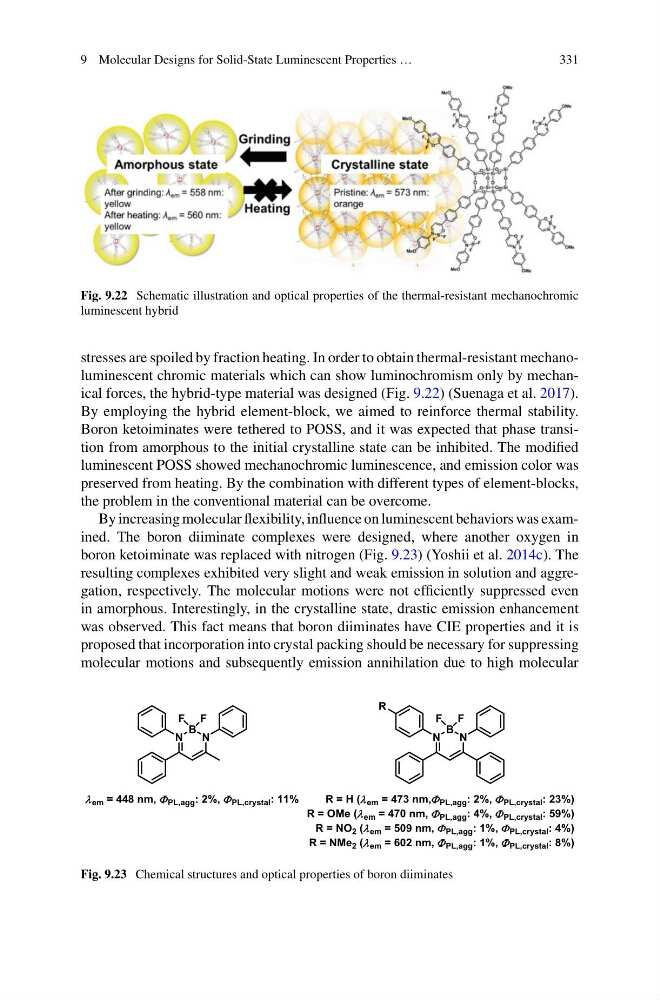
Fig. 9.22 Schematic illustration and optical properties of the thermal-resistant mechanochromic
luminescent hybrid
stresses are spoiled by fraction heating. In order to obtain thermal-resistant mechanoluminescent chromic materials which can show luminochromism only by mechanical forces, the hybrid-type material was designed (Fig. 9.22) (Suenaga et al. 2017).
By employing the hybrid element-block, we aimed to reinforce thermal stability.
Boron ketoiminates were tethered to POSS, and it was expected that phase transition from amorphous to the initial crystalline state can be inhibited. The modified
luminescent POSS showed mechanochromic luminescence, and emission color was
preserved from heating. By the combination with different types of element-blocks,
the problem in the conventional material can be overcome.
By increasing molecular flexibility, influence on luminescent behaviors was examined. The boron diiminate complexes were designed, where another oxygen in
boron ketoiminate was replaced with nitrogen (Fig. 9.23) (Yoshii et al. 2014c). The
resulting complexes exhibited very slight and weak emission in solution and aggregation, respectively. The molecular motions were not efficiently suppressed even
in amorphous. Interestingly, in the crystalline state, drastic emission enhancement
was observed. This fact means that boron diiminates have CIE properties and it is
proposed that incorporation into crystal packing should be necessary for suppressing
molecular motions and subsequently emission annihilation due to high molecular
N
N
B
F F
R = H ( em = 473 nm, PL,agg : 2%, PL,crystal : 23%)
R = OMe ( em = 470 nm, PL,agg : 4%, PL,crystal : 59%)
R = NO 2 ( em = 509 nm, PL,agg : 1%, PL,crystal : 4%)
R = NMe 2 ( em = 602 nm, PL,agg : 1%, PL,crystal : 8%)
R
N
N
B
F F
em = 448 nm, PL,agg : 2%, PL,crystal : 11%
Fig. 9.23 Chemical structures and optical properties of boron diiminates
331
Fig. 9.22 Schematic illustration and optical properties of the thermal-resistant mechanochromic
luminescent hybrid
stresses are spoiled by fraction heating. In order to obtain thermal-resistant mechanoluminescent chromic materials which can show luminochromism only by mechanical forces, the hybrid-type material was designed (Fig. 9.22) (Suenaga et al. 2017).
By employing the hybrid element-block, we aimed to reinforce thermal stability.
Boron ketoiminates were tethered to POSS, and it was expected that phase transition from amorphous to the initial crystalline state can be inhibited. The modified
luminescent POSS showed mechanochromic luminescence, and emission color was
preserved from heating. By the combination with different types of element-blocks,
the problem in the conventional material can be overcome.
By increasing molecular flexibility, influence on luminescent behaviors was examined. The boron diiminate complexes were designed, where another oxygen in
boron ketoiminate was replaced with nitrogen (Fig. 9.23) (Yoshii et al. 2014c). The
resulting complexes exhibited very slight and weak emission in solution and aggregation, respectively. The molecular motions were not efficiently suppressed even
in amorphous. Interestingly, in the crystalline state, drastic emission enhancement
was observed. This fact means that boron diiminates have CIE properties and it is
proposed that incorporation into crystal packing should be necessary for suppressing
molecular motions and subsequently emission annihilation due to high molecular
N
N
B
F F
R = H ( em = 473 nm, PL,agg : 2%, PL,crystal : 23%)
R = OMe ( em = 470 nm, PL,agg : 4%, PL,crystal : 59%)
R = NO 2 ( em = 509 nm, PL,agg : 1%, PL,crystal : 4%)
R = NMe 2 ( em = 602 nm, PL,agg : 1%, PL,crystal : 8%)
R
N
N
B
F F
em = 448 nm, PL,agg : 2%, PL,crystal : 11%
Fig. 9.23 Chemical structures and optical properties of boron diiminates