

290
T. Ishi-i
O
Me 2 N
13
F ca. 15 GM at 870 nm,
em 609 nm, F 0.12 (ethanol)
O
Me 2 N
14
F ca. 4 GM at 940 nm,
em 679 nm, F 0.05 (ethanol)
CN
CN
O
O
Me 2 N
NH
CN
O
Me 2 N
10
CN
F
-
180 GM at 800 nm, em 585 nm, F 0.63 (EtOH)
Nonfluorescence
Strong Fluorescence
SiMe 2 tBu
CN
O
Me 2 N
12
O
O
N
F 50 GM at 840 nm (dioxane),
em 626 nm, F 0.07 (PBS, pH 7.4)
PPh 3
+ Br
-
H
32 GM at 750 nm,
em 542 nm, F 0.12 (buffer, pH 4.0)
O
HO
15a
O
O
N
PPh 3
+
Br
-
H
O
- O
15b
O
O
N
PPh 3
+
Br
-
H
- H
+
pK a = 7.95
62 GM at 910 nm,
em 604 nm, F 0.084 (buffer, pH 10.0)
O
N
16
O
N
+
F 160 GM at 840 nm (DMSO),
em 691 nm, F 0.03 (EtOH)
Me 2 N
acedane
O
11
δ
λ
Φ
Φ
Φ
Φ
Φ
Φ
Φ
Φ
Φ
Φ
Φ
δ
δ
δ
δ
δ
δ
λ
λ
λ
λ
λ
λ
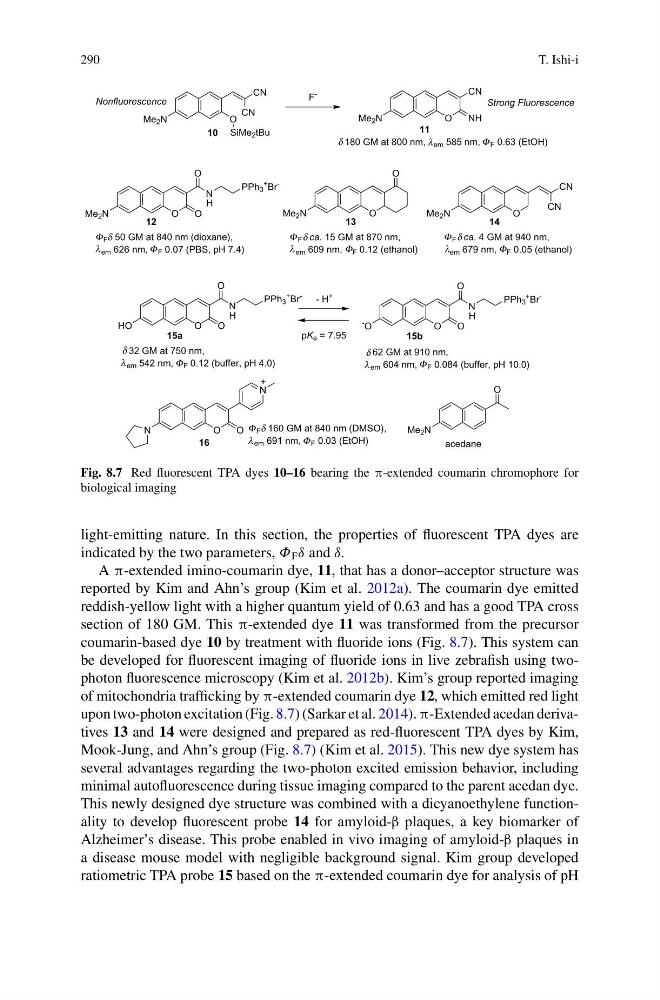
Fig. 8.7 Red fluorescent TPA dyes 10–16 bearing the π-extended coumarin chromophore for
biological imaging
light-emitting nature. In this section, the properties of fluorescent TPA dyes are
indicated by the two parameters, Φ F δ and δ.
A π-extended imino-coumarin dye, 11, that has a donor–acceptor structure was
reported by Kim and Ahn’s group (Kim et al. 2012a). The coumarin dye emitted
reddish-yellow light with a higher quantum yield of 0.63 and has a good TPA cross
section of 180 GM. This π-extended dye 11 was transformed from the precursor
coumarin-based dye 10 by treatment with fluoride ions (Fig. 8.7). This system can
be developed for fluorescent imaging of fluoride ions in live zebrafish using twophoton fluorescence microscopy (Kim et al. 2012b). Kim’s group reported imaging
of mitochondria trafficking by π-extended coumarin dye 12, which emitted red light
upon two-photon excitation (Fig. 8.7) (Sarkar et al. 2014). π-Extended acedan derivatives 13 and 14 were designed and prepared as red-fluorescent TPA dyes by Kim,
Mook-Jung, and Ahn’s group (Fig. 8.7) (Kim et al. 2015). This new dye system has
several advantages regarding the two-photon excited emission behavior, including
minimal autofluorescence during tissue imaging compared to the parent acedan dye.
This newly designed dye structure was combined with a dicyanoethylene functionality to develop fluorescent probe 14 for amyloid-β plaques, a key biomarker of
Alzheimer’s disease. This probe enabled in vivo imaging of amyloid-β plaques in
a disease mouse model with negligible background signal. Kim group developed
ratiometric TPA probe 15 based on the π-extended coumarin dye for analysis of pH
T. Ishi-i
O
Me 2 N
13
F ca. 15 GM at 870 nm,
em 609 nm, F 0.12 (ethanol)
O
Me 2 N
14
F ca. 4 GM at 940 nm,
em 679 nm, F 0.05 (ethanol)
CN
CN
O
O
Me 2 N
NH
CN
O
Me 2 N
10
CN
F
-
180 GM at 800 nm, em 585 nm, F 0.63 (EtOH)
Nonfluorescence
Strong Fluorescence
SiMe 2 tBu
CN
O
Me 2 N
12
O
O
N
F 50 GM at 840 nm (dioxane),
em 626 nm, F 0.07 (PBS, pH 7.4)
PPh 3
+ Br
-
H
32 GM at 750 nm,
em 542 nm, F 0.12 (buffer, pH 4.0)
O
HO
15a
O
O
N
PPh 3
+
Br
-
H
O
- O
15b
O
O
N
PPh 3
+
Br
-
H
- H
+
pK a = 7.95
62 GM at 910 nm,
em 604 nm, F 0.084 (buffer, pH 10.0)
O
N
16
O
N
+
F 160 GM at 840 nm (DMSO),
em 691 nm, F 0.03 (EtOH)
Me 2 N
acedane
O
11
δ
λ
Φ
Φ
Φ
Φ
Φ
Φ
Φ
Φ
Φ
Φ
Φ
δ
δ
δ
δ
δ
δ
λ
λ
λ
λ
λ
λ
Fig. 8.7 Red fluorescent TPA dyes 10–16 bearing the π-extended coumarin chromophore for
biological imaging
light-emitting nature. In this section, the properties of fluorescent TPA dyes are
indicated by the two parameters, Φ F δ and δ.
A π-extended imino-coumarin dye, 11, that has a donor–acceptor structure was
reported by Kim and Ahn’s group (Kim et al. 2012a). The coumarin dye emitted
reddish-yellow light with a higher quantum yield of 0.63 and has a good TPA cross
section of 180 GM. This π-extended dye 11 was transformed from the precursor
coumarin-based dye 10 by treatment with fluoride ions (Fig. 8.7). This system can
be developed for fluorescent imaging of fluoride ions in live zebrafish using twophoton fluorescence microscopy (Kim et al. 2012b). Kim’s group reported imaging
of mitochondria trafficking by π-extended coumarin dye 12, which emitted red light
upon two-photon excitation (Fig. 8.7) (Sarkar et al. 2014). π-Extended acedan derivatives 13 and 14 were designed and prepared as red-fluorescent TPA dyes by Kim,
Mook-Jung, and Ahn’s group (Fig. 8.7) (Kim et al. 2015). This new dye system has
several advantages regarding the two-photon excited emission behavior, including
minimal autofluorescence during tissue imaging compared to the parent acedan dye.
This newly designed dye structure was combined with a dicyanoethylene functionality to develop fluorescent probe 14 for amyloid-β plaques, a key biomarker of
Alzheimer’s disease. This probe enabled in vivo imaging of amyloid-β plaques in
a disease mouse model with negligible background signal. Kim group developed
ratiometric TPA probe 15 based on the π-extended coumarin dye for analysis of pH