

5 BODIPY Dyes and Their Analogues
161
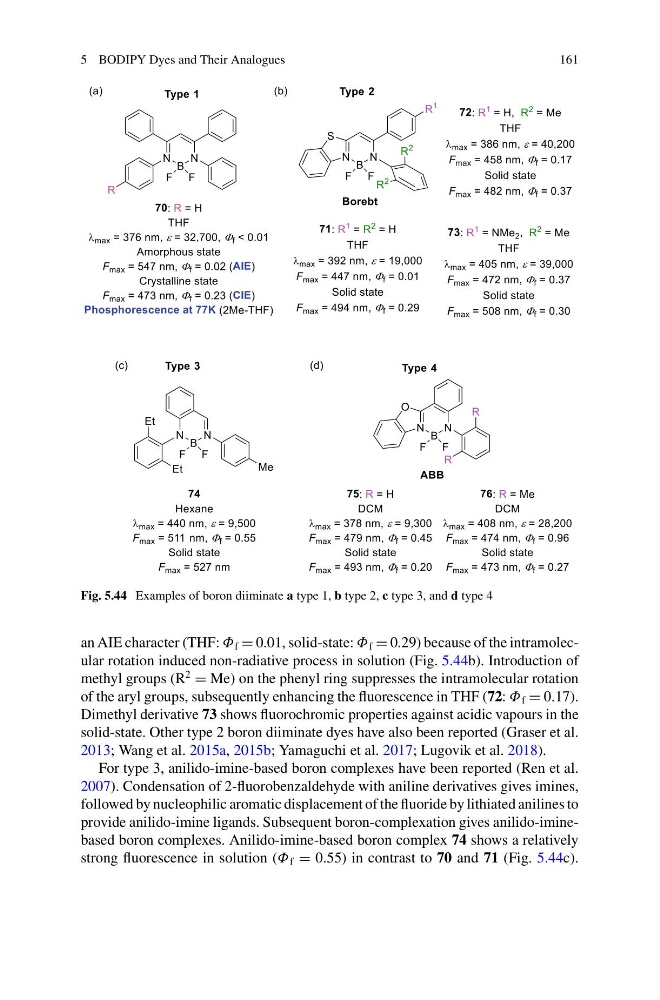
Fig. 5.44 Examples of boron diiminate a type 1, b type 2, c type 3, and d type 4
an AIE character (THF: Φ f = 0.01, solid-state: Φ f = 0.29) because of the intramolecular rotation induced non-radiative process in solution (Fig. 5.44b). Introduction of
methyl groups (R
2
= Me) on the phenyl ring suppresses the intramolecular rotation
of the aryl groups, subsequently enhancing the fluorescence in THF (72: Φ f = 0.17).
Dimethyl derivative 73 shows fluorochromic properties against acidic vapours in the
solid-state. Other type 2 boron diiminate dyes have also been reported (Graser et al.
2013; Wang et al. 2015a, 2015b; Yamaguchi et al. 2017; Lugovik et al. 2018).
For type 3, anilido-imine-based boron complexes have been reported (Ren et al.
2007). Condensation of 2-fluorobenzaldehyde with aniline derivatives gives imines,
followed by nucleophilic aromatic displacement of the fluoride by lithiated anilines to
provide anilido-imine ligands. Subsequent boron-complexation gives anilido-iminebased boron complexes. Anilido-imine-based boron complex 74 shows a relatively
strong fluorescence in solution (Φ f = 0.55) in contrast to 70 and 71 (Fig. 5.44c).
161
Fig. 5.44 Examples of boron diiminate a type 1, b type 2, c type 3, and d type 4
an AIE character (THF: Φ f = 0.01, solid-state: Φ f = 0.29) because of the intramolecular rotation induced non-radiative process in solution (Fig. 5.44b). Introduction of
methyl groups (R
2
= Me) on the phenyl ring suppresses the intramolecular rotation
of the aryl groups, subsequently enhancing the fluorescence in THF (72: Φ f = 0.17).
Dimethyl derivative 73 shows fluorochromic properties against acidic vapours in the
solid-state. Other type 2 boron diiminate dyes have also been reported (Graser et al.
2013; Wang et al. 2015a, 2015b; Yamaguchi et al. 2017; Lugovik et al. 2018).
For type 3, anilido-imine-based boron complexes have been reported (Ren et al.
2007). Condensation of 2-fluorobenzaldehyde with aniline derivatives gives imines,
followed by nucleophilic aromatic displacement of the fluoride by lithiated anilines to
provide anilido-imine ligands. Subsequent boron-complexation gives anilido-iminebased boron complexes. Anilido-imine-based boron complex 74 shows a relatively
strong fluorescence in solution (Φ f = 0.55) in contrast to 70 and 71 (Fig. 5.44c).