

5 BODIPY Dyes and Their Analogues
159
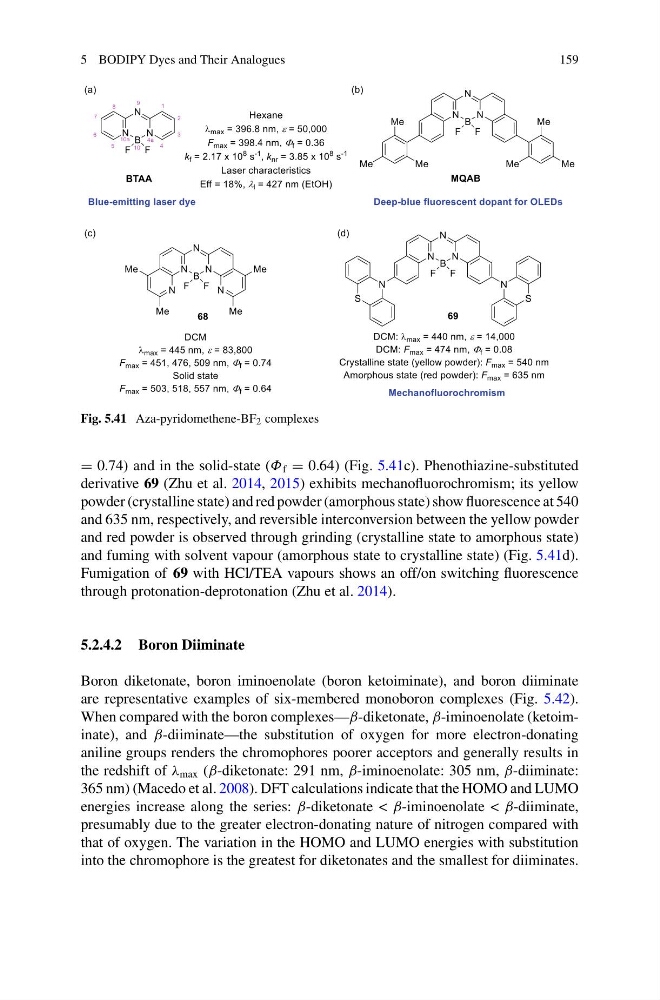
Fig. 5.41 Aza-pyridomethene-BF 2 complexes
= 0.74) and in the solid-state (Φ f = 0.64) (Fig. 5.41c). Phenothiazine-substituted
derivative 69 (Zhu et al. 2014, 2015) exhibits mechanofluorochromism; its yellow
powder (crystalline state) and red powder (amorphous state) show fluorescence at 540
and 635 nm, respectively, and reversible interconversion between the yellow powder
and red powder is observed through grinding (crystalline state to amorphous state)
and fuming with solvent vapour (amorphous state to crystalline state) (Fig. 5.41d).
Fumigation of 69 with HCl/TEA vapours shows an off/on switching fluorescence
through protonation-deprotonation (Zhu et al. 2014).
5.2.4.2 Boron Diiminate
Boron diketonate, boron iminoenolate (boron ketoiminate), and boron diiminate
are representative examples of six-membered monoboron complexes (Fig. 5.42).
When compared with the boron complexes—β-diketonate, β-iminoenolate (ketoiminate), and β-diiminate—the substitution of oxygen for more electron-donating
aniline groups renders the chromophores poorer acceptors and generally results in
the redshift of λ max (β-diketonate: 291 nm, β-iminoenolate: 305 nm, β-diiminate:
365 nm) (Macedo et al. 2008). DFT calculations indicate that the HOMO and LUMO
energies increase along the series: β-diketonate < β-iminoenolate < β-diiminate,
presumably due to the greater electron-donating nature of nitrogen compared with
that of oxygen. The variation in the HOMO and LUMO energies with substitution
into the chromophore is the greatest for diketonates and the smallest for diiminates.
159
Fig. 5.41 Aza-pyridomethene-BF 2 complexes
= 0.74) and in the solid-state (Φ f = 0.64) (Fig. 5.41c). Phenothiazine-substituted
derivative 69 (Zhu et al. 2014, 2015) exhibits mechanofluorochromism; its yellow
powder (crystalline state) and red powder (amorphous state) show fluorescence at 540
and 635 nm, respectively, and reversible interconversion between the yellow powder
and red powder is observed through grinding (crystalline state to amorphous state)
and fuming with solvent vapour (amorphous state to crystalline state) (Fig. 5.41d).
Fumigation of 69 with HCl/TEA vapours shows an off/on switching fluorescence
through protonation-deprotonation (Zhu et al. 2014).
5.2.4.2 Boron Diiminate
Boron diketonate, boron iminoenolate (boron ketoiminate), and boron diiminate
are representative examples of six-membered monoboron complexes (Fig. 5.42).
When compared with the boron complexes—β-diketonate, β-iminoenolate (ketoiminate), and β-diiminate—the substitution of oxygen for more electron-donating
aniline groups renders the chromophores poorer acceptors and generally results in
the redshift of λ max (β-diketonate: 291 nm, β-iminoenolate: 305 nm, β-diiminate:
365 nm) (Macedo et al. 2008). DFT calculations indicate that the HOMO and LUMO
energies increase along the series: β-diketonate < β-iminoenolate < β-diiminate,
presumably due to the greater electron-donating nature of nitrogen compared with
that of oxygen. The variation in the HOMO and LUMO energies with substitution
into the chromophore is the greatest for diketonates and the smallest for diiminates.