

4.6 QUANTUM MECHANICAL TUNNELING
4.6.1 Implications of finite energy barriers
A key feature of the particle in box models described in Section 4.3 is the
presence of infinite potential barriers, which serve to preclude the presence
of the particle outside of the region of interest. If the potentials barriers were
not infinite, the solution to the Schrödinger equation tells us that the particle
has a finite probability of residing beyond the line region, a phenomenon
known as quantum mechanical tunneling. This happens even if the particle does not have enough energy to classically cross the barrier. However,
the probability density in the regions beyond the line decays very rapidly.
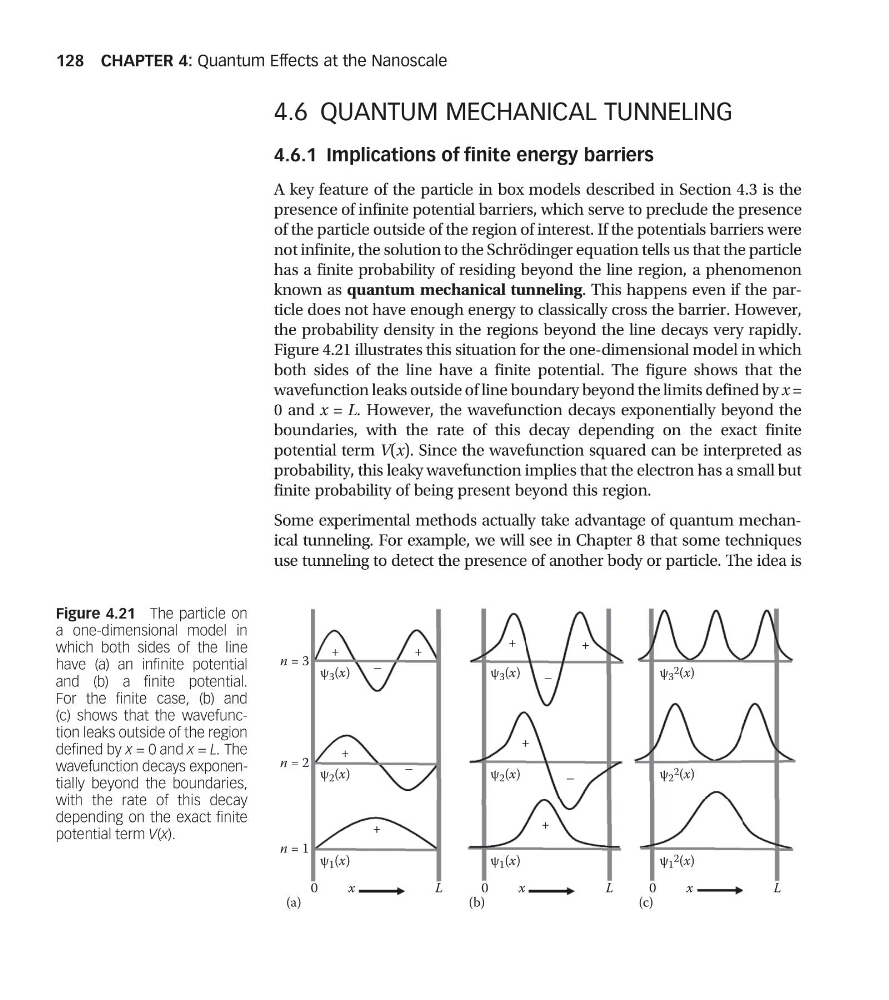
Figure 4.21 illustrates this situation for the one-dimensional model in which
both sides of the line have a finite potential. The figure shows that the
wavefunction leaks outside of line boundary beyond the limits defined by x =
0 and x = L. However, the wavefunction decays exponentially beyond the
boundaries, with the rate of this decay depending on the exact finite
potential term V(x). Since the wavefunction squared can be interpreted as
probability, this leaky wavefunction implies that the electron has a small but
finite probability of being present beyond this region.
Some experimental methods actually take advantage of quantum mechanical tunneling. For example, we will see in Chapter 8 that some techniques
use tunneling to detect the presence of another body or particle. The idea is
n = 3
ψ 3 (x)
ψ 2 (x)
ψ 1 (x)
ψ 3 (x)
ψ 2 (x)
ψ 1 (x)
ψ 3
2 (x)
ψ 2
2 (x)
ψ 1
2 (x)
+
+
+
+
+
+
+
+
–
–
–
–
n = 2
n = 1
0
(a)
(b)
(c)
L
x
0
L
x
0
L
x
Figure 4.21 The particle on
a one-dimensional model in
which both sides of the line
have (a) an infinite potential
and (b) a finite potential.
For the finite case, (b) and
(c) shows that the wavefunction leaks outside of the region
defined by x = 0 and x = L. The
wavefunction decays exponentially beyond the boundaries,
with the rate of this decay
depending on the exact finite
potential term V(x).
CHAPTER 4: Quantum Effects at the Nanoscale
128
4.6.1 Implications of finite energy barriers
A key feature of the particle in box models described in Section 4.3 is the
presence of infinite potential barriers, which serve to preclude the presence
of the particle outside of the region of interest. If the potentials barriers were
not infinite, the solution to the Schrödinger equation tells us that the particle
has a finite probability of residing beyond the line region, a phenomenon
known as quantum mechanical tunneling. This happens even if the particle does not have enough energy to classically cross the barrier. However,
the probability density in the regions beyond the line decays very rapidly.
Figure 4.21 illustrates this situation for the one-dimensional model in which
both sides of the line have a finite potential. The figure shows that the
wavefunction leaks outside of line boundary beyond the limits defined by x =
0 and x = L. However, the wavefunction decays exponentially beyond the
boundaries, with the rate of this decay depending on the exact finite
potential term V(x). Since the wavefunction squared can be interpreted as
probability, this leaky wavefunction implies that the electron has a small but
finite probability of being present beyond this region.
Some experimental methods actually take advantage of quantum mechanical tunneling. For example, we will see in Chapter 8 that some techniques
use tunneling to detect the presence of another body or particle. The idea is
n = 3
ψ 3 (x)
ψ 2 (x)
ψ 1 (x)
ψ 3 (x)
ψ 2 (x)
ψ 1 (x)
ψ 3
2 (x)
ψ 2
2 (x)
ψ 1
2 (x)
+
+
+
+
+
+
+
+
–
–
–
–
n = 2
n = 1
0
(a)
(b)
(c)
L
x
0
L
x
0
L
x
Figure 4.21 The particle on
a one-dimensional model in
which both sides of the line
have (a) an infinite potential
and (b) a finite potential.
For the finite case, (b) and
(c) shows that the wavefunction leaks outside of the region
defined by x = 0 and x = L. The
wavefunction decays exponentially beyond the boundaries,
with the rate of this decay
depending on the exact finite
potential term V(x).
CHAPTER 4: Quantum Effects at the Nanoscale
128