

system, let’s examine the ground state of the hydrogen atom. You know
from introductory courses in chemistry and physics that the electron
normally resides in the 1s orbital. It can be excited to the 2s orbital where
it possesses more energy. In fact, the energy of an electron in hydrogen is
quantized and depends on a quantum number n (Equation 4.6):
E = −
R H
n
2
(4.6)
Equation 4.6 provides the energy levels available to an electron in the
hydrogen atom. The negative sign in the above equation is used to
describe an attractive potential energy interaction between the proton
and the electron. A smaller negative value of energy corresponds to the
electron having more energy and less attraction for the central proton. R H
is a constant known as the Rydberg energy (about 2.180 × 10
−18 J) and the
quantum number n takes on values 1, 2, 3, 4, and so on, depending on
which energy level the electron is in.
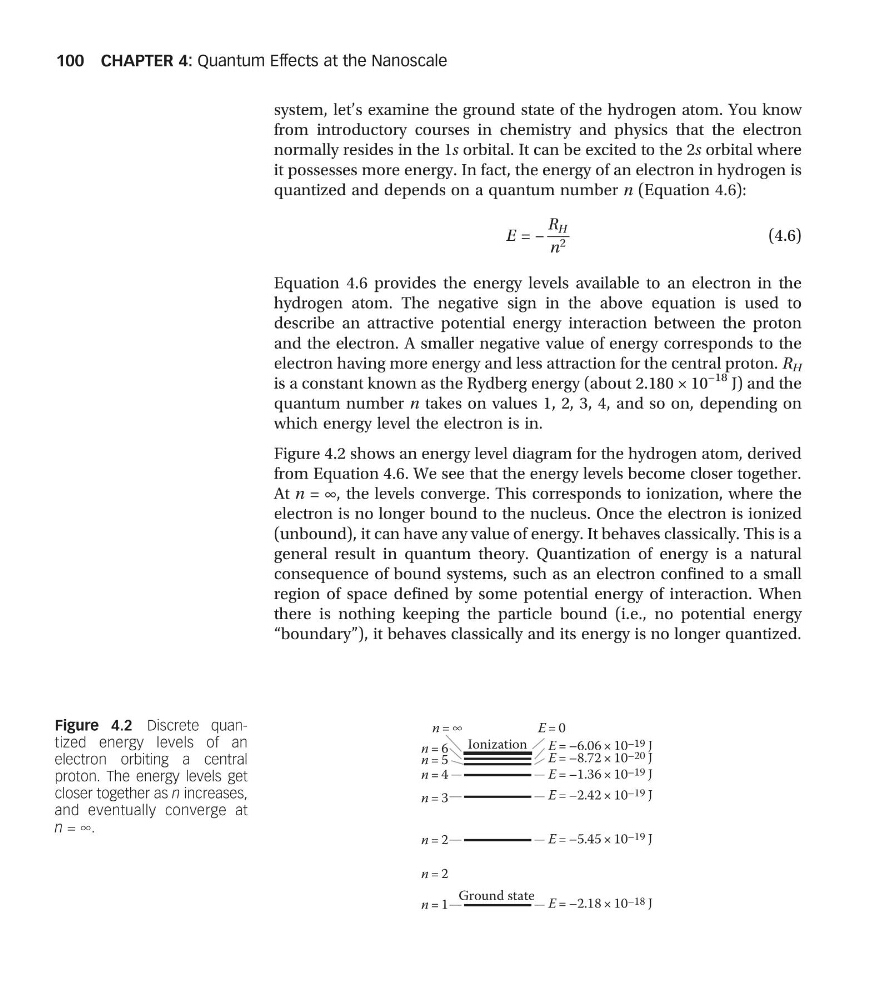
Figure 4.2 shows an energy level diagram for the hydrogen atom, derived
from Equation 4.6. We see that the energy levels become closer together.
At n = ∞, the levels converge. This corresponds to ionization, where the
electron is no longer bound to the nucleus. Once the electron is ionized
(unbound), it can have any value of energy. It behaves classically. This is a
general result in quantum theory. Quantization of energy is a natural
consequence of bound systems, such as an electron confined to a small
region of space defined by some potential energy of interaction. When
there is nothing keeping the particle bound (i.e., no potential energy
“boundary”), it behaves classically and its energy is no longer quantized.
E = –6.06 × 10 –19 J
n = 6
E = –8.72 × 10 –20 J
E = –1.36 × 10 –19 J
E = –2.42 × 10 –19 J
E = –5.45 × 10 –19 J
E = –2.18 × 10 –18 J
n = 5
n = 4
n = 3
n = 2
n = 2
n = 1
n = ∞
E = 0
Ionization
Ground state
Figure 4.2 Discrete quantized energy levels of an
electron orbiting a central
proton. The energy levels get
closer together as n increases,
and eventually converge at
n = ∞.
CHAPTER 4: Quantum Effects at the Nanoscale
100
from introductory courses in chemistry and physics that the electron
normally resides in the 1s orbital. It can be excited to the 2s orbital where
it possesses more energy. In fact, the energy of an electron in hydrogen is
quantized and depends on a quantum number n (Equation 4.6):
E = −
R H
n
2
(4.6)
Equation 4.6 provides the energy levels available to an electron in the
hydrogen atom. The negative sign in the above equation is used to
describe an attractive potential energy interaction between the proton
and the electron. A smaller negative value of energy corresponds to the
electron having more energy and less attraction for the central proton. R H
is a constant known as the Rydberg energy (about 2.180 × 10
−18 J) and the
quantum number n takes on values 1, 2, 3, 4, and so on, depending on
which energy level the electron is in.
Figure 4.2 shows an energy level diagram for the hydrogen atom, derived
from Equation 4.6. We see that the energy levels become closer together.
At n = ∞, the levels converge. This corresponds to ionization, where the
electron is no longer bound to the nucleus. Once the electron is ionized
(unbound), it can have any value of energy. It behaves classically. This is a
general result in quantum theory. Quantization of energy is a natural
consequence of bound systems, such as an electron confined to a small
region of space defined by some potential energy of interaction. When
there is nothing keeping the particle bound (i.e., no potential energy
“boundary”), it behaves classically and its energy is no longer quantized.
E = –6.06 × 10 –19 J
n = 6
E = –8.72 × 10 –20 J
E = –1.36 × 10 –19 J
E = –2.42 × 10 –19 J
E = –5.45 × 10 –19 J
E = –2.18 × 10 –18 J
n = 5
n = 4
n = 3
n = 2
n = 2
n = 1
n = ∞
E = 0
Ionization
Ground state
Figure 4.2 Discrete quantized energy levels of an
electron orbiting a central
proton. The energy levels get
closer together as n increases,
and eventually converge at
n = ∞.
CHAPTER 4: Quantum Effects at the Nanoscale
100