

226 ◾ Fundamental Food Microbiology
Likewise, intravenous injection of piscicolin also reduced Lis. monocytogenes counts but prolonged
protection was not observed. Therefore, before bacteriocins can be used, additional research showing their effectiveness and safety has to be conducted thoroughly. Finally, approval by regulatory
agencies will be necessary before they can be used as food biopreservatives and therapeutic agents.
encapsulation and Delivery of Bacteriocin 19–23
Bacteriocins, in general, are highly susceptible to food environments, including microbial enzymes,
pH shift (to neutral or alkaline pH), salts, and other food components. Therefore, it is essential to
develop technologies to preserve the activity of bacteriocins in food for at least a certain duration
before the expiration of the shelf life of a product. Scientists have employed numerous strategies to effectively deliver antimicrobial peptides, including bacteriocins on varieties of foods. For
example, bacteriocins have been encapsulated in macrostructures or nanostructures for maintaining activity and controlled release over a period of time. The major advantages of such strategies
include loading of large amounts of antimicrobials, homogenous dispersion into the food system, accessibility to microorganisms, increased interaction and attachment to microbes because of
smaller sizes, and protection from food environments and controlled release of active molecules.
Some select encapsulation methods are briefly discussed below.
Food Packaging 20
Synthetic polymers are widely used as packaging materials, and more recently, biopolymers have
been used because of their high water vapor permeability, environmental concerns, and their
potential for incorporating active components. Biopolymers are made of natural materials, including carbohydrates, proteins, lipids, and composites. Advances in nanotechnology also helped
develop packaging materials with improved functionality, such as active packaging. Active packaging became an industry trend because of its ability to modify the internal environment, resulting
from direct interaction of packaging materials with the food. This enabled production of highquality products with fresh-like appearance and extended shelf life. Incorporation of antimicrobial
compounds, such as nisin, into the packaging material (bioactive packaging) to control microbes
on the surface of food products can improve safety and prolong shelf life. Another important
attribute of active packaging is that it can be fabricated to allow controlled or slow release of the
active compounds for long duration. This will slow down the bacterial growth kinetics, rendering
it safe for human consumption.
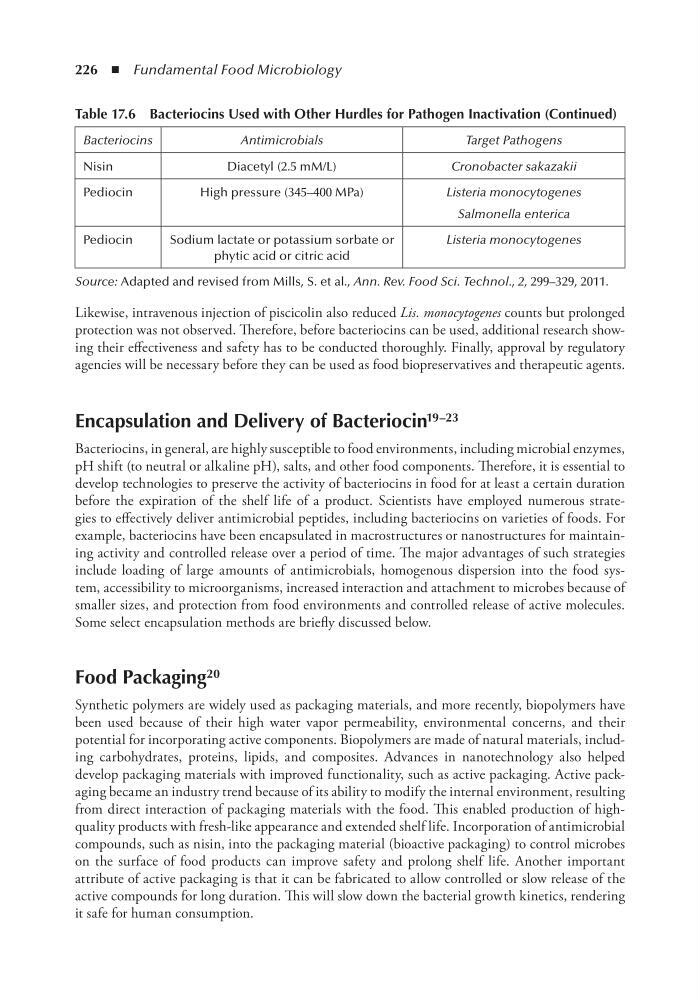
table 17.6 Bacteriocins Used with other Hurdles for Pathogen inactivation (Continued)
Bacteriocins
Antimicrobials
Target Pathogens
Nisin
Diacetyl (2.5 mM/L)
Cronobacter sakazakii
Pediocin
High pressure (345–400 MPa)
Listeria monocytogenes
Salmonella enterica
Pediocin
Sodium lactate or potassium sorbate or
phytic acid or citric acid
Listeria monocytogenes
Source: Adapted and revised from Mills, S. et al., Ann. Rev. Food Sci. Technol., 2, 299–329, 2011.
Likewise, intravenous injection of piscicolin also reduced Lis. monocytogenes counts but prolonged
protection was not observed. Therefore, before bacteriocins can be used, additional research showing their effectiveness and safety has to be conducted thoroughly. Finally, approval by regulatory
agencies will be necessary before they can be used as food biopreservatives and therapeutic agents.
encapsulation and Delivery of Bacteriocin 19–23
Bacteriocins, in general, are highly susceptible to food environments, including microbial enzymes,
pH shift (to neutral or alkaline pH), salts, and other food components. Therefore, it is essential to
develop technologies to preserve the activity of bacteriocins in food for at least a certain duration
before the expiration of the shelf life of a product. Scientists have employed numerous strategies to effectively deliver antimicrobial peptides, including bacteriocins on varieties of foods. For
example, bacteriocins have been encapsulated in macrostructures or nanostructures for maintaining activity and controlled release over a period of time. The major advantages of such strategies
include loading of large amounts of antimicrobials, homogenous dispersion into the food system, accessibility to microorganisms, increased interaction and attachment to microbes because of
smaller sizes, and protection from food environments and controlled release of active molecules.
Some select encapsulation methods are briefly discussed below.
Food Packaging 20
Synthetic polymers are widely used as packaging materials, and more recently, biopolymers have
been used because of their high water vapor permeability, environmental concerns, and their
potential for incorporating active components. Biopolymers are made of natural materials, including carbohydrates, proteins, lipids, and composites. Advances in nanotechnology also helped
develop packaging materials with improved functionality, such as active packaging. Active packaging became an industry trend because of its ability to modify the internal environment, resulting
from direct interaction of packaging materials with the food. This enabled production of highquality products with fresh-like appearance and extended shelf life. Incorporation of antimicrobial
compounds, such as nisin, into the packaging material (bioactive packaging) to control microbes
on the surface of food products can improve safety and prolong shelf life. Another important
attribute of active packaging is that it can be fabricated to allow controlled or slow release of the
active compounds for long duration. This will slow down the bacterial growth kinetics, rendering
it safe for human consumption.
table 17.6 Bacteriocins Used with other Hurdles for Pathogen inactivation (Continued)
Bacteriocins
Antimicrobials
Target Pathogens
Nisin
Diacetyl (2.5 mM/L)
Cronobacter sakazakii
Pediocin
High pressure (345–400 MPa)
Listeria monocytogenes
Salmonella enterica
Pediocin
Sodium lactate or potassium sorbate or
phytic acid or citric acid
Listeria monocytogenes
Source: Adapted and revised from Mills, S. et al., Ann. Rev. Food Sci. Technol., 2, 299–329, 2011.