

202 ◾ Fundamental Food Microbiology
property. The adherent property can be lost during long maintenance under laboratory conditions.
Many studies have been conducted without even knowing the source and identity of the strains.
In selecting a strain for a study, the following factors need to be considered.
Sensitivity to Stomach Acids, Biles, and Pancreatin
Survivability of strains to acid (low stomach pH), biles, and pancreatin present in the GI tract
varies greatly. These effects can be reduced by either reducing stomach acidity with food, by using
strains that are proven resistant to an acid environment, or delivered in the protective encapsulated
form.
Viability and Injury of Cells
Cells of beneficial bacteria when frozen, dried, and exposed to low pH, high salts, and many
chemicals can die. Among the survivors, many can be injured and killed by stomach acid and bile
salts and lysozyme in the intestine. In studies, it may be better to use cells grown for 16–18 hours
and maintained before feeding under conditions that retain their maximum viability.
Dose Level and Duration
Consumption of large numbers of live cells (10 9 per day), which are not stressed, over a period
of time (ca. 14 days) is advocated to obtain a benefit. Using preparations that have low levels of
viable cells, many of which could be stressed, cannot provide expected results. Many products
that are currently marketed do not have the needed level of viable cells to produce beneficial
effects (Table 16.2). Some products also have bacteria that are associated with improper sanitary
practices.
Induced Lactase Trait
In Lactobacillus acidophilus, lactase is an induced enzyme. To study the lactase effect, strains
should be grown in lactose-containing media. In commercial preparations, a strain may be grown
in glucose and thus not have lactase when consumed.
(a)
(b)
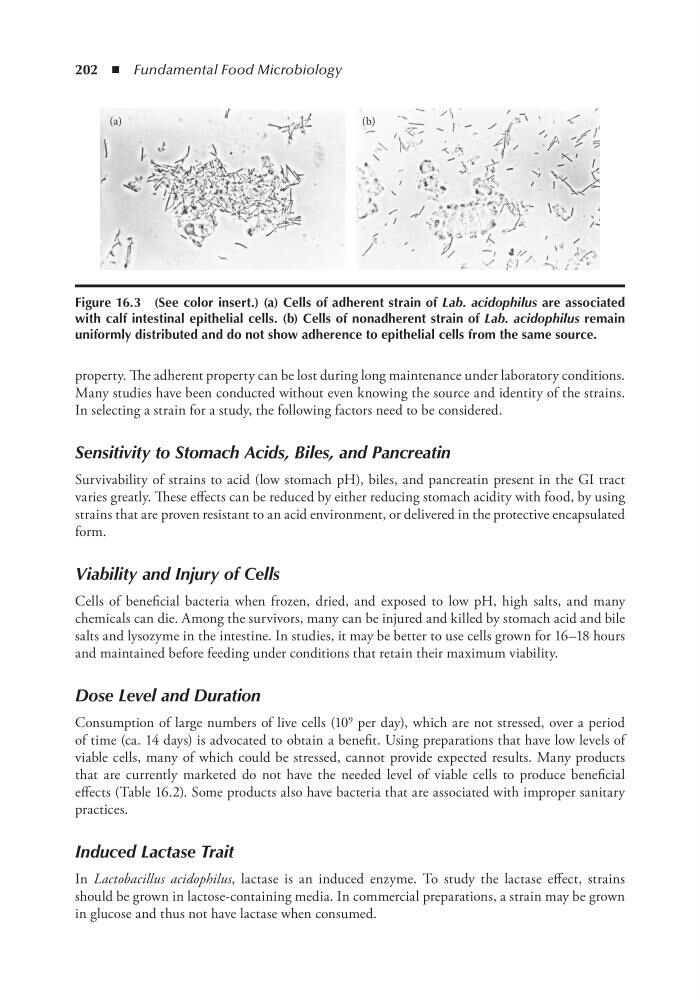
Figure 16.3 (See color insert.) (a) Cells of adherent strain of Lab. acidophilus are associated
with calf intestinal epithelial cells. (b) Cells of nonadherent strain of Lab. acidophilus remain
uniformly distributed and do not show adherence to epithelial cells from the same source.
property. The adherent property can be lost during long maintenance under laboratory conditions.
Many studies have been conducted without even knowing the source and identity of the strains.
In selecting a strain for a study, the following factors need to be considered.
Sensitivity to Stomach Acids, Biles, and Pancreatin
Survivability of strains to acid (low stomach pH), biles, and pancreatin present in the GI tract
varies greatly. These effects can be reduced by either reducing stomach acidity with food, by using
strains that are proven resistant to an acid environment, or delivered in the protective encapsulated
form.
Viability and Injury of Cells
Cells of beneficial bacteria when frozen, dried, and exposed to low pH, high salts, and many
chemicals can die. Among the survivors, many can be injured and killed by stomach acid and bile
salts and lysozyme in the intestine. In studies, it may be better to use cells grown for 16–18 hours
and maintained before feeding under conditions that retain their maximum viability.
Dose Level and Duration
Consumption of large numbers of live cells (10 9 per day), which are not stressed, over a period
of time (ca. 14 days) is advocated to obtain a benefit. Using preparations that have low levels of
viable cells, many of which could be stressed, cannot provide expected results. Many products
that are currently marketed do not have the needed level of viable cells to produce beneficial
effects (Table 16.2). Some products also have bacteria that are associated with improper sanitary
practices.
Induced Lactase Trait
In Lactobacillus acidophilus, lactase is an induced enzyme. To study the lactase effect, strains
should be grown in lactose-containing media. In commercial preparations, a strain may be grown
in glucose and thus not have lactase when consumed.
(a)
(b)
Figure 16.3 (See color insert.) (a) Cells of adherent strain of Lab. acidophilus are associated
with calf intestinal epithelial cells. (b) Cells of nonadherent strain of Lab. acidophilus remain
uniformly distributed and do not show adherence to epithelial cells from the same source.