

Intestinal Bacteria and Probiotics ◾ 203
Antibacterial Substances
Many studies have reported that strains of beneficial intestinal bacteria produce metabolites that
are active against many Gram-positive and Gram-negative bacteria. Some of these were identified,
such as several bacteriocins, organic acid, and reuterine. Other substances need to be identified
and examined in purified form for their antibacterial effectiveness.
True Species and Strains
Many species and strains used by many probiotic food producers do not have either proper identity or information on their original sources. Also, many species that were previously regarded as
Lactobacillus acidophilus have been found to be different species, and many are not of intestinal
origin. Before selecting a strain for a study, one needs to be sure, through testing by recommended
methods, that the strain being used is what it is supposed to be.
Expertise in Research Areas
Lack of an understanding in research in the areas of microbiology, gastroenterology, immunology,
oncology, and related fields may result in faulty experimental design and interpretation of data.
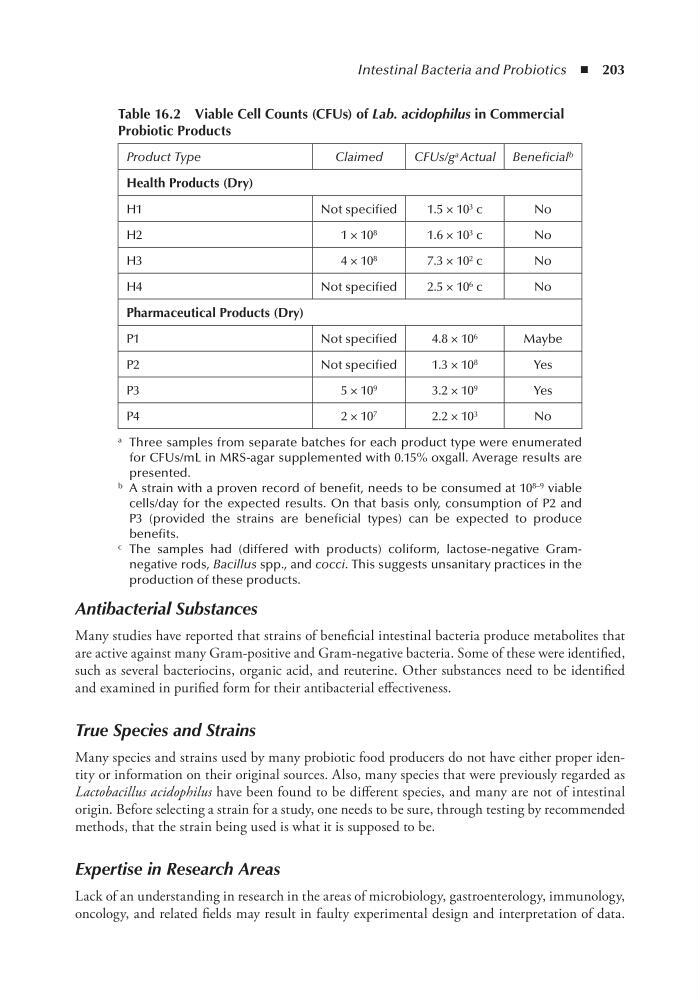
table 16.2 Viable Cell Counts (CFUs) of Lab. acidophilus in Commercial
Probiotic Products
Product Type
Claimed
CFUs/g a Actual Beneficial b
Health Products (Dry)
H1
Not specified
1.5 × 10 3 c
No
H2
1 × 10 8
1.6 × 10 3 c
No
H3
4 × 10 8
7.3 × 10 2 c
No
H4
Not specified
2.5 × 10 6 c
No
Pharmaceutical Products (Dry)
P1
Not specified
4.8 × 10 6
Maybe
P2
Not specified
1.3 × 10 8
Yes
P3
5 × 10 9
3.2 × 10 9
Yes
P4
2 × 10 7
2.2 × 10 3
No
a Three samples from separate batches for each product type were enumerated
for CFUs/mL in MRS-agar supplemented with 0.15% oxgall. Average results are
presented.
b A strain with a proven record of benefit, needs to be consumed at 10 8–9 viable
cells/day for the expected results. On that basis only, consumption of P2 and
P3 (provided the strains are beneficial types) can be expected to produce
benefits.
c The samples had (differed with products) coliform, lactose-negative Gramnegative rods, Bacillus spp., and cocci. This suggests unsanitary practices in the
production of these products.
Antibacterial Substances
Many studies have reported that strains of beneficial intestinal bacteria produce metabolites that
are active against many Gram-positive and Gram-negative bacteria. Some of these were identified,
such as several bacteriocins, organic acid, and reuterine. Other substances need to be identified
and examined in purified form for their antibacterial effectiveness.
True Species and Strains
Many species and strains used by many probiotic food producers do not have either proper identity or information on their original sources. Also, many species that were previously regarded as
Lactobacillus acidophilus have been found to be different species, and many are not of intestinal
origin. Before selecting a strain for a study, one needs to be sure, through testing by recommended
methods, that the strain being used is what it is supposed to be.
Expertise in Research Areas
Lack of an understanding in research in the areas of microbiology, gastroenterology, immunology,
oncology, and related fields may result in faulty experimental design and interpretation of data.
table 16.2 Viable Cell Counts (CFUs) of Lab. acidophilus in Commercial
Probiotic Products
Product Type
Claimed
CFUs/g a Actual Beneficial b
Health Products (Dry)
H1
Not specified
1.5 × 10 3 c
No
H2
1 × 10 8
1.6 × 10 3 c
No
H3
4 × 10 8
7.3 × 10 2 c
No
H4
Not specified
2.5 × 10 6 c
No
Pharmaceutical Products (Dry)
P1
Not specified
4.8 × 10 6
Maybe
P2
Not specified
1.3 × 10 8
Yes
P3
5 × 10 9
3.2 × 10 9
Yes
P4
2 × 10 7
2.2 × 10 3
No
a Three samples from separate batches for each product type were enumerated
for CFUs/mL in MRS-agar supplemented with 0.15% oxgall. Average results are
presented.
b A strain with a proven record of benefit, needs to be consumed at 10 8–9 viable
cells/day for the expected results. On that basis only, consumption of P2 and
P3 (provided the strains are beneficial types) can be expected to produce
benefits.
c The samples had (differed with products) coliform, lactose-negative Gramnegative rods, Bacillus spp., and cocci. This suggests unsanitary practices in the
production of these products.