

396
surface layer of amphipathic lipid and polar proteins. The core of the lipoprotein
particle consists of triacylglycerol and/or cholesteryl esters, fatty acids and fatsoluble vitamins like Vitamin E. The surface single layer is made up of phospholipids, unesterified cholesterol and specific type of water soluble apolipoproteins. The
protein moiety of a lipoprotein is called apolipoprotein. Lipoproteins are further
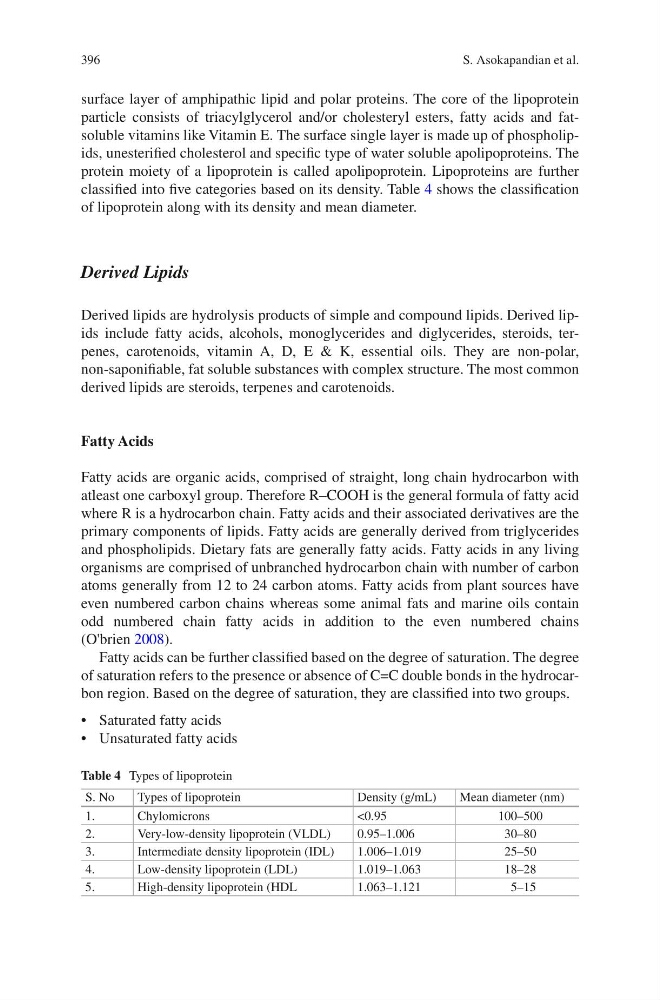
classified into five categories based on its density. Table 4 shows the classification
of lipoprotein along with its density and mean diameter.
Derived Lipids
Derived lipids are hydrolysis products of simple and compound lipids. Derived lipids include fatty acids, alcohols, monoglycerides and diglycerides, steroids, terpenes, carotenoids, vitamin A, D, E & K, essential oils. They are non-polar,
non-saponifiable, fat soluble substances with complex structure. The most common
derived lipids are steroids, terpenes and carotenoids.
Fatty Acids
Fatty acids are organic acids, comprised of straight, long chain hydrocarbon with
atleast one carboxyl group. Therefore R–COOH is the general formula of fatty acid
where R is a hydrocarbon chain. Fatty acids and their associated derivatives are the
primary components of lipids. Fatty acids are generally derived from triglycerides
and phospholipids. Dietary fats are generally fatty acids. Fatty acids in any living
organisms are comprised of unbranched hydrocarbon chain with number of carbon
atoms generally from 12 to 24 carbon atoms. Fatty acids from plant sources have
even numbered carbon chains whereas some animal fats and marine oils contain
odd numbered chain fatty acids in addition to the even numbered chains
(O'brien 2008).
Fatty acids can be further classified based on the degree of saturation. The degree
of saturation refers to the presence or absence of C=C double bonds in the hydrocarbon region. Based on the degree of saturation, they are classified into two groups.
• Saturated fatty acids
• Unsaturated fatty acids
Table 4 Types of lipoprotein
S. No
Types of lipoprotein
Density (g/mL)
Mean diameter (nm)
1.
Chylomicrons
<0.95
100–500
2.
Very-low-density lipoprotein (VLDL)
0.95–1.006
30–80
3.
Intermediate density lipoprotein (IDL)
1.006–1.019
25–50
4.
Low-density lipoprotein (LDL)
1.019–1.063
18–28
5.
High-density lipoprotein (HDL
1.063–1.121
5–15
S. Asokapandian et al.
surface layer of amphipathic lipid and polar proteins. The core of the lipoprotein
particle consists of triacylglycerol and/or cholesteryl esters, fatty acids and fatsoluble vitamins like Vitamin E. The surface single layer is made up of phospholipids, unesterified cholesterol and specific type of water soluble apolipoproteins. The
protein moiety of a lipoprotein is called apolipoprotein. Lipoproteins are further
classified into five categories based on its density. Table 4 shows the classification
of lipoprotein along with its density and mean diameter.
Derived Lipids
Derived lipids are hydrolysis products of simple and compound lipids. Derived lipids include fatty acids, alcohols, monoglycerides and diglycerides, steroids, terpenes, carotenoids, vitamin A, D, E & K, essential oils. They are non-polar,
non-saponifiable, fat soluble substances with complex structure. The most common
derived lipids are steroids, terpenes and carotenoids.
Fatty Acids
Fatty acids are organic acids, comprised of straight, long chain hydrocarbon with
atleast one carboxyl group. Therefore R–COOH is the general formula of fatty acid
where R is a hydrocarbon chain. Fatty acids and their associated derivatives are the
primary components of lipids. Fatty acids are generally derived from triglycerides
and phospholipids. Dietary fats are generally fatty acids. Fatty acids in any living
organisms are comprised of unbranched hydrocarbon chain with number of carbon
atoms generally from 12 to 24 carbon atoms. Fatty acids from plant sources have
even numbered carbon chains whereas some animal fats and marine oils contain
odd numbered chain fatty acids in addition to the even numbered chains
(O'brien 2008).
Fatty acids can be further classified based on the degree of saturation. The degree
of saturation refers to the presence or absence of C=C double bonds in the hydrocarbon region. Based on the degree of saturation, they are classified into two groups.
• Saturated fatty acids
• Unsaturated fatty acids
Table 4 Types of lipoprotein
S. No
Types of lipoprotein
Density (g/mL)
Mean diameter (nm)
1.
Chylomicrons
<0.95
100–500
2.
Very-low-density lipoprotein (VLDL)
0.95–1.006
30–80
3.
Intermediate density lipoprotein (IDL)
1.006–1.019
25–50
4.
Low-density lipoprotein (LDL)
1.019–1.063
18–28
5.
High-density lipoprotein (HDL
1.063–1.121
5–15
S. Asokapandian et al.