

From Plant to Patient: Thapsigargin, a Tool for Understanding …
89
O
O
O
O
O
O
OH
OH
O
O
(CH 2 ) 11
N
H
O
O
70
O
O
O
O
O
O
O
O
OH
OH
O
O
(CH 2 ) 11
H 2 N
O
O
71
a
O
H
N
OH
O
O
N
O
O
O
H
N
OH
N
H
O
O
O
O
O
O
O
OH
OH
O
O
(CH 2 ) 11
O
O
72
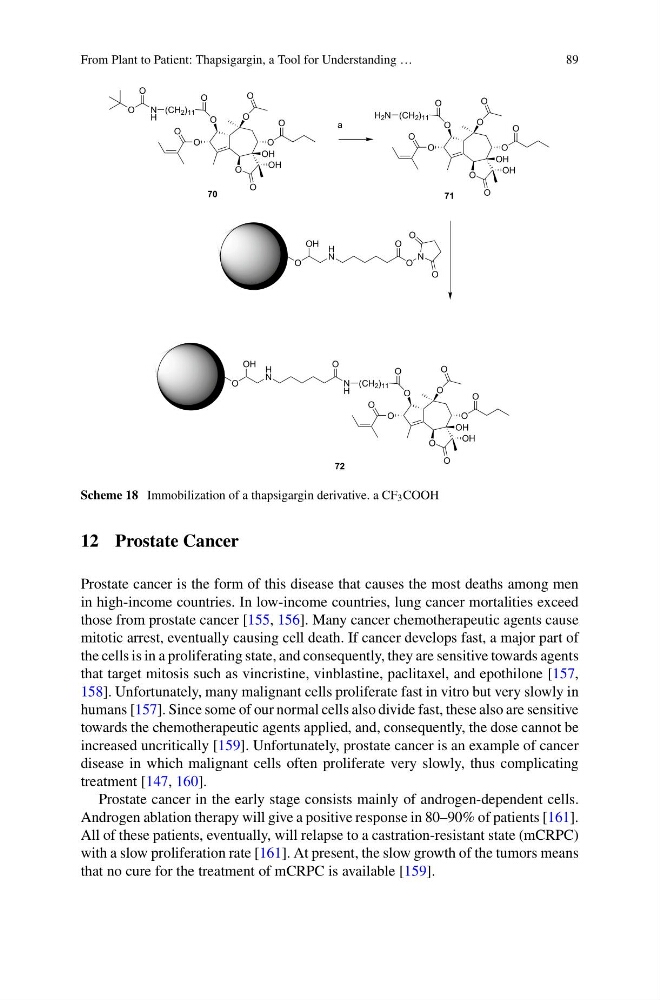
Scheme 18 Immobilization of a thapsigargin derivative. a CF 3 COOH
12 Prostate Cancer
Prostate cancer is the form of this disease that causes the most deaths among men
in high-income countries. In low-income countries, lung cancer mortalities exceed
those from prostate cancer [155, 156]. Many cancer chemotherapeutic agents cause
mitotic arrest, eventually causing cell death. If cancer develops fast, a major part of
the cells is in a proliferating state, and consequently, they are sensitive towards agents
that target mitosis such as vincristine, vinblastine, paclitaxel, and epothilone [157,
158]. Unfortunately, many malignant cells proliferate fast in vitro but very slowly in
humans [157]. Since some of our normal cells also divide fast, these also are sensitive
towards the chemotherapeutic agents applied, and, consequently, the dose cannot be
increased uncritically [159]. Unfortunately, prostate cancer is an example of cancer
disease in which malignant cells often proliferate very slowly, thus complicating
treatment [147, 160].
Prostate cancer in the early stage consists mainly of androgen-dependent cells.
Androgen ablation therapy will give a positive response in 80–90% of patients [161].
All of these patients, eventually, will relapse to a castration-resistant state (mCRPC)
with a slow proliferation rate [161]. At present, the slow growth of the tumors means
that no cure for the treatment of mCRPC is available [159].
89
O
O
O
O
O
O
OH
OH
O
O
(CH 2 ) 11
N
H
O
O
70
O
O
O
O
O
O
O
O
OH
OH
O
O
(CH 2 ) 11
H 2 N
O
O
71
a
O
H
N
OH
O
O
N
O
O
O
H
N
OH
N
H
O
O
O
O
O
O
O
OH
OH
O
O
(CH 2 ) 11
O
O
72
Scheme 18 Immobilization of a thapsigargin derivative. a CF 3 COOH
12 Prostate Cancer
Prostate cancer is the form of this disease that causes the most deaths among men
in high-income countries. In low-income countries, lung cancer mortalities exceed
those from prostate cancer [155, 156]. Many cancer chemotherapeutic agents cause
mitotic arrest, eventually causing cell death. If cancer develops fast, a major part of
the cells is in a proliferating state, and consequently, they are sensitive towards agents
that target mitosis such as vincristine, vinblastine, paclitaxel, and epothilone [157,
158]. Unfortunately, many malignant cells proliferate fast in vitro but very slowly in
humans [157]. Since some of our normal cells also divide fast, these also are sensitive
towards the chemotherapeutic agents applied, and, consequently, the dose cannot be
increased uncritically [159]. Unfortunately, prostate cancer is an example of cancer
disease in which malignant cells often proliferate very slowly, thus complicating
treatment [147, 160].
Prostate cancer in the early stage consists mainly of androgen-dependent cells.
Androgen ablation therapy will give a positive response in 80–90% of patients [161].
All of these patients, eventually, will relapse to a castration-resistant state (mCRPC)
with a slow proliferation rate [161]. At present, the slow growth of the tumors means
that no cure for the treatment of mCRPC is available [159].