

From Plant to Patient: Thapsigargin, a Tool for Understanding …
79
O
Cl
O
O
O
O
O
TBS
O
O Bn
TBS
TBS
O
O
O Bn
O
O
TBSO
O
O
O
O
O
OH
Bn
O
TBS
O
TBS
O TBS
TBSO
O
O
O
O
O
O
O
O
O
OH
OH
O
1
O
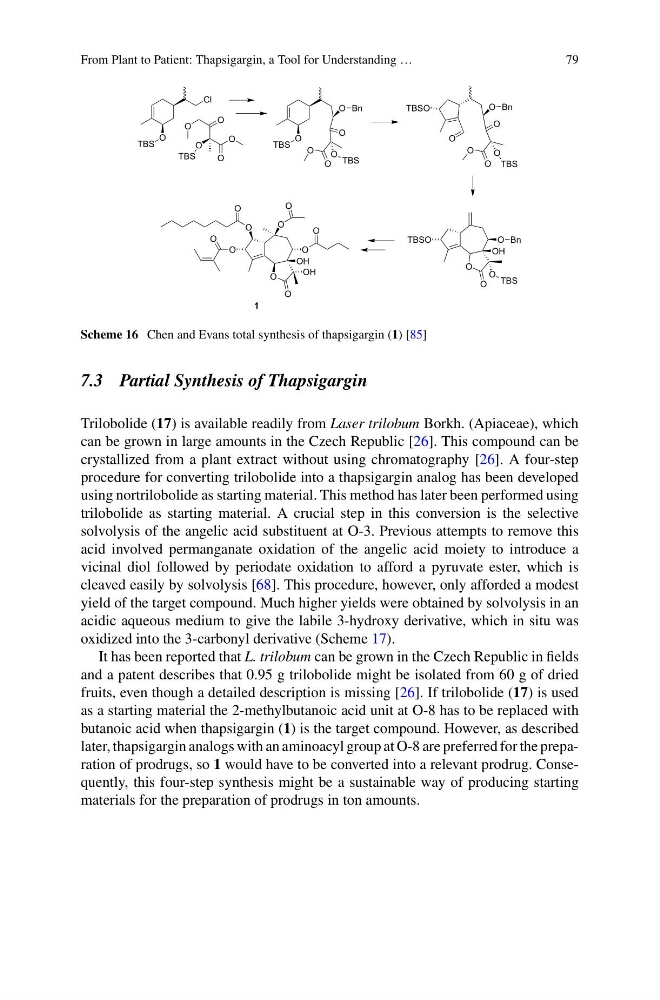
Scheme 16 Chen and Evans total synthesis of thapsigargin (1) [85]
7.3 Partial Synthesis of Thapsigargin
Trilobolide (17) is available readily from Laser trilobum Borkh. (Apiaceae), which
can be grown in large amounts in the Czech Republic [26]. This compound can be
crystallized from a plant extract without using chromatography [26]. A four-step
procedure for converting trilobolide into a thapsigargin analog has been developed
using nortrilobolide as starting material. This method has later been performed using
trilobolide as starting material. A crucial step in this conversion is the selective
solvolysis of the angelic acid substituent at O-3. Previous attempts to remove this
acid involved permanganate oxidation of the angelic acid moiety to introduce a
vicinal diol followed by periodate oxidation to afford a pyruvate ester, which is
cleaved easily by solvolysis [68]. This procedure, however, only afforded a modest
yield of the target compound. Much higher yields were obtained by solvolysis in an
acidic aqueous medium to give the labile 3-hydroxy derivative, which in situ was
oxidized into the 3-carbonyl derivative (Scheme 17).
It has been reported that L. trilobum can be grown in the Czech Republic in fields
and a patent describes that 0.95 g trilobolide might be isolated from 60 g of dried
fruits, even though a detailed description is missing [26]. If trilobolide (17) is used
as a starting material the 2-methylbutanoic acid unit at O-8 has to be replaced with
butanoic acid when thapsigargin (1) is the target compound. However, as described
later, thapsigargin analogs with an aminoacyl group at O-8 are preferred for the preparation of prodrugs, so 1 would have to be converted into a relevant prodrug. Consequently, this four-step synthesis might be a sustainable way of producing starting
materials for the preparation of prodrugs in ton amounts.
79
O
Cl
O
O
O
O
O
TBS
O
O Bn
TBS
TBS
O
O
O Bn
O
O
TBSO
O
O
O
O
O
OH
Bn
O
TBS
O
TBS
O TBS
TBSO
O
O
O
O
O
O
O
O
O
OH
OH
O
1
O
Scheme 16 Chen and Evans total synthesis of thapsigargin (1) [85]
7.3 Partial Synthesis of Thapsigargin
Trilobolide (17) is available readily from Laser trilobum Borkh. (Apiaceae), which
can be grown in large amounts in the Czech Republic [26]. This compound can be
crystallized from a plant extract without using chromatography [26]. A four-step
procedure for converting trilobolide into a thapsigargin analog has been developed
using nortrilobolide as starting material. This method has later been performed using
trilobolide as starting material. A crucial step in this conversion is the selective
solvolysis of the angelic acid substituent at O-3. Previous attempts to remove this
acid involved permanganate oxidation of the angelic acid moiety to introduce a
vicinal diol followed by periodate oxidation to afford a pyruvate ester, which is
cleaved easily by solvolysis [68]. This procedure, however, only afforded a modest
yield of the target compound. Much higher yields were obtained by solvolysis in an
acidic aqueous medium to give the labile 3-hydroxy derivative, which in situ was
oxidized into the 3-carbonyl derivative (Scheme 17).
It has been reported that L. trilobum can be grown in the Czech Republic in fields
and a patent describes that 0.95 g trilobolide might be isolated from 60 g of dried
fruits, even though a detailed description is missing [26]. If trilobolide (17) is used
as a starting material the 2-methylbutanoic acid unit at O-8 has to be replaced with
butanoic acid when thapsigargin (1) is the target compound. However, as described
later, thapsigargin analogs with an aminoacyl group at O-8 are preferred for the preparation of prodrugs, so 1 would have to be converted into a relevant prodrug. Consequently, this four-step synthesis might be a sustainable way of producing starting
materials for the preparation of prodrugs in ton amounts.