

The Role of Total Synthesis in Structure …
19
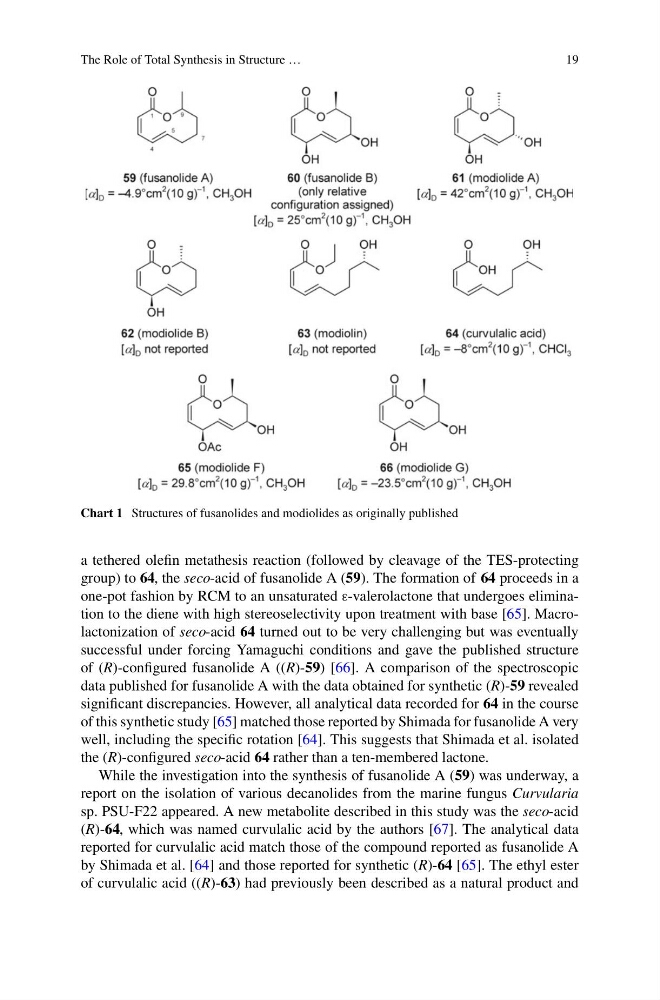
Chart 1 Structures of fusanolides and modiolides as originally published
a tethered olefin metathesis reaction (followed by cleavage of the TES-protecting
group) to 64, the seco-acid of fusanolide A (59). The formation of 64 proceeds in a
one-pot fashion by RCM to an unsaturated ε-valerolactone that undergoes elimination to the diene with high stereoselectivity upon treatment with base [65]. Macrolactonization of seco-acid 64 turned out to be very challenging but was eventually
successful under forcing Yamaguchi conditions and gave the published structure
of (R)-configured fusanolide A ((R)-59) [66]. A comparison of the spectroscopic
data published for fusanolide A with the data obtained for synthetic (R)-59 revealed
significant discrepancies. However, all analytical data recorded for 64 in the course
of this synthetic study [65] matched those reported by Shimada for fusanolide A very
well, including the specific rotation [64]. This suggests that Shimada et al. isolated
the (R)-configured seco-acid 64 rather than a ten-membered lactone.
While the investigation into the synthesis of fusanolide A (59) was underway, a
report on the isolation of various decanolides from the marine fungus Curvularia
sp. PSU-F22 appeared. A new metabolite described in this study was the seco-acid
(R)-64, which was named curvulalic acid by the authors [67]. The analytical data
reported for curvulalic acid match those of the compound reported as fusanolide A
by Shimada et al. [64] and those reported for synthetic (R)-64 [65]. The ethyl ester
of curvulalic acid ((R)-63) had previously been described as a natural product and
19
Chart 1 Structures of fusanolides and modiolides as originally published
a tethered olefin metathesis reaction (followed by cleavage of the TES-protecting
group) to 64, the seco-acid of fusanolide A (59). The formation of 64 proceeds in a
one-pot fashion by RCM to an unsaturated ε-valerolactone that undergoes elimination to the diene with high stereoselectivity upon treatment with base [65]. Macrolactonization of seco-acid 64 turned out to be very challenging but was eventually
successful under forcing Yamaguchi conditions and gave the published structure
of (R)-configured fusanolide A ((R)-59) [66]. A comparison of the spectroscopic
data published for fusanolide A with the data obtained for synthetic (R)-59 revealed
significant discrepancies. However, all analytical data recorded for 64 in the course
of this synthetic study [65] matched those reported by Shimada for fusanolide A very
well, including the specific rotation [64]. This suggests that Shimada et al. isolated
the (R)-configured seco-acid 64 rather than a ten-membered lactone.
While the investigation into the synthesis of fusanolide A (59) was underway, a
report on the isolation of various decanolides from the marine fungus Curvularia
sp. PSU-F22 appeared. A new metabolite described in this study was the seco-acid
(R)-64, which was named curvulalic acid by the authors [67]. The analytical data
reported for curvulalic acid match those of the compound reported as fusanolide A
by Shimada et al. [64] and those reported for synthetic (R)-64 [65]. The ethyl ester
of curvulalic acid ((R)-63) had previously been described as a natural product and