

Antileishmanial Activity of Lignans, Neolignans …
151
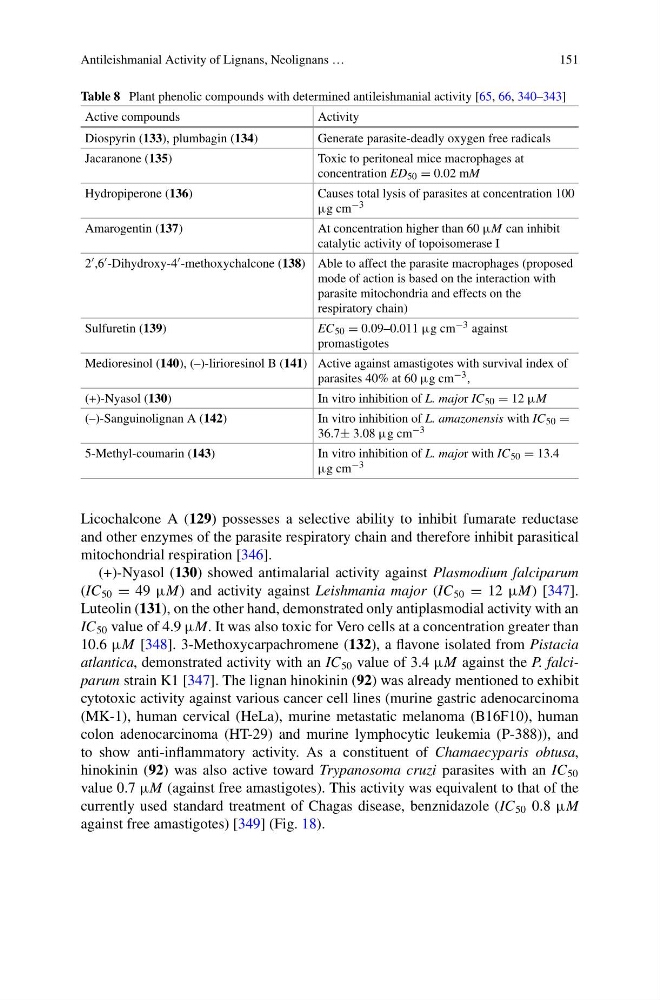
Table 8 Plant phenolic compounds with determined antileishmanial activity [65, 66, 340–343]
Active compounds
Activity
Diospyrin (133), plumbagin (134)
Generate parasite-deadly oxygen free radicals
Jacaranone (135)
Toxic to peritoneal mice macrophages at
concentration ED 50 = 0.02 mM
Hydropiperone (136)
Causes total lysis of parasites at concentration 100
μg cm −3
Amarogentin (137)
At concentration higher than 60 μM can inhibit
catalytic activity of topoisomerase I
2 ,6 -Dihydroxy-4 -methoxychalcone (138) Able to affect the parasite macrophages (proposed
mode of action is based on the interaction with
parasite mitochondria and effects on the
respiratory chain)
Sulfuretin (139)
EC 50 = 0.09–0.011 μg cm −3 against
promastigotes
Medioresinol (140), (–)-lirioresinol B (141) Active against amastigotes with survival index of
parasites 40% at 60 μg cm −3 ,
(+)-Nyasol (130)
In vitro inhibition of L. major IC 50 = 12 μM
(–)-Sanguinolignan A (142)
In vitro inhibition of L. amazonensis with IC 50 =
36.7± 3.08 μg cm −3
5-Methyl-coumarin (143)
In vitro inhibition of L. major with IC 50 = 13.4
μg cm −3
Licochalcone A (129) possesses a selective ability to inhibit fumarate reductase
and other enzymes of the parasite respiratory chain and therefore inhibit parasitical
mitochondrial respiration [346].
(+)-Nyasol (130) showed antimalarial activity against Plasmodium falciparum
(IC 50 = 49 μM) and activity against Leishmania major (IC 50 = 12 μM) [347].
Luteolin (131), on the other hand, demonstrated only antiplasmodial activity with an
IC 50 value of 4.9 μM. It was also toxic for Vero cells at a concentration greater than
10.6 μM [348]. 3-Methoxycarpachromene (132), a flavone isolated from Pistacia
atlantica, demonstrated activity with an IC 50 value of 3.4 μM against the P. falciparum strain K1 [347]. The lignan hinokinin (92) was already mentioned to exhibit
cytotoxic activity against various cancer cell lines (murine gastric adenocarcinoma
(MK-1), human cervical (HeLa), murine metastatic melanoma (B16F10), human
colon adenocarcinoma (HT-29) and murine lymphocytic leukemia (P-388)), and
to show anti-inflammatory activity. As a constituent of Chamaecyparis obtusa,
hinokinin (92) was also active toward Trypanosoma cruzi parasites with an IC 50
value 0.7 μM (against free amastigotes). This activity was equivalent to that of the
currently used standard treatment of Chagas disease, benznidazole (IC 50 0.8 μM
against free amastigotes) [349] (Fig. 18).
151
Table 8 Plant phenolic compounds with determined antileishmanial activity [65, 66, 340–343]
Active compounds
Activity
Diospyrin (133), plumbagin (134)
Generate parasite-deadly oxygen free radicals
Jacaranone (135)
Toxic to peritoneal mice macrophages at
concentration ED 50 = 0.02 mM
Hydropiperone (136)
Causes total lysis of parasites at concentration 100
μg cm −3
Amarogentin (137)
At concentration higher than 60 μM can inhibit
catalytic activity of topoisomerase I
2 ,6 -Dihydroxy-4 -methoxychalcone (138) Able to affect the parasite macrophages (proposed
mode of action is based on the interaction with
parasite mitochondria and effects on the
respiratory chain)
Sulfuretin (139)
EC 50 = 0.09–0.011 μg cm −3 against
promastigotes
Medioresinol (140), (–)-lirioresinol B (141) Active against amastigotes with survival index of
parasites 40% at 60 μg cm −3 ,
(+)-Nyasol (130)
In vitro inhibition of L. major IC 50 = 12 μM
(–)-Sanguinolignan A (142)
In vitro inhibition of L. amazonensis with IC 50 =
36.7± 3.08 μg cm −3
5-Methyl-coumarin (143)
In vitro inhibition of L. major with IC 50 = 13.4
μg cm −3
Licochalcone A (129) possesses a selective ability to inhibit fumarate reductase
and other enzymes of the parasite respiratory chain and therefore inhibit parasitical
mitochondrial respiration [346].
(+)-Nyasol (130) showed antimalarial activity against Plasmodium falciparum
(IC 50 = 49 μM) and activity against Leishmania major (IC 50 = 12 μM) [347].
Luteolin (131), on the other hand, demonstrated only antiplasmodial activity with an
IC 50 value of 4.9 μM. It was also toxic for Vero cells at a concentration greater than
10.6 μM [348]. 3-Methoxycarpachromene (132), a flavone isolated from Pistacia
atlantica, demonstrated activity with an IC 50 value of 3.4 μM against the P. falciparum strain K1 [347]. The lignan hinokinin (92) was already mentioned to exhibit
cytotoxic activity against various cancer cell lines (murine gastric adenocarcinoma
(MK-1), human cervical (HeLa), murine metastatic melanoma (B16F10), human
colon adenocarcinoma (HT-29) and murine lymphocytic leukemia (P-388)), and
to show anti-inflammatory activity. As a constituent of Chamaecyparis obtusa,
hinokinin (92) was also active toward Trypanosoma cruzi parasites with an IC 50
value 0.7 μM (against free amastigotes). This activity was equivalent to that of the
currently used standard treatment of Chagas disease, benznidazole (IC 50 0.8 μM
against free amastigotes) [349] (Fig. 18).