

148
J. Pospíšil et al.
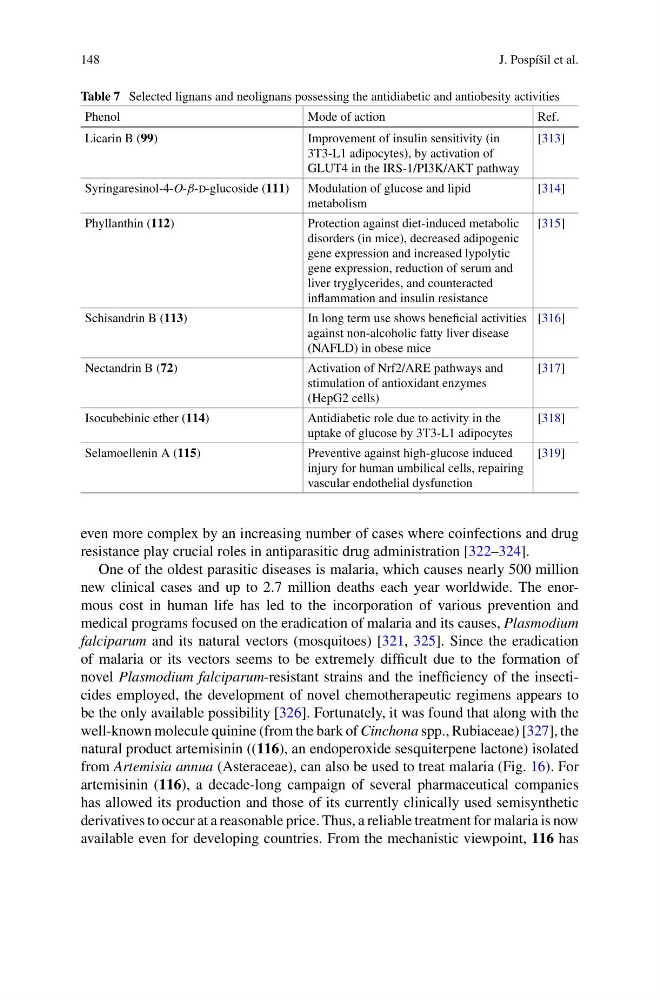
Table 7 Selected lignans and neolignans possessing the antidiabetic and antiobesity activities
Phenol
Mode of action
Ref.
Licarin B (99)
Improvement of insulin sensitivity (in
3T3-L1 adipocytes), by activation of
GLUT4 in the IRS-1/PI3K/AKT pathway
[313]
Syringaresinol-4-O-β-d-glucoside (111) Modulation of glucose and lipid
metabolism
[314]
Phyllanthin (112)
Protection against diet-induced metabolic
disorders (in mice), decreased adipogenic
gene expression and increased lypolytic
gene expression, reduction of serum and
liver tryglycerides, and counteracted
inflammation and insulin resistance
[315]
Schisandrin B (113)
In long term use shows beneficial activities
against non-alcoholic fatty liver disease
(NAFLD) in obese mice
[316]
Nectandrin B (72)
Activation of Nrf2/ARE pathways and
stimulation of antioxidant enzymes
(HepG2 cells)
[317]
Isocubebinic ether (114)
Antidiabetic role due to activity in the
uptake of glucose by 3T3-L1 adipocytes
[318]
Selamoellenin A (115)
Preventive against high-glucose induced
injury for human umbilical cells, repairing
vascular endothelial dysfunction
[319]
even more complex by an increasing number of cases where coinfections and drug
resistance play crucial roles in antiparasitic drug administration [322–324].
One of the oldest parasitic diseases is malaria, which causes nearly 500 million
new clinical cases and up to 2.7 million deaths each year worldwide. The enormous cost in human life has led to the incorporation of various prevention and
medical programs focused on the eradication of malaria and its causes, Plasmodium
falciparum and its natural vectors (mosquitoes) [321, 325]. Since the eradication
of malaria or its vectors seems to be extremely difficult due to the formation of
novel Plasmodium falciparum-resistant strains and the inefficiency of the insecticides employed, the development of novel chemotherapeutic regimens appears to
be the only available possibility [326]. Fortunately, it was found that along with the
well-known molecule quinine (from the bark of Cinchona spp., Rubiaceae) [327], the
natural product artemisinin ((116), an endoperoxide sesquiterpene lactone) isolated
from Artemisia annua (Asteraceae), can also be used to treat malaria (Fig. 16). For
artemisinin (116), a decade-long campaign of several pharmaceutical companies
has allowed its production and those of its currently clinically used semisynthetic
derivatives to occur at a reasonable price. Thus, a reliable treatment for malaria is now
available even for developing countries. From the mechanistic viewpoint, 116 has
J. Pospíšil et al.
Table 7 Selected lignans and neolignans possessing the antidiabetic and antiobesity activities
Phenol
Mode of action
Ref.
Licarin B (99)
Improvement of insulin sensitivity (in
3T3-L1 adipocytes), by activation of
GLUT4 in the IRS-1/PI3K/AKT pathway
[313]
Syringaresinol-4-O-β-d-glucoside (111) Modulation of glucose and lipid
metabolism
[314]
Phyllanthin (112)
Protection against diet-induced metabolic
disorders (in mice), decreased adipogenic
gene expression and increased lypolytic
gene expression, reduction of serum and
liver tryglycerides, and counteracted
inflammation and insulin resistance
[315]
Schisandrin B (113)
In long term use shows beneficial activities
against non-alcoholic fatty liver disease
(NAFLD) in obese mice
[316]
Nectandrin B (72)
Activation of Nrf2/ARE pathways and
stimulation of antioxidant enzymes
(HepG2 cells)
[317]
Isocubebinic ether (114)
Antidiabetic role due to activity in the
uptake of glucose by 3T3-L1 adipocytes
[318]
Selamoellenin A (115)
Preventive against high-glucose induced
injury for human umbilical cells, repairing
vascular endothelial dysfunction
[319]
even more complex by an increasing number of cases where coinfections and drug
resistance play crucial roles in antiparasitic drug administration [322–324].
One of the oldest parasitic diseases is malaria, which causes nearly 500 million
new clinical cases and up to 2.7 million deaths each year worldwide. The enormous cost in human life has led to the incorporation of various prevention and
medical programs focused on the eradication of malaria and its causes, Plasmodium
falciparum and its natural vectors (mosquitoes) [321, 325]. Since the eradication
of malaria or its vectors seems to be extremely difficult due to the formation of
novel Plasmodium falciparum-resistant strains and the inefficiency of the insecticides employed, the development of novel chemotherapeutic regimens appears to
be the only available possibility [326]. Fortunately, it was found that along with the
well-known molecule quinine (from the bark of Cinchona spp., Rubiaceae) [327], the
natural product artemisinin ((116), an endoperoxide sesquiterpene lactone) isolated
from Artemisia annua (Asteraceae), can also be used to treat malaria (Fig. 16). For
artemisinin (116), a decade-long campaign of several pharmaceutical companies
has allowed its production and those of its currently clinically used semisynthetic
derivatives to occur at a reasonable price. Thus, a reliable treatment for malaria is now
available even for developing countries. From the mechanistic viewpoint, 116 has