

Antileishmanial Activity of Lignans, Neolignans …
143
Mycoplasma pneumonia, Mycoplasma orale, and Mycoplasma salivarum, as well
as other pathogenic bacteria [241–243]. Kaempferol (49) and quercetin (41) glycosides may inhibit the toxic manifestation of botulinum neurotoxins (Clostridium
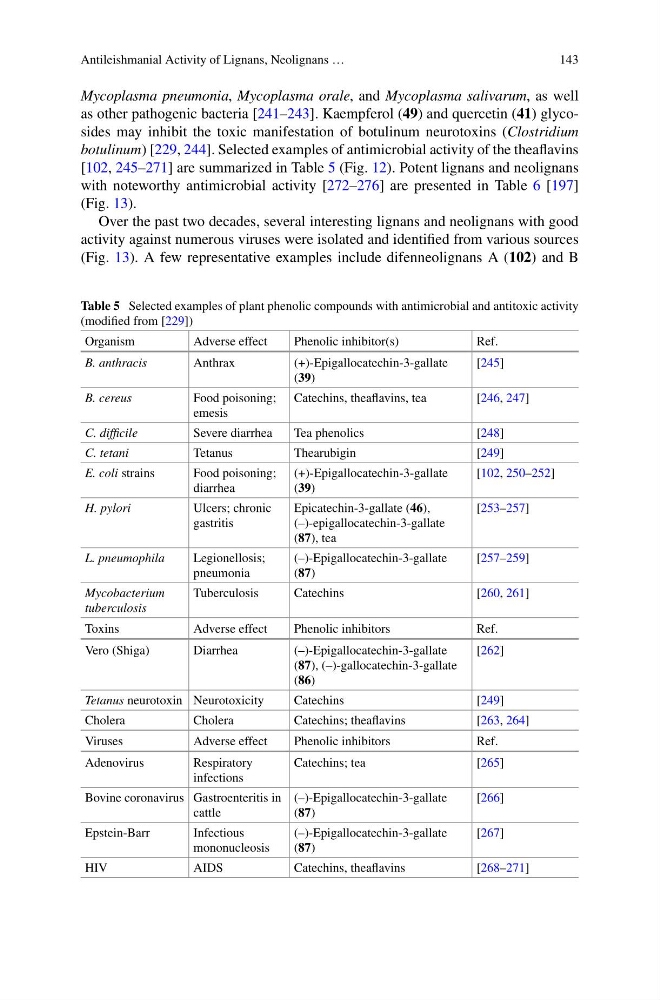
botulinum) [229, 244]. Selected examples of antimicrobial activity of the theaflavins
[102, 245–271] are summarized in Table 5 (Fig. 12). Potent lignans and neolignans
with noteworthy antimicrobial activity [272–276] are presented in Table 6 [197]
(Fig. 13).
Over the past two decades, several interesting lignans and neolignans with good
activity against numerous viruses were isolated and identified from various sources
(Fig. 13). A few representative examples include difenneolignans A (102) and B
Table 5 Selected examples of plant phenolic compounds with antimicrobial and antitoxic activity
(modified from [229])
Organism
Adverse effect
Phenolic inhibitor(s)
Ref.
B. anthracis
Anthrax
(+)-Epigallocatechin-3-gallate
(39)
[245]
B. cereus
Food poisoning;
emesis
Catechins, theaflavins, tea
[246, 247]
C. difficile
Severe diarrhea
Tea phenolics
[248]
C. tetani
Tetanus
Thearubigin
[249]
E. coli strains
Food poisoning;
diarrhea
(+)-Epigallocatechin-3-gallate
(39)
[102, 250–252]
H. pylori
Ulcers; chronic
gastritis
Epicatechin-3-gallate (46),
(–)-epigallocatechin-3-gallate
(87), tea
[253–257]
L. pneumophila
Legionellosis;
pneumonia
(–)-Epigallocatechin-3-gallate
(87)
[257–259]
Mycobacterium
tuberculosis
Tuberculosis
Catechins
[260, 261]
Toxins
Adverse effect
Phenolic inhibitors
Ref.
Vero (Shiga)
Diarrhea
(–)-Epigallocatechin-3-gallate
(87), (–)-gallocatechin-3-gallate
(86)
[262]
Tetanus neurotoxin Neurotoxicity
Catechins
[249]
Cholera
Cholera
Catechins; theaflavins
[263, 264]
Viruses
Adverse effect
Phenolic inhibitors
Ref.
Adenovirus
Respiratory
infections
Catechins; tea
[265]
Bovine coronavirus Gastroenteritis in
cattle
(–)-Epigallocatechin-3-gallate
(87)
[266]
Epstein-Barr
Infectious
mononucleosis
(–)-Epigallocatechin-3-gallate
(87)
[267]
HIV
AIDS
Catechins, theaflavins
[268–271]
143
Mycoplasma pneumonia, Mycoplasma orale, and Mycoplasma salivarum, as well
as other pathogenic bacteria [241–243]. Kaempferol (49) and quercetin (41) glycosides may inhibit the toxic manifestation of botulinum neurotoxins (Clostridium
botulinum) [229, 244]. Selected examples of antimicrobial activity of the theaflavins
[102, 245–271] are summarized in Table 5 (Fig. 12). Potent lignans and neolignans
with noteworthy antimicrobial activity [272–276] are presented in Table 6 [197]
(Fig. 13).
Over the past two decades, several interesting lignans and neolignans with good
activity against numerous viruses were isolated and identified from various sources
(Fig. 13). A few representative examples include difenneolignans A (102) and B
Table 5 Selected examples of plant phenolic compounds with antimicrobial and antitoxic activity
(modified from [229])
Organism
Adverse effect
Phenolic inhibitor(s)
Ref.
B. anthracis
Anthrax
(+)-Epigallocatechin-3-gallate
(39)
[245]
B. cereus
Food poisoning;
emesis
Catechins, theaflavins, tea
[246, 247]
C. difficile
Severe diarrhea
Tea phenolics
[248]
C. tetani
Tetanus
Thearubigin
[249]
E. coli strains
Food poisoning;
diarrhea
(+)-Epigallocatechin-3-gallate
(39)
[102, 250–252]
H. pylori
Ulcers; chronic
gastritis
Epicatechin-3-gallate (46),
(–)-epigallocatechin-3-gallate
(87), tea
[253–257]
L. pneumophila
Legionellosis;
pneumonia
(–)-Epigallocatechin-3-gallate
(87)
[257–259]
Mycobacterium
tuberculosis
Tuberculosis
Catechins
[260, 261]
Toxins
Adverse effect
Phenolic inhibitors
Ref.
Vero (Shiga)
Diarrhea
(–)-Epigallocatechin-3-gallate
(87), (–)-gallocatechin-3-gallate
(86)
[262]
Tetanus neurotoxin Neurotoxicity
Catechins
[249]
Cholera
Cholera
Catechins; theaflavins
[263, 264]
Viruses
Adverse effect
Phenolic inhibitors
Ref.
Adenovirus
Respiratory
infections
Catechins; tea
[265]
Bovine coronavirus Gastroenteritis in
cattle
(–)-Epigallocatechin-3-gallate
(87)
[266]
Epstein-Barr
Infectious
mononucleosis
(–)-Epigallocatechin-3-gallate
(87)
[267]
HIV
AIDS
Catechins, theaflavins
[268–271]