

142
J. Pospíšil et al.
O
O
O
HO
O
OH
OH
91 ((–)-(3R,4R) -nortrachelogenin)
92 ((3R,4R)-hinokinin)
O
O
O
O
O
O
O
HO
OH
O
93 (dehydroguaiaretic acid)
O
O
OH
O
O
O
O
O
O
O
O
O
O
O
94 ((2S,3S)-melaleucin A)
95 ((2S,3S)-melaleucin B)
96 ((2S,3S)-melaleucin C)
97 ((1S,2S)-myrislignan)
98 ((1R,2R)-myrislignanometin E)
99 ((2S,3S)-licarin B)
100 ((2S,3S)-5'-methoxylicarin B)
O
O
O
O
O
O
O
O
O
O
OH
O
HO
O
101 ((2R,3S,4S,5S)-verrucosin)
O
OH
O
OH
O
O
O
HO
O
OH
O
O
OH
OH
O
O
OH
O
NH 2
O
104 ((2S,3S)-pahangine A)
HO
O
OH
AcO
O
O
O
OH
102 ((2S,3S)-difenneolignan A)
HO
O
OH
HO
O
OH
O
OH
103 ((2S,3S)-difenneolignan B)
HO
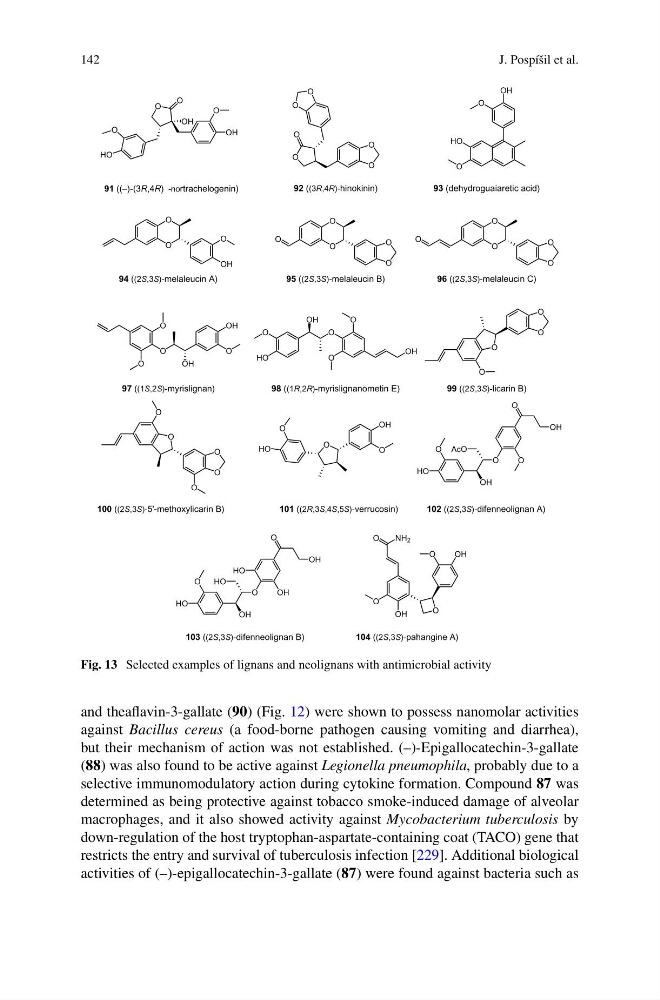
Fig. 13 Selected examples of lignans and neolignans with antimicrobial activity
and theaflavin-3-gallate (90) (Fig. 12) were shown to possess nanomolar activities
against Bacillus cereus (a food-borne pathogen causing vomiting and diarrhea),
but their mechanism of action was not established. (–)-Epigallocatechin-3-gallate
(88) was also found to be active against Legionella pneumophila, probably due to a
selective immunomodulatory action during cytokine formation. Compound 87 was
determined as being protective against tobacco smoke-induced damage of alveolar
macrophages, and it also showed activity against Mycobacterium tuberculosis by
down-regulation of the host tryptophan-aspartate-containing coat (TACO) gene that
restricts the entry and survival of tuberculosis infection [229]. Additional biological
activities of (–)-epigallocatechin-3-gallate (87) were found against bacteria such as
J. Pospíšil et al.
O
O
O
HO
O
OH
OH
91 ((–)-(3R,4R) -nortrachelogenin)
92 ((3R,4R)-hinokinin)
O
O
O
O
O
O
O
HO
OH
O
93 (dehydroguaiaretic acid)
O
O
OH
O
O
O
O
O
O
O
O
O
O
O
94 ((2S,3S)-melaleucin A)
95 ((2S,3S)-melaleucin B)
96 ((2S,3S)-melaleucin C)
97 ((1S,2S)-myrislignan)
98 ((1R,2R)-myrislignanometin E)
99 ((2S,3S)-licarin B)
100 ((2S,3S)-5'-methoxylicarin B)
O
O
O
O
O
O
O
O
O
O
OH
O
HO
O
101 ((2R,3S,4S,5S)-verrucosin)
O
OH
O
OH
O
O
O
HO
O
OH
O
O
OH
OH
O
O
OH
O
NH 2
O
104 ((2S,3S)-pahangine A)
HO
O
OH
AcO
O
O
O
OH
102 ((2S,3S)-difenneolignan A)
HO
O
OH
HO
O
OH
O
OH
103 ((2S,3S)-difenneolignan B)
HO
Fig. 13 Selected examples of lignans and neolignans with antimicrobial activity
and theaflavin-3-gallate (90) (Fig. 12) were shown to possess nanomolar activities
against Bacillus cereus (a food-borne pathogen causing vomiting and diarrhea),
but their mechanism of action was not established. (–)-Epigallocatechin-3-gallate
(88) was also found to be active against Legionella pneumophila, probably due to a
selective immunomodulatory action during cytokine formation. Compound 87 was
determined as being protective against tobacco smoke-induced damage of alveolar
macrophages, and it also showed activity against Mycobacterium tuberculosis by
down-regulation of the host tryptophan-aspartate-containing coat (TACO) gene that
restricts the entry and survival of tuberculosis infection [229]. Additional biological
activities of (–)-epigallocatechin-3-gallate (87) were found against bacteria such as