

Antileishmanial Activity of Lignans, Neolignans …
141
O
OH
OH
HO
OH
OH
OH
85 ((–)- (2R,3R)-epigallocatechin)
O
O
O
HO
OH
OH
OH
OH
OH
OH
OH
86 ((–)-(2S,3R)-gallocatechin-3-gallate)
O
O
O
HO
OH
OH
OH
OH
OH
OH
OH
87 ((–)-(2R,3R)-epigallocatechin-3-gallate)
O
O
O
HO
OH
OH
OH
OH
OH
OH
88 ((–)-(2S,3R)-catechin-3-gallate)
O
HO
HO
OH
O
HO
OH
OH
O
O
O
HO
OH
OH
HO
OH
90 ((2R,3R,2'R,3'R)-theaflavin-3'-gallate)
89 ((2R,3R,2'R,3'R)-theaflavin-3'-gallate)
O
O
O
HO
OH
HO
OH
HO
O
HO
HO
OH
OH
O
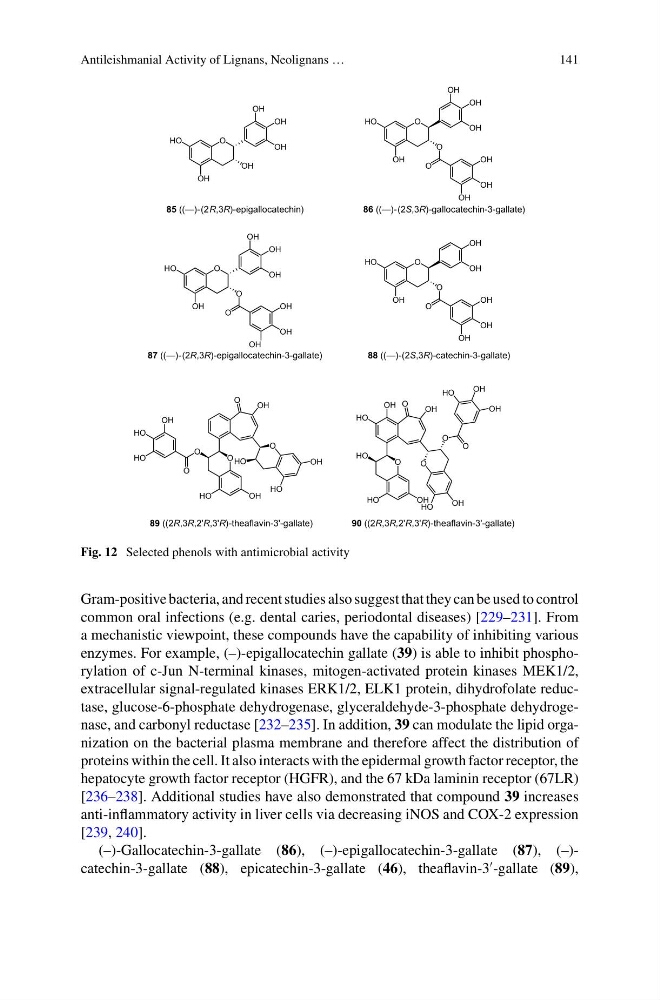
Fig. 12 Selected phenols with antimicrobial activity
Gram-positive bacteria, and recent studies also suggest that they can be used to control
common oral infections (e.g. dental caries, periodontal diseases) [229–231]. From
a mechanistic viewpoint, these compounds have the capability of inhibiting various
enzymes. For example, (–)-epigallocatechin gallate (39) is able to inhibit phosphorylation of c-Jun N-terminal kinases, mitogen-activated protein kinases MEK1/2,
extracellular signal-regulated kinases ERK1/2, ELK1 protein, dihydrofolate reductase, glucose-6-phosphate dehydrogenase, glyceraldehyde-3-phosphate dehydrogenase, and carbonyl reductase [232–235]. In addition, 39 can modulate the lipid organization on the bacterial plasma membrane and therefore affect the distribution of
proteins within the cell. It also interacts with the epidermal growth factor receptor, the
hepatocyte growth factor receptor (HGFR), and the 67 kDa laminin receptor (67LR)
[236–238]. Additional studies have also demonstrated that compound 39 increases
anti-inflammatory activity in liver cells via decreasing iNOS and COX-2 expression
[239, 240].
(–)-Gallocatechin-3-gallate (86), (–)-epigallocatechin-3-gallate (87), (–)catechin-3-gallate (88), epicatechin-3-gallate (46), theaflavin-3
-gallate (89),
141
O
OH
OH
HO
OH
OH
OH
85 ((–)- (2R,3R)-epigallocatechin)
O
O
O
HO
OH
OH
OH
OH
OH
OH
OH
86 ((–)-(2S,3R)-gallocatechin-3-gallate)
O
O
O
HO
OH
OH
OH
OH
OH
OH
OH
87 ((–)-(2R,3R)-epigallocatechin-3-gallate)
O
O
O
HO
OH
OH
OH
OH
OH
OH
88 ((–)-(2S,3R)-catechin-3-gallate)
O
HO
HO
OH
O
HO
OH
OH
O
O
O
HO
OH
OH
HO
OH
90 ((2R,3R,2'R,3'R)-theaflavin-3'-gallate)
89 ((2R,3R,2'R,3'R)-theaflavin-3'-gallate)
O
O
O
HO
OH
HO
OH
HO
O
HO
HO
OH
OH
O
Fig. 12 Selected phenols with antimicrobial activity
Gram-positive bacteria, and recent studies also suggest that they can be used to control
common oral infections (e.g. dental caries, periodontal diseases) [229–231]. From
a mechanistic viewpoint, these compounds have the capability of inhibiting various
enzymes. For example, (–)-epigallocatechin gallate (39) is able to inhibit phosphorylation of c-Jun N-terminal kinases, mitogen-activated protein kinases MEK1/2,
extracellular signal-regulated kinases ERK1/2, ELK1 protein, dihydrofolate reductase, glucose-6-phosphate dehydrogenase, glyceraldehyde-3-phosphate dehydrogenase, and carbonyl reductase [232–235]. In addition, 39 can modulate the lipid organization on the bacterial plasma membrane and therefore affect the distribution of
proteins within the cell. It also interacts with the epidermal growth factor receptor, the
hepatocyte growth factor receptor (HGFR), and the 67 kDa laminin receptor (67LR)
[236–238]. Additional studies have also demonstrated that compound 39 increases
anti-inflammatory activity in liver cells via decreasing iNOS and COX-2 expression
[239, 240].
(–)-Gallocatechin-3-gallate (86), (–)-epigallocatechin-3-gallate (87), (–)catechin-3-gallate (88), epicatechin-3-gallate (46), theaflavin-3
-gallate (89),