

140
J. Pospíšil et al.
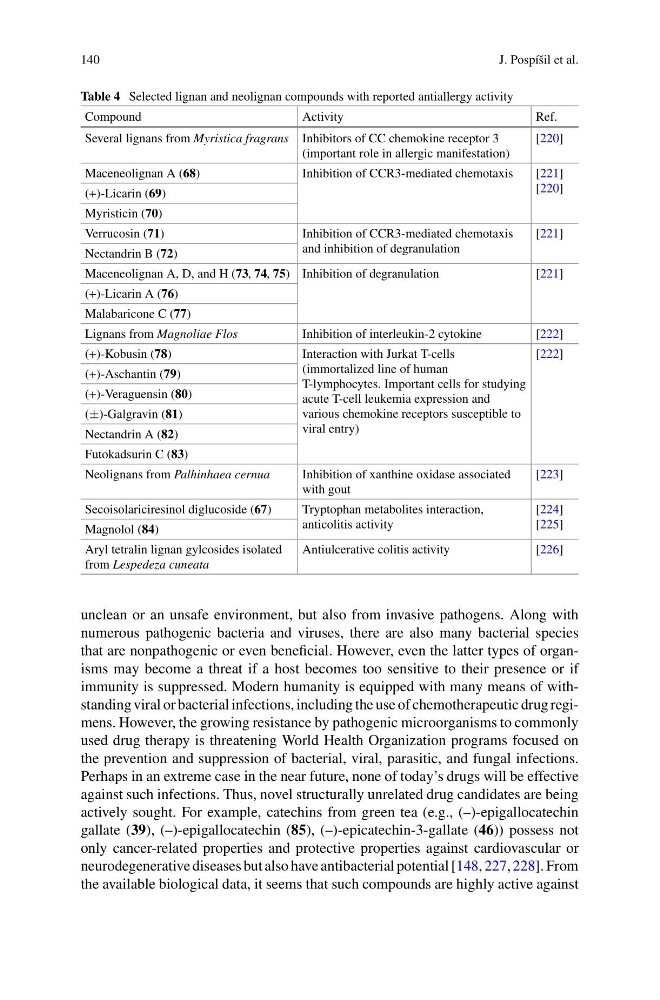
Table 4 Selected lignan and neolignan compounds with reported antiallergy activity
Compound
Activity
Ref.
Several lignans from Myristica fragrans Inhibitors of CC chemokine receptor 3
(important role in allergic manifestation)
[220]
Maceneolignan A (68)
Inhibition of CCR3-mediated chemotaxis
[221]
[220]
(+)-Licarin (69)
Myristicin (70)
Verrucosin (71)
Inhibition of CCR3-mediated chemotaxis
and inhibition of degranulation
[221]
Nectandrin B (72)
Maceneolignan A, D, and H (73, 74, 75) Inhibition of degranulation
[221]
(+)-Licarin A (76)
Malabaricone C (77)
Lignans from Magnoliae Flos
Inhibition of interleukin-2 cytokine
[222]
(+)-Kobusin (78)
Interaction with Jurkat T-cells
(immortalized line of human
T-lymphocytes. Important cells for studying
acute T-cell leukemia expression and
various chemokine receptors susceptible to
viral entry)
[222]
(+)-Aschantin (79)
(+)-Veraguensin (80)
(±)-Galgravin (81)
Nectandrin A (82)
Futokadsurin C (83)
Neolignans from Palhinhaea cernua
Inhibition of xanthine oxidase associated
with gout
[223]
Secoisolariciresinol diglucoside (67)
Tryptophan metabolites interaction,
anticolitis activity
[224]
[225]
Magnolol (84)
Aryl tetralin lignan gylcosides isolated
from Lespedeza cuneata
Antiulcerative colitis activity
[226]
unclean or an unsafe environment, but also from invasive pathogens. Along with
numerous pathogenic bacteria and viruses, there are also many bacterial species
that are nonpathogenic or even beneficial. However, even the latter types of organisms may become a threat if a host becomes too sensitive to their presence or if
immunity is suppressed. Modern humanity is equipped with many means of withstanding viral or bacterial infections, including the use of chemotherapeutic drug regimens. However, the growing resistance by pathogenic microorganisms to commonly
used drug therapy is threatening World Health Organization programs focused on
the prevention and suppression of bacterial, viral, parasitic, and fungal infections.
Perhaps in an extreme case in the near future, none of today’s drugs will be effective
against such infections. Thus, novel structurally unrelated drug candidates are being
actively sought. For example, catechins from green tea (e.g., (–)-epigallocatechin
gallate (39), (–)-epigallocatechin (85), (–)-epicatechin-3-gallate (46)) possess not
only cancer-related properties and protective properties against cardiovascular or
neurodegenerative diseases but also have antibacterial potential [148, 227, 228]. From
the available biological data, it seems that such compounds are highly active against
J. Pospíšil et al.
Table 4 Selected lignan and neolignan compounds with reported antiallergy activity
Compound
Activity
Ref.
Several lignans from Myristica fragrans Inhibitors of CC chemokine receptor 3
(important role in allergic manifestation)
[220]
Maceneolignan A (68)
Inhibition of CCR3-mediated chemotaxis
[221]
[220]
(+)-Licarin (69)
Myristicin (70)
Verrucosin (71)
Inhibition of CCR3-mediated chemotaxis
and inhibition of degranulation
[221]
Nectandrin B (72)
Maceneolignan A, D, and H (73, 74, 75) Inhibition of degranulation
[221]
(+)-Licarin A (76)
Malabaricone C (77)
Lignans from Magnoliae Flos
Inhibition of interleukin-2 cytokine
[222]
(+)-Kobusin (78)
Interaction with Jurkat T-cells
(immortalized line of human
T-lymphocytes. Important cells for studying
acute T-cell leukemia expression and
various chemokine receptors susceptible to
viral entry)
[222]
(+)-Aschantin (79)
(+)-Veraguensin (80)
(±)-Galgravin (81)
Nectandrin A (82)
Futokadsurin C (83)
Neolignans from Palhinhaea cernua
Inhibition of xanthine oxidase associated
with gout
[223]
Secoisolariciresinol diglucoside (67)
Tryptophan metabolites interaction,
anticolitis activity
[224]
[225]
Magnolol (84)
Aryl tetralin lignan gylcosides isolated
from Lespedeza cuneata
Antiulcerative colitis activity
[226]
unclean or an unsafe environment, but also from invasive pathogens. Along with
numerous pathogenic bacteria and viruses, there are also many bacterial species
that are nonpathogenic or even beneficial. However, even the latter types of organisms may become a threat if a host becomes too sensitive to their presence or if
immunity is suppressed. Modern humanity is equipped with many means of withstanding viral or bacterial infections, including the use of chemotherapeutic drug regimens. However, the growing resistance by pathogenic microorganisms to commonly
used drug therapy is threatening World Health Organization programs focused on
the prevention and suppression of bacterial, viral, parasitic, and fungal infections.
Perhaps in an extreme case in the near future, none of today’s drugs will be effective
against such infections. Thus, novel structurally unrelated drug candidates are being
actively sought. For example, catechins from green tea (e.g., (–)-epigallocatechin
gallate (39), (–)-epigallocatechin (85), (–)-epicatechin-3-gallate (46)) possess not
only cancer-related properties and protective properties against cardiovascular or
neurodegenerative diseases but also have antibacterial potential [148, 227, 228]. From
the available biological data, it seems that such compounds are highly active against