

144
J. Pospíšil et al.
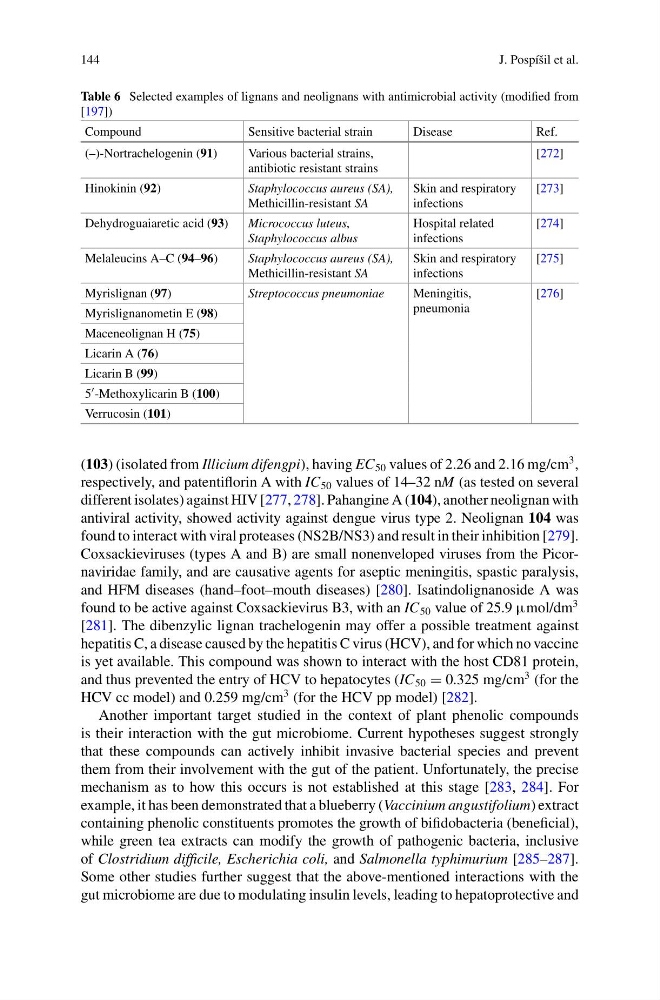
Table 6 Selected examples of lignans and neolignans with antimicrobial activity (modified from
[197])
Compound
Sensitive bacterial strain
Disease
Ref.
(–)-Nortrachelogenin (91)
Various bacterial strains,
antibiotic resistant strains
[272]
Hinokinin (92)
Staphylococcus aureus (SA),
Methicillin-resistant SA
Skin and respiratory
infections
[273]
Dehydroguaiaretic acid (93)
Micrococcus luteus,
Staphylococcus albus
Hospital related
infections
[274]
Melaleucins A–C (94–96)
Staphylococcus aureus (SA),
Methicillin-resistant SA
Skin and respiratory
infections
[275]
Myrislignan (97)
Streptococcus pneumoniae
Meningitis,
pneumonia
[276]
Myrislignanometin E (98)
Maceneolignan H (75)
Licarin A (76)
Licarin B (99)
5 -Methoxylicarin B (100)
Verrucosin (101)
(103) (isolated from Illicium difengpi), having EC 50 values of 2.26 and 2.16 mg/cm
3 ,
respectively, and patentiflorin A with IC 50 values of 14–32 nM (as tested on several
different isolates) against HIV [277, 278]. Pahangine A (104), another neolignan with
antiviral activity, showed activity against dengue virus type 2. Neolignan 104 was
found to interact with viral proteases (NS2B/NS3) and result in their inhibition [279].
Coxsackieviruses (types A and B) are small nonenveloped viruses from the Picornaviridae family, and are causative agents for aseptic meningitis, spastic paralysis,
and HFM diseases (hand–foot–mouth diseases) [280]. Isatindolignanoside A was
found to be active against Coxsackievirus B3, with an IC 50 value of 25.9 μmol/dm
3
[281]. The dibenzylic lignan trachelogenin may offer a possible treatment against
hepatitis C, a disease caused by the hepatitis C virus (HCV), and for which no vaccine
is yet available. This compound was shown to interact with the host CD81 protein,
and thus prevented the entry of HCV to hepatocytes (IC 50 = 0.325 mg/cm
3 (for the
HCV cc model) and 0.259 mg/cm
3 (for the HCV pp model) [282].
Another important target studied in the context of plant phenolic compounds
is their interaction with the gut microbiome. Current hypotheses suggest strongly
that these compounds can actively inhibit invasive bacterial species and prevent
them from their involvement with the gut of the patient. Unfortunately, the precise
mechanism as to how this occurs is not established at this stage [283, 284]. For
example, it has been demonstrated that a blueberry (Vaccinium angustifolium) extract
containing phenolic constituents promotes the growth of bifidobacteria (beneficial),
while green tea extracts can modify the growth of pathogenic bacteria, inclusive
of Clostridium difficile, Escherichia coli, and Salmonella typhimurium [285–287].
Some other studies further suggest that the above-mentioned interactions with the
gut microbiome are due to modulating insulin levels, leading to hepatoprotective and
J. Pospíšil et al.
Table 6 Selected examples of lignans and neolignans with antimicrobial activity (modified from
[197])
Compound
Sensitive bacterial strain
Disease
Ref.
(–)-Nortrachelogenin (91)
Various bacterial strains,
antibiotic resistant strains
[272]
Hinokinin (92)
Staphylococcus aureus (SA),
Methicillin-resistant SA
Skin and respiratory
infections
[273]
Dehydroguaiaretic acid (93)
Micrococcus luteus,
Staphylococcus albus
Hospital related
infections
[274]
Melaleucins A–C (94–96)
Staphylococcus aureus (SA),
Methicillin-resistant SA
Skin and respiratory
infections
[275]
Myrislignan (97)
Streptococcus pneumoniae
Meningitis,
pneumonia
[276]
Myrislignanometin E (98)
Maceneolignan H (75)
Licarin A (76)
Licarin B (99)
5 -Methoxylicarin B (100)
Verrucosin (101)
(103) (isolated from Illicium difengpi), having EC 50 values of 2.26 and 2.16 mg/cm
3 ,
respectively, and patentiflorin A with IC 50 values of 14–32 nM (as tested on several
different isolates) against HIV [277, 278]. Pahangine A (104), another neolignan with
antiviral activity, showed activity against dengue virus type 2. Neolignan 104 was
found to interact with viral proteases (NS2B/NS3) and result in their inhibition [279].
Coxsackieviruses (types A and B) are small nonenveloped viruses from the Picornaviridae family, and are causative agents for aseptic meningitis, spastic paralysis,
and HFM diseases (hand–foot–mouth diseases) [280]. Isatindolignanoside A was
found to be active against Coxsackievirus B3, with an IC 50 value of 25.9 μmol/dm
3
[281]. The dibenzylic lignan trachelogenin may offer a possible treatment against
hepatitis C, a disease caused by the hepatitis C virus (HCV), and for which no vaccine
is yet available. This compound was shown to interact with the host CD81 protein,
and thus prevented the entry of HCV to hepatocytes (IC 50 = 0.325 mg/cm
3 (for the
HCV cc model) and 0.259 mg/cm
3 (for the HCV pp model) [282].
Another important target studied in the context of plant phenolic compounds
is their interaction with the gut microbiome. Current hypotheses suggest strongly
that these compounds can actively inhibit invasive bacterial species and prevent
them from their involvement with the gut of the patient. Unfortunately, the precise
mechanism as to how this occurs is not established at this stage [283, 284]. For
example, it has been demonstrated that a blueberry (Vaccinium angustifolium) extract
containing phenolic constituents promotes the growth of bifidobacteria (beneficial),
while green tea extracts can modify the growth of pathogenic bacteria, inclusive
of Clostridium difficile, Escherichia coli, and Salmonella typhimurium [285–287].
Some other studies further suggest that the above-mentioned interactions with the
gut microbiome are due to modulating insulin levels, leading to hepatoprotective and