

120
J. Pospíšil et al.
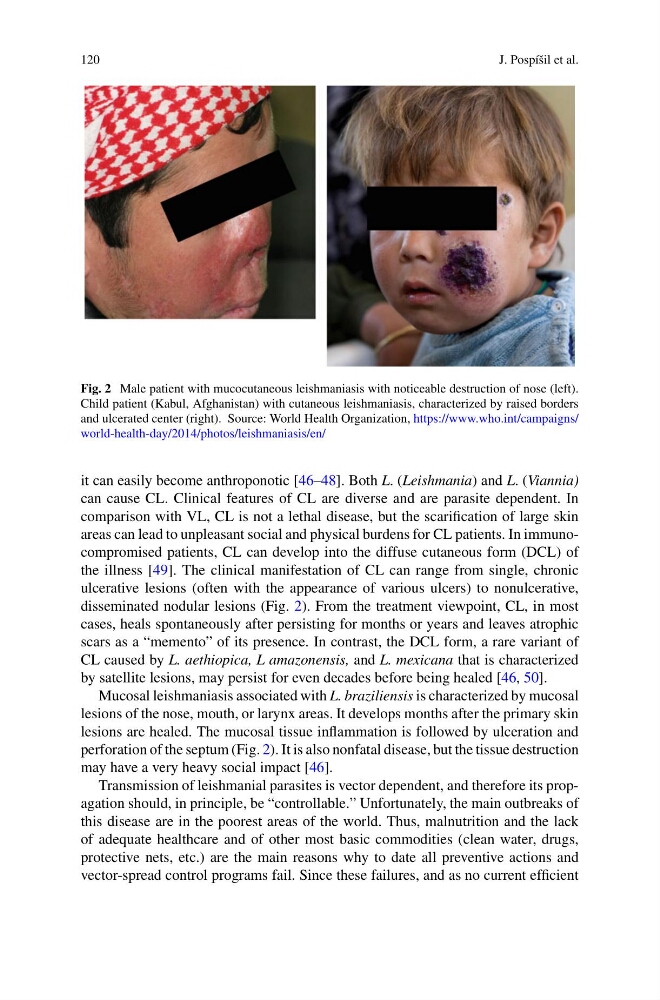
Fig. 2 Male patient with mucocutaneous leishmaniasis with noticeable destruction of nose (left).
Child patient (Kabul, Afghanistan) with cutaneous leishmaniasis, characterized by raised borders
and ulcerated center (right). Source: World Health Organization, https://www.who.int/campaigns/
world-health-day/2014/photos/leishmaniasis/en/
it can easily become anthroponotic [46–48]. Both L. (Leishmania) and L. (Viannia)
can cause CL. Clinical features of CL are diverse and are parasite dependent. In
comparison with VL, CL is not a lethal disease, but the scarification of large skin
areas can lead to unpleasant social and physical burdens for CL patients. In immunocompromised patients, CL can develop into the diffuse cutaneous form (DCL) of
the illness [49]. The clinical manifestation of CL can range from single, chronic
ulcerative lesions (often with the appearance of various ulcers) to nonulcerative,
disseminated nodular lesions (Fig. 2). From the treatment viewpoint, CL, in most
cases, heals spontaneously after persisting for months or years and leaves atrophic
scars as a “memento” of its presence. In contrast, the DCL form, a rare variant of
CL caused by L. aethiopica, L amazonensis, and L. mexicana that is characterized
by satellite lesions, may persist for even decades before being healed [46, 50].
Mucosal leishmaniasis associated with L. braziliensis is characterized by mucosal
lesions of the nose, mouth, or larynx areas. It develops months after the primary skin
lesions are healed. The mucosal tissue inflammation is followed by ulceration and
perforation of the septum (Fig. 2). It is also nonfatal disease, but the tissue destruction
may have a very heavy social impact [46].
Transmission of leishmanial parasites is vector dependent, and therefore its propagation should, in principle, be “controllable.” Unfortunately, the main outbreaks of
this disease are in the poorest areas of the world. Thus, malnutrition and the lack
of adequate healthcare and of other most basic commodities (clean water, drugs,
protective nets, etc.) are the main reasons why to date all preventive actions and
vector-spread control programs fail. Since these failures, and as no current efficient
J. Pospíšil et al.
Fig. 2 Male patient with mucocutaneous leishmaniasis with noticeable destruction of nose (left).
Child patient (Kabul, Afghanistan) with cutaneous leishmaniasis, characterized by raised borders
and ulcerated center (right). Source: World Health Organization, https://www.who.int/campaigns/
world-health-day/2014/photos/leishmaniasis/en/
it can easily become anthroponotic [46–48]. Both L. (Leishmania) and L. (Viannia)
can cause CL. Clinical features of CL are diverse and are parasite dependent. In
comparison with VL, CL is not a lethal disease, but the scarification of large skin
areas can lead to unpleasant social and physical burdens for CL patients. In immunocompromised patients, CL can develop into the diffuse cutaneous form (DCL) of
the illness [49]. The clinical manifestation of CL can range from single, chronic
ulcerative lesions (often with the appearance of various ulcers) to nonulcerative,
disseminated nodular lesions (Fig. 2). From the treatment viewpoint, CL, in most
cases, heals spontaneously after persisting for months or years and leaves atrophic
scars as a “memento” of its presence. In contrast, the DCL form, a rare variant of
CL caused by L. aethiopica, L amazonensis, and L. mexicana that is characterized
by satellite lesions, may persist for even decades before being healed [46, 50].
Mucosal leishmaniasis associated with L. braziliensis is characterized by mucosal
lesions of the nose, mouth, or larynx areas. It develops months after the primary skin
lesions are healed. The mucosal tissue inflammation is followed by ulceration and
perforation of the septum (Fig. 2). It is also nonfatal disease, but the tissue destruction
may have a very heavy social impact [46].
Transmission of leishmanial parasites is vector dependent, and therefore its propagation should, in principle, be “controllable.” Unfortunately, the main outbreaks of
this disease are in the poorest areas of the world. Thus, malnutrition and the lack
of adequate healthcare and of other most basic commodities (clean water, drugs,
protective nets, etc.) are the main reasons why to date all preventive actions and
vector-spread control programs fail. Since these failures, and as no current efficient