

272 11 Mechanical Properties
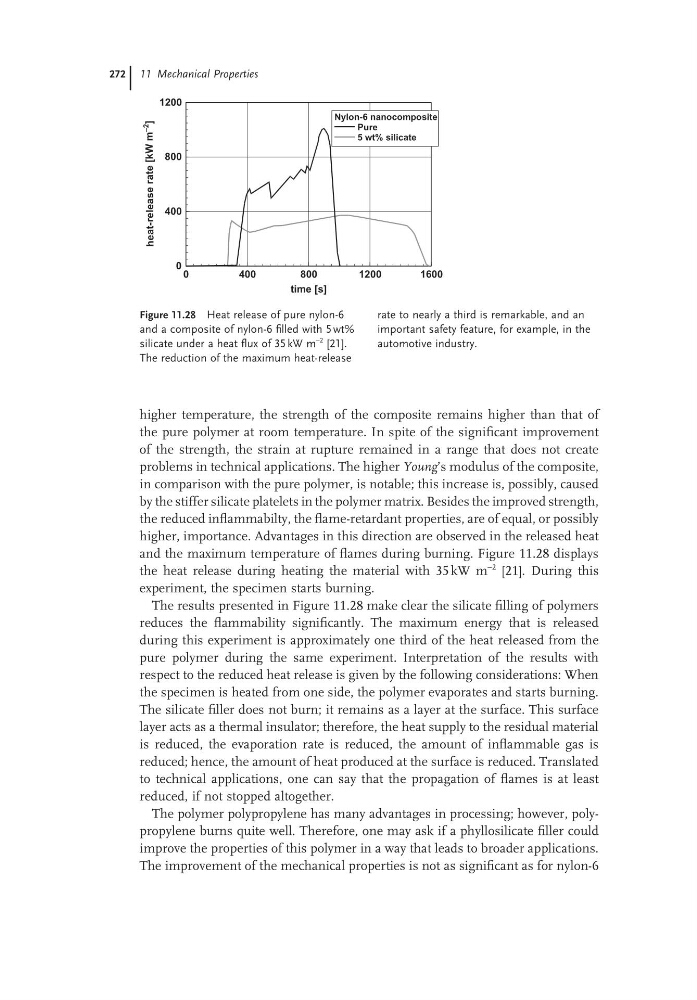
Figure 11.28 Heat release of pure nylon-6
and a composite of nylon-6 filled with 5 wt%
silicate under a heat flux of 35 kW m
−2 [21].
The reduction of the maximum heat-release
rate to nearly a third is remarkable, and an
important safety feature, for example, in the
automotive industry.
0
400
800
1200
1600
time [s]
0
400
800
1200
heat-release
rate
[kW
m
–2
]
Nylon-6 nanocomposite
Pure
5 wt% silicate
higher temperature, the strength of the composite remains higher than that of
the pure polymer at room temperature. In spite of the significant improvement
of the strength, the strain at rupture remained in a range that does not create
problems in technical applications. The higher Young’s modulus of the composite,
in comparison with the pure polymer, is notable; this increase is, possibly, caused
by the stiffer silicate platelets in the polymer matrix. Besides the improved strength,
the reduced inflammabilty, the flame-retardant properties, are of equal, or possibly
higher, importance. Advantages in this direction are observed in the released heat
and the maximum temperature of flames during burning. Figure 11.28 displays
the heat release during heating the material with 35 kW m
−2 [21]. During this
experiment, the specimen starts burning.
The results presented in Figure 11.28 make clear the silicate filling of polymers
reduces the flammability significantly. The maximum energy that is released
during this experiment is approximately one third of the heat released from the
pure polymer during the same experiment. Interpretation of the results with
respect to the reduced heat release is given by the following considerations: When
the specimen is heated from one side, the polymer evaporates and starts burning.
The silicate filler does not burn; it remains as a layer at the surface. This surface
layer acts as a thermal insulator; therefore, the heat supply to the residual material
is reduced, the evaporation rate is reduced, the amount of inflammable gas is
reduced; hence, the amount of heat produced at the surface is reduced. Translated
to technical applications, one can say that the propagation of flames is at least
reduced, if not stopped altogether.
The polymer polypropylene has many advantages in processing; however, polypropylene burns quite well. Therefore, one may ask if a phyllosilicate filler could
improve the properties of this polymer in a way that leads to broader applications.
The improvement of the mechanical properties is not as significant as for nylon-6
Figure 11.28 Heat release of pure nylon-6
and a composite of nylon-6 filled with 5 wt%
silicate under a heat flux of 35 kW m
−2 [21].
The reduction of the maximum heat-release
rate to nearly a third is remarkable, and an
important safety feature, for example, in the
automotive industry.
0
400
800
1200
1600
time [s]
0
400
800
1200
heat-release
rate
[kW
m
–2
]
Nylon-6 nanocomposite
Pure
5 wt% silicate
higher temperature, the strength of the composite remains higher than that of
the pure polymer at room temperature. In spite of the significant improvement
of the strength, the strain at rupture remained in a range that does not create
problems in technical applications. The higher Young’s modulus of the composite,
in comparison with the pure polymer, is notable; this increase is, possibly, caused
by the stiffer silicate platelets in the polymer matrix. Besides the improved strength,
the reduced inflammabilty, the flame-retardant properties, are of equal, or possibly
higher, importance. Advantages in this direction are observed in the released heat
and the maximum temperature of flames during burning. Figure 11.28 displays
the heat release during heating the material with 35 kW m
−2 [21]. During this
experiment, the specimen starts burning.
The results presented in Figure 11.28 make clear the silicate filling of polymers
reduces the flammability significantly. The maximum energy that is released
during this experiment is approximately one third of the heat released from the
pure polymer during the same experiment. Interpretation of the results with
respect to the reduced heat release is given by the following considerations: When
the specimen is heated from one side, the polymer evaporates and starts burning.
The silicate filler does not burn; it remains as a layer at the surface. This surface
layer acts as a thermal insulator; therefore, the heat supply to the residual material
is reduced, the evaporation rate is reduced, the amount of inflammable gas is
reduced; hence, the amount of heat produced at the surface is reduced. Translated
to technical applications, one can say that the propagation of flames is at least
reduced, if not stopped altogether.
The polymer polypropylene has many advantages in processing; however, polypropylene burns quite well. Therefore, one may ask if a phyllosilicate filler could
improve the properties of this polymer in a way that leads to broader applications.
The improvement of the mechanical properties is not as significant as for nylon-6