

11.3 Deformation Mechanisms of Nanocrystalline Materials 257
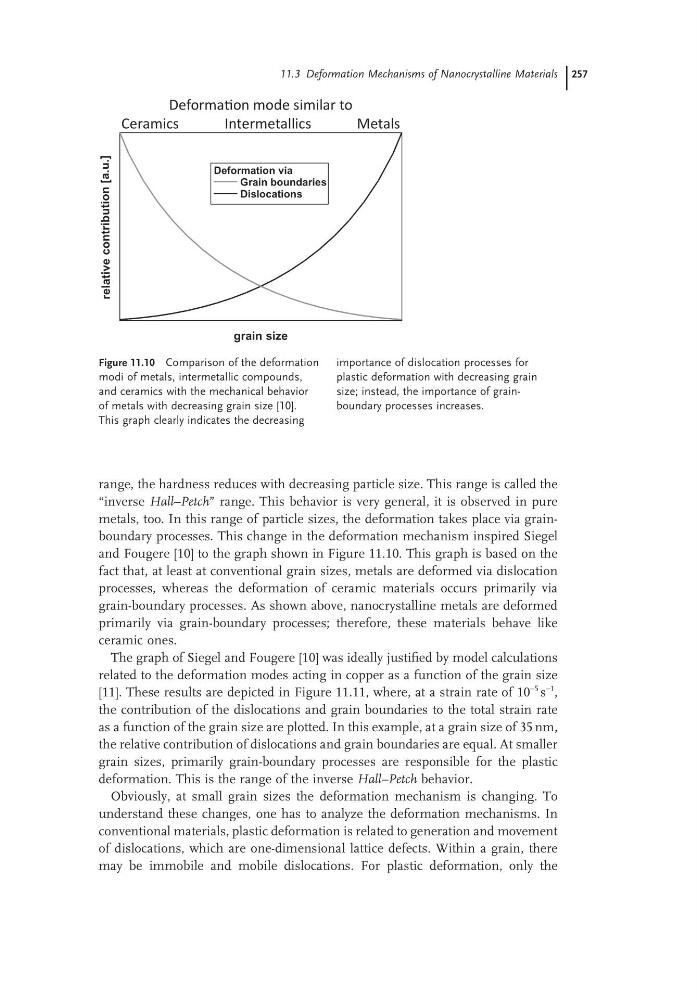
Figure 11.10 Comparison of the deformation
modi of metals, intermetallic compounds,
and ceramics with the mechanical behavior
of metals with decreasing grain size [10].
This graph clearly indicates the decreasing
importance of dislocation processes for
plastic deformation with decreasing grain
size; instead, the importance of grainboundary processes increases.
DeformaƟon mode similar to
Ceramics
Intermetallics
Metals
0.1
grain size
0
relative
contribution
[a.u.]
Deformation via
Grain boundaries
Dislocations
range, the hardness reduces with decreasing particle size. This range is called the
“inverse Hall–Petch” range. This behavior is very general, it is observed in pure
metals, too. In this range of particle sizes, the deformation takes place via grainboundary processes. This change in the deformation mechanism inspired Siegel
and Fougere [10] to the graph shown in Figure 11.10. This graph is based on the
fact that, at least at conventional grain sizes, metals are deformed via dislocation
processes, whereas the deformation of ceramic materials occurs primarily via
grain-boundary processes. As shown above, nanocrystalline metals are deformed
primarily via grain-boundary processes; therefore, these materials behave like
ceramic ones.
The graph of Siegel and Fougere [10] was ideally justified by model calculations
related to the deformation modes acting in copper as a function of the grain size
[11]. These results are depicted in Figure 11.11, where, at a strain rate of 10
−5 s
−1 ,
the contribution of the dislocations and grain boundaries to the total strain rate
as a function of the grain size are plotted. In this example, at a grain size of 35 nm,
the relative contribution of dislocations and grain boundaries are equal. At smaller
grain sizes, primarily grain-boundary processes are responsible for the plastic
deformation. This is the range of the inverse Hall–Petch behavior.
Obviously, at small grain sizes the deformation mechanism is changing. To
understand these changes, one has to analyze the deformation mechanisms. In
conventional materials, plastic deformation is related to generation and movement
of dislocations, which are one-dimensional lattice defects. Within a grain, there
may be immobile and mobile dislocations. For plastic deformation, only the
Figure 11.10 Comparison of the deformation
modi of metals, intermetallic compounds,
and ceramics with the mechanical behavior
of metals with decreasing grain size [10].
This graph clearly indicates the decreasing
importance of dislocation processes for
plastic deformation with decreasing grain
size; instead, the importance of grainboundary processes increases.
DeformaƟon mode similar to
Ceramics
Intermetallics
Metals
0.1
grain size
0
relative
contribution
[a.u.]
Deformation via
Grain boundaries
Dislocations
range, the hardness reduces with decreasing particle size. This range is called the
“inverse Hall–Petch” range. This behavior is very general, it is observed in pure
metals, too. In this range of particle sizes, the deformation takes place via grainboundary processes. This change in the deformation mechanism inspired Siegel
and Fougere [10] to the graph shown in Figure 11.10. This graph is based on the
fact that, at least at conventional grain sizes, metals are deformed via dislocation
processes, whereas the deformation of ceramic materials occurs primarily via
grain-boundary processes. As shown above, nanocrystalline metals are deformed
primarily via grain-boundary processes; therefore, these materials behave like
ceramic ones.
The graph of Siegel and Fougere [10] was ideally justified by model calculations
related to the deformation modes acting in copper as a function of the grain size
[11]. These results are depicted in Figure 11.11, where, at a strain rate of 10
−5 s
−1 ,
the contribution of the dislocations and grain boundaries to the total strain rate
as a function of the grain size are plotted. In this example, at a grain size of 35 nm,
the relative contribution of dislocations and grain boundaries are equal. At smaller
grain sizes, primarily grain-boundary processes are responsible for the plastic
deformation. This is the range of the inverse Hall–Petch behavior.
Obviously, at small grain sizes the deformation mechanism is changing. To
understand these changes, one has to analyze the deformation mechanisms. In
conventional materials, plastic deformation is related to generation and movement
of dislocations, which are one-dimensional lattice defects. Within a grain, there
may be immobile and mobile dislocations. For plastic deformation, only the