

9.8 Electroluminescence 215
9.8
Electroluminescence
In electroluminescent devices, light emission is stimulated by electric fields
instead of energy-rich photons. Therefore, light emission can be controlled easily
by means of electronic devices. The electrical stimulation may be provided by the
electric field in a field-effect-like structure or by injection of charge carriers. Presently, the latter process is the one with significantly better chances for broad
industrial application.
With respect to economical applications, electroluminescence has an extremely
high potential. Primarily, in consumer products, such as TV sets, cell phones, or
monitors, there is the potential to replace the back-lit systems working with liquid
crystals devices (LCD). Looking at these applications, systems working with special
organic particles (OLED) are the most progressed. Figure 9.40 displays the basic
setup of an electroluminescence device. Such a device is based on a glass substrate,
which is coated with ITO (indium tin oxide), an optically transparent electrical
conductor. The next layer contains the luminescent particles. This layer is covered
with a counterelectrode, in most cases made of aluminum. In-between the electrodes there is the electrical field, which stimulates light emission. Even when the
stimulation of light emission by injection of charge carriers is a direct current,
DC, phenomenon, in many cases the application of alternating current, AC, is of
advantage.
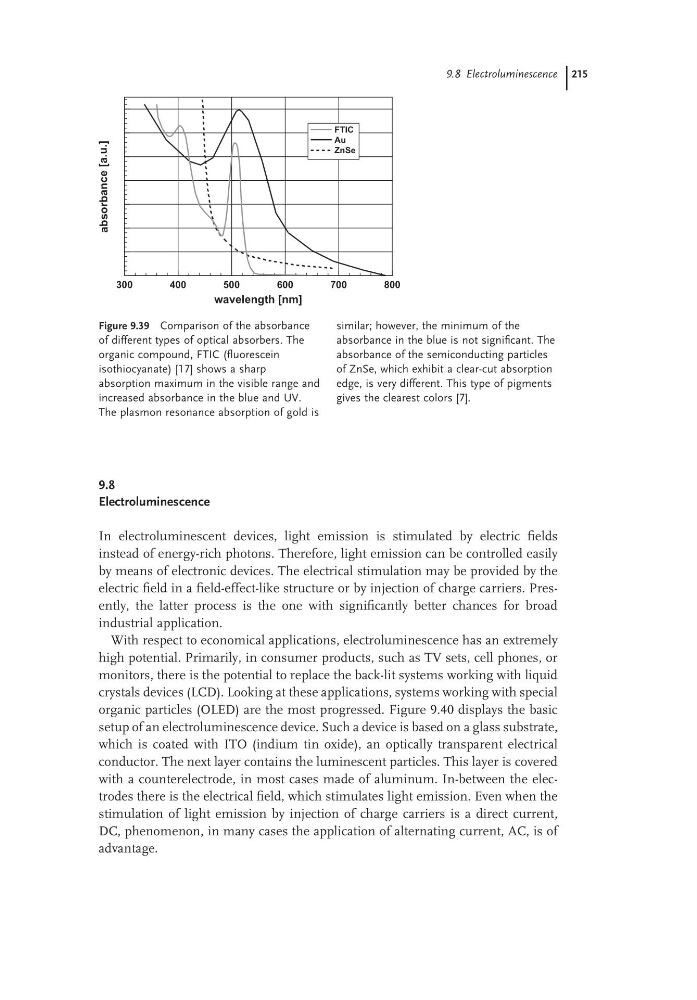
Figure 9.39 Comparison of the absorbance
of different types of optical absorbers. The
organic compound, FTIC (fluorescein
isothiocyanate) [17] shows a sharp
absorption maximum in the visible range and
increased absorbance in the blue and UV.
The plasmon resonance absorption of gold is
similar; however, the minimum of the
absorbance in the blue is not significant. The
absorbance of the semiconducting particles
of ZnSe, which exhibit a clear-cut absorption
edge, is very different. This type of pigments
gives the clearest colors [7].
300
400
500
600
700
800
wavelength [nm]
0
2
4
6
8
10
12
14
absorbance
[a.u.]
FTIC
Au
ZnSe
9.8
Electroluminescence
In electroluminescent devices, light emission is stimulated by electric fields
instead of energy-rich photons. Therefore, light emission can be controlled easily
by means of electronic devices. The electrical stimulation may be provided by the
electric field in a field-effect-like structure or by injection of charge carriers. Presently, the latter process is the one with significantly better chances for broad
industrial application.
With respect to economical applications, electroluminescence has an extremely
high potential. Primarily, in consumer products, such as TV sets, cell phones, or
monitors, there is the potential to replace the back-lit systems working with liquid
crystals devices (LCD). Looking at these applications, systems working with special
organic particles (OLED) are the most progressed. Figure 9.40 displays the basic
setup of an electroluminescence device. Such a device is based on a glass substrate,
which is coated with ITO (indium tin oxide), an optically transparent electrical
conductor. The next layer contains the luminescent particles. This layer is covered
with a counterelectrode, in most cases made of aluminum. In-between the electrodes there is the electrical field, which stimulates light emission. Even when the
stimulation of light emission by injection of charge carriers is a direct current,
DC, phenomenon, in many cases the application of alternating current, AC, is of
advantage.
Figure 9.39 Comparison of the absorbance
of different types of optical absorbers. The
organic compound, FTIC (fluorescein
isothiocyanate) [17] shows a sharp
absorption maximum in the visible range and
increased absorbance in the blue and UV.
The plasmon resonance absorption of gold is
similar; however, the minimum of the
absorbance in the blue is not significant. The
absorbance of the semiconducting particles
of ZnSe, which exhibit a clear-cut absorption
edge, is very different. This type of pigments
gives the clearest colors [7].
300
400
500
600
700
800
wavelength [nm]
0
2
4
6
8
10
12
14
absorbance
[a.u.]
FTIC
Au
ZnSe