

9.5 Metallic Nanoparticles – Plasmon Resonance 199
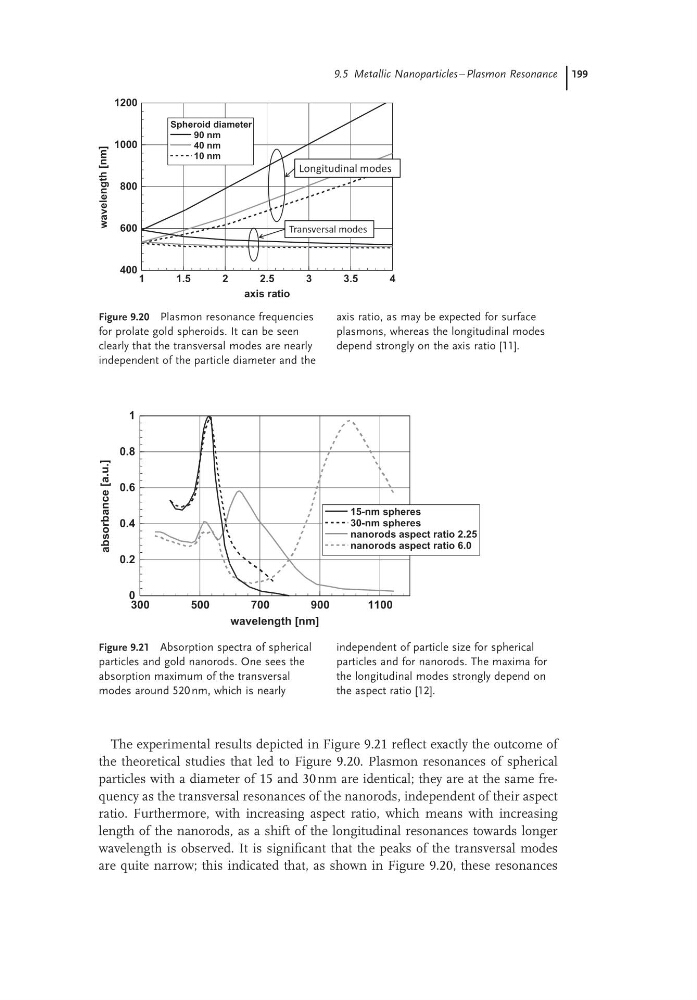
Figure 9.20 Plasmon resonance frequencies
for prolate gold spheroids. It can be seen
clearly that the transversal modes are nearly
independent of the particle diameter and the
axis ratio, as may be expected for surface
plasmons, whereas the longitudinal modes
depend strongly on the axis ratio [11].
1
1.5
2
2.5
3
3.5
4
axis ratio
400
600
800
1000
1200
wavelength
[nm]
Spheroid diameter
90 nm
40 nm
10 nm
Longitudinal modes
Transversal modes
Figure 9.21 Absorption spectra of spherical
particles and gold nanorods. One sees the
absorption maximum of the transversal
modes around 520 nm, which is nearly
independent of particle size for spherical
particles and for nanorods. The maxima for
the longitudinal modes strongly depend on
the aspect ratio [12].
300
500
700
900
1100
wavelength [nm]
0
0.2
0.4
0.6
0.8
1
absorbance
[a.u.]
15-nm spheres
30-nm spheres
nanorods aspect ratio 2.25
nanorods aspect ratio 6.0
The experimental results depicted in Figure 9.21 reflect exactly the outcome of
the theoretical studies that led to Figure 9.20. Plasmon resonances of spherical
particles with a diameter of 15 and 30 nm are identical; they are at the same frequency as the transversal resonances of the nanorods, independent of their aspect
ratio. Furthermore, with increasing aspect ratio, which means with increasing
length of the nanorods, as a shift of the longitudinal resonances towards longer
wavelength is observed. It is significant that the peaks of the transversal modes
are quite narrow; this indicated that, as shown in Figure 9.20, these resonances
Figure 9.20 Plasmon resonance frequencies
for prolate gold spheroids. It can be seen
clearly that the transversal modes are nearly
independent of the particle diameter and the
axis ratio, as may be expected for surface
plasmons, whereas the longitudinal modes
depend strongly on the axis ratio [11].
1
1.5
2
2.5
3
3.5
4
axis ratio
400
600
800
1000
1200
wavelength
[nm]
Spheroid diameter
90 nm
40 nm
10 nm
Longitudinal modes
Transversal modes
Figure 9.21 Absorption spectra of spherical
particles and gold nanorods. One sees the
absorption maximum of the transversal
modes around 520 nm, which is nearly
independent of particle size for spherical
particles and for nanorods. The maxima for
the longitudinal modes strongly depend on
the aspect ratio [12].
300
500
700
900
1100
wavelength [nm]
0
0.2
0.4
0.6
0.8
1
absorbance
[a.u.]
15-nm spheres
30-nm spheres
nanorods aspect ratio 2.25
nanorods aspect ratio 6.0
The experimental results depicted in Figure 9.21 reflect exactly the outcome of
the theoretical studies that led to Figure 9.20. Plasmon resonances of spherical
particles with a diameter of 15 and 30 nm are identical; they are at the same frequency as the transversal resonances of the nanorods, independent of their aspect
ratio. Furthermore, with increasing aspect ratio, which means with increasing
length of the nanorods, as a shift of the longitudinal resonances towards longer
wavelength is observed. It is significant that the peaks of the transversal modes
are quite narrow; this indicated that, as shown in Figure 9.20, these resonances