

174 8 Magnetic Nanomaterials, Superparamagnetism
volume fraction of magnetically hard particles in the range of 10 vol% is sufficient
to obtain a superior magnetically composite.
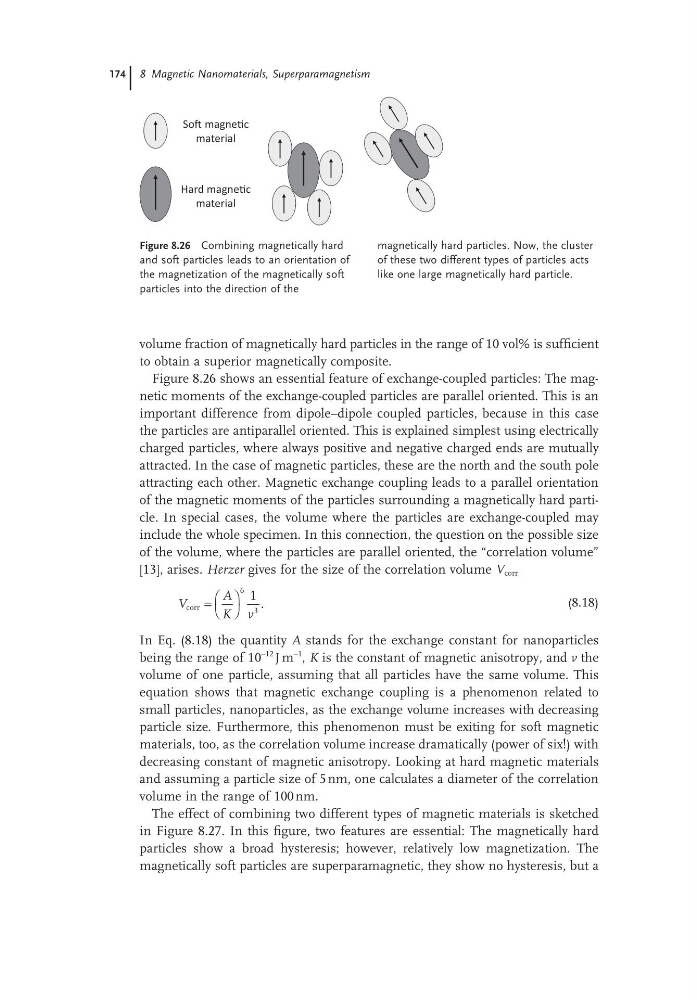
Figure 8.26 shows an essential feature of exchangecoupled particles: The magnetic moments of the exchangecoupled particles are parallel oriented. This is an
important difference from dipole–dipole coupled particles, because in this case
the particles are antiparallel oriented. This is explained simplest using electrically
charged particles, where always positive and negative charged ends are mutually
attracted. In the case of magnetic particles, these are the north and the south pole
attracting each other. Magnetic exchange coupling leads to a parallel orientation
of the magnetic moments of the particles surrounding a magnetically hard particle. In special cases, the volume where the particles are exchangecoupled may
include the whole specimen. In this connection, the question on the possible size
of the volume, where the particles are parallel oriented, the “correlation volume”
[13], arises. Herzer gives for the size of the correlation volume V corr
V
A
K v
corr =
6
3
1 .
(8.18)
In Eq. (8.18) the quantity A stands for the exchange constant for nanoparticles
being the range of 10
−12 J m
−1
, K is the constant of magnetic anisotropy, and v the
volume of one particle, assuming that all particles have the same volume. This
equation shows that magnetic exchange coupling is a phenomenon related to
small particles, nanoparticles, as the exchange volume increases with decreasing
particle size. Furthermore, this phenomenon must be exiting for soft magnetic
materials, too, as the correlation volume increase dramatically (power of six!) with
decreasing constant of magnetic anisotropy. Looking at hard magnetic materials
and assuming a particle size of 5 nm, one calculates a diameter of the correlation
volume in the range of 100 nm.
The effect of combining two different types of magnetic materials is sketched
in Figure 8.27. In this figure, two features are essential: The magnetically hard
particles show a broad hysteresis; however, relatively low magnetization. The
magnetically soft particles are superparamagnetic, they show no hysteresis, but a
Figure 8.26 Combining magnetically hard
and soft particles leads to an orientation of
the magnetization of the magnetically soft
particles into the direction of the
magnetically hard particles. Now, the cluster
of these two different types of particles acts
like one large magnetically hard particle.
SoŌ magneƟc
material
Hard magneƟc
material
volume fraction of magnetically hard particles in the range of 10 vol% is sufficient
to obtain a superior magnetically composite.
Figure 8.26 shows an essential feature of exchangecoupled particles: The magnetic moments of the exchangecoupled particles are parallel oriented. This is an
important difference from dipole–dipole coupled particles, because in this case
the particles are antiparallel oriented. This is explained simplest using electrically
charged particles, where always positive and negative charged ends are mutually
attracted. In the case of magnetic particles, these are the north and the south pole
attracting each other. Magnetic exchange coupling leads to a parallel orientation
of the magnetic moments of the particles surrounding a magnetically hard particle. In special cases, the volume where the particles are exchangecoupled may
include the whole specimen. In this connection, the question on the possible size
of the volume, where the particles are parallel oriented, the “correlation volume”
[13], arises. Herzer gives for the size of the correlation volume V corr
V
A
K v
corr =
6
3
1 .
(8.18)
In Eq. (8.18) the quantity A stands for the exchange constant for nanoparticles
being the range of 10
−12 J m
−1
, K is the constant of magnetic anisotropy, and v the
volume of one particle, assuming that all particles have the same volume. This
equation shows that magnetic exchange coupling is a phenomenon related to
small particles, nanoparticles, as the exchange volume increases with decreasing
particle size. Furthermore, this phenomenon must be exiting for soft magnetic
materials, too, as the correlation volume increase dramatically (power of six!) with
decreasing constant of magnetic anisotropy. Looking at hard magnetic materials
and assuming a particle size of 5 nm, one calculates a diameter of the correlation
volume in the range of 100 nm.
The effect of combining two different types of magnetic materials is sketched
in Figure 8.27. In this figure, two features are essential: The magnetically hard
particles show a broad hysteresis; however, relatively low magnetization. The
magnetically soft particles are superparamagnetic, they show no hysteresis, but a
Figure 8.26 Combining magnetically hard
and soft particles leads to an orientation of
the magnetization of the magnetically soft
particles into the direction of the
magnetically hard particles. Now, the cluster
of these two different types of particles acts
like one large magnetically hard particle.
SoŌ magneƟc
material
Hard magneƟc
material