

8.6 Exchange-Coupled Magnetic Nanoparticles 173
8.6
Exchange-Coupled Magnetic Nanoparticles
Caused by the dipole moment of magnetic particles, they interact. In view of
superpramagnetism, this phenomenon is adverse. On the other hand, why not
use this interaction to create new materials. This is exactly what Kneller and Hawig
[12] did; by wise combination of different nanoscaled magnetic materials they
developed new materials. The basic idea may be summarized as follows: Magnetically hard particles will keep their direction of magnetization also when other
magnetic particles come close. Magnetically soft particles tend to rotate the direction of magnetization into the direction of an external field, certainly, also into the
direction of a field created by an other particle. Therefore, Kneller and Hawig
combined magnetically soft with magnetically hard particles. In other words: The
soft magnetic particles, in most cases superparamagnetic particles, directly adjacent to a hard magnetic particle are forced by the hard magnetic particles in their
direction. As a result, the whole composite is magnetically oriented into the same
direction. This has the following advantages:
• The magnetically soft particles have higher magnetization as compared to
magnetically hard materials. In combination, one expects better magnetic
properties with higher magnetization.
• Magnetically hard materials are significantly more expensive than magnetically
soft materials; therefore, one expects a cheaper composite material.
The forced orientation of the soft magnetic particles in the magnetic field of the
magnetically hard particles is depicted in Figure 8.26. The magnetically soft and
hard particles are exchangecoupled. Kneller and Hawig [12] estimated that a
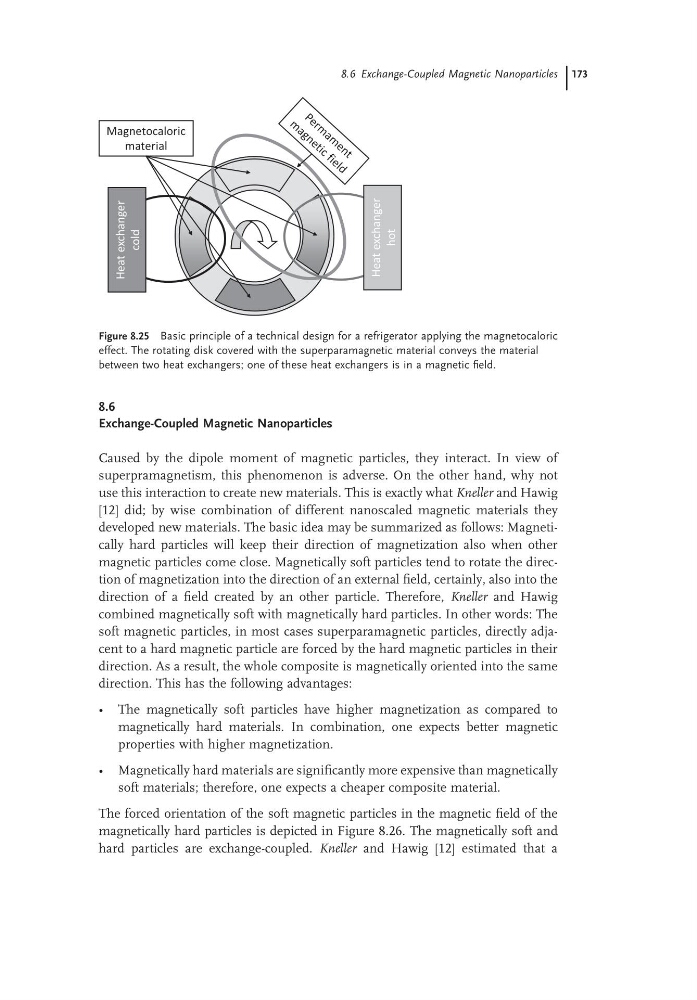
Figure 8.25 Basic principle of a technical design for a refrigerator applying the magnetocaloric
effect. The rotating disk covered with the superparamagnetic material conveys the material
between two heat exchangers; one of these heat exchangers is in a magnetic field.
Heat exchanger
cold
Heat exchanger
hot
Magnetocaloric
material
8.6
Exchange-Coupled Magnetic Nanoparticles
Caused by the dipole moment of magnetic particles, they interact. In view of
superpramagnetism, this phenomenon is adverse. On the other hand, why not
use this interaction to create new materials. This is exactly what Kneller and Hawig
[12] did; by wise combination of different nanoscaled magnetic materials they
developed new materials. The basic idea may be summarized as follows: Magnetically hard particles will keep their direction of magnetization also when other
magnetic particles come close. Magnetically soft particles tend to rotate the direction of magnetization into the direction of an external field, certainly, also into the
direction of a field created by an other particle. Therefore, Kneller and Hawig
combined magnetically soft with magnetically hard particles. In other words: The
soft magnetic particles, in most cases superparamagnetic particles, directly adjacent to a hard magnetic particle are forced by the hard magnetic particles in their
direction. As a result, the whole composite is magnetically oriented into the same
direction. This has the following advantages:
• The magnetically soft particles have higher magnetization as compared to
magnetically hard materials. In combination, one expects better magnetic
properties with higher magnetization.
• Magnetically hard materials are significantly more expensive than magnetically
soft materials; therefore, one expects a cheaper composite material.
The forced orientation of the soft magnetic particles in the magnetic field of the
magnetically hard particles is depicted in Figure 8.26. The magnetically soft and
hard particles are exchangecoupled. Kneller and Hawig [12] estimated that a
Figure 8.25 Basic principle of a technical design for a refrigerator applying the magnetocaloric
effect. The rotating disk covered with the superparamagnetic material conveys the material
between two heat exchangers; one of these heat exchangers is in a magnetic field.
Heat exchanger
cold
Heat exchanger
hot
Magnetocaloric
material