

134 7 Thermodynamics of Nanoparticles and Phase Transformations
The authors give clearly separated ranges of temperature and particle size, where
this phenomenon is observed. These ranges form a phase diagram, as is depicted
in Figure 7.12.
The phase diagram depicted in Figure 7.12 shows a few essential features that
are characteristic of small particles. Certainly, most important for the authors’
viewpoint was the delimitation of the field, where the they found crystallized
embryos within the melted droplets, the range was denominated “pseudocrystalline”. Furthermore, they found a field where the crystallized particles steadily
change their habit, called a “crystalline quasimelt”. Lastly, this is the same phenomenon as earlier observed by Iijima and Ichihashi [6] (see Figure 7.10). Obviously, this is a very general phenomenon. It can be explained and calculated with
good approximation by consequent application of classical thermodynamics,
Ajayan and Marks [8]. These authors calculated the free enthalpy of gold particles
as a function of particle size, shape, and temperature. Using gold as an example,
these calculations led to the phase diagram that is depicted in Figure 7.13.
The phase diagram depicted in Figure 7.13 shows all the features expected for
small particles in the vicinity of the melting temperature. Obviously, there is a
field where the particles are liquid. After reducing the temperature or increasing
the particle size, the next field is called the “quasimelt”, where the crystallized
particles perpetually change their habit, as may be seen in the series of electron
micrographs in Figure 7.10. As the next step, one enters fields where specific
shapes, such as decahedral or icosahedral, show maximal stability. However, there
is also a range, where any habit is stable, denominated as “single crystal” in Figure
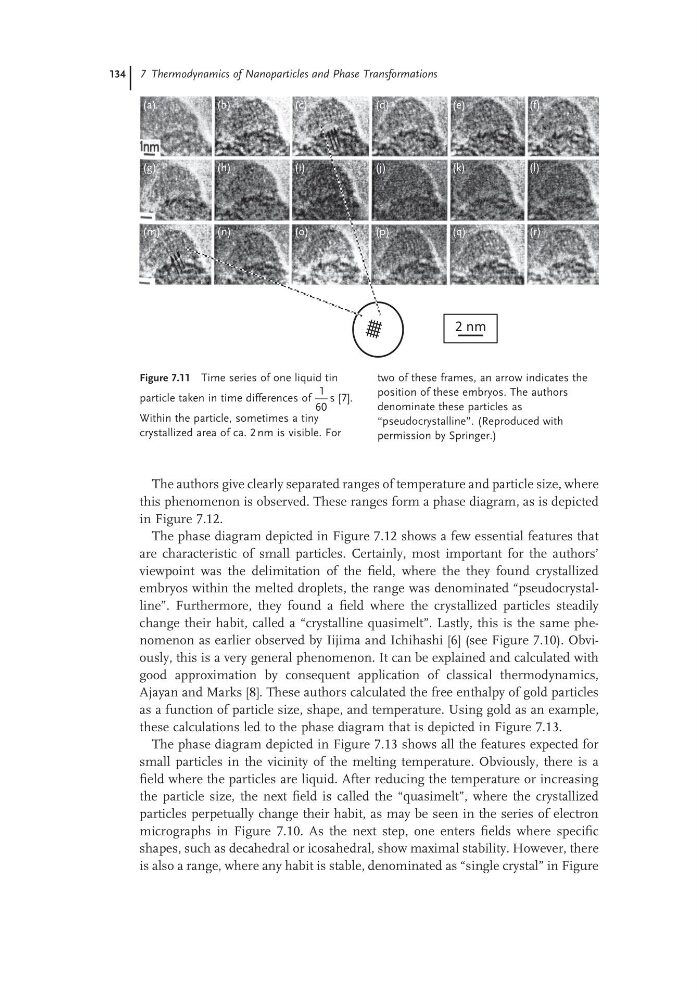
Figure 7.11 Time series of one liquid tin
particle taken in time differences of
1
60
s [7].
Within the particle, sometimes a tiny
crystallized area of ca. 2 nm is visible. For
two of these frames, an arrow indicates the
position of these embryos. The authors
denominate these particles as
“pseudocrystalline”. (Reproduced with
permission by Springer.)
(a)
(b)
(c)
(d)
(e)
(f)
(g)
(h)
(i)
(j)
(k)
(l)
(m)
(n)
(o)
(p)
(q)
(r)
2 nm
The authors give clearly separated ranges of temperature and particle size, where
this phenomenon is observed. These ranges form a phase diagram, as is depicted
in Figure 7.12.
The phase diagram depicted in Figure 7.12 shows a few essential features that
are characteristic of small particles. Certainly, most important for the authors’
viewpoint was the delimitation of the field, where the they found crystallized
embryos within the melted droplets, the range was denominated “pseudocrystalline”. Furthermore, they found a field where the crystallized particles steadily
change their habit, called a “crystalline quasimelt”. Lastly, this is the same phenomenon as earlier observed by Iijima and Ichihashi [6] (see Figure 7.10). Obviously, this is a very general phenomenon. It can be explained and calculated with
good approximation by consequent application of classical thermodynamics,
Ajayan and Marks [8]. These authors calculated the free enthalpy of gold particles
as a function of particle size, shape, and temperature. Using gold as an example,
these calculations led to the phase diagram that is depicted in Figure 7.13.
The phase diagram depicted in Figure 7.13 shows all the features expected for
small particles in the vicinity of the melting temperature. Obviously, there is a
field where the particles are liquid. After reducing the temperature or increasing
the particle size, the next field is called the “quasimelt”, where the crystallized
particles perpetually change their habit, as may be seen in the series of electron
micrographs in Figure 7.10. As the next step, one enters fields where specific
shapes, such as decahedral or icosahedral, show maximal stability. However, there
is also a range, where any habit is stable, denominated as “single crystal” in Figure
Figure 7.11 Time series of one liquid tin
particle taken in time differences of
1
60
s [7].
Within the particle, sometimes a tiny
crystallized area of ca. 2 nm is visible. For
two of these frames, an arrow indicates the
position of these embryos. The authors
denominate these particles as
“pseudocrystalline”. (Reproduced with
permission by Springer.)
(a)
(b)
(c)
(d)
(e)
(f)
(g)
(h)
(i)
(j)
(k)
(l)
(m)
(n)
(o)
(p)
(q)
(r)
2 nm