

therefore suitable for processing. Depending on the apparatus,
semicrystalline thermoplastics are usually processed at temperatures from 10 to 30
C higher than the melting point. In
case of amorphous grades, rheological measurements are
needed to give further insights about the material processing
window. Rheometry is used to evaluate the material viscosity
and therefore how it flows at different temperatures. Increasing
the temperature promotes flow but increases the solidification
time after deposition, which could cause loss of geometrical
accuracy. By reducing the temperature, the risk of degradation
decreases, but higher driving forces for deposition are needed.
16. With 3D-fiber deposition and bioextrusion, the duration of
the fabrication session should be limited as the material in the
reservoir might thermally degrade over time. Lowering the
temperature can be an option, but this would influence the
flow as well.
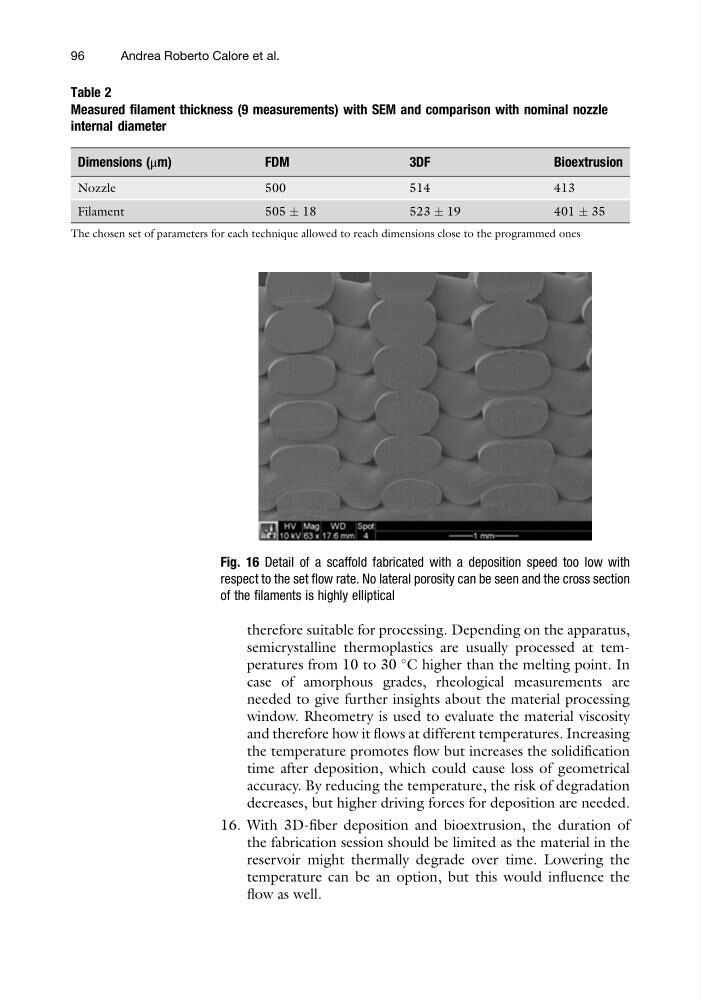
Fig. 16 Detail of a scaffold fabricated with a deposition speed too low with
respect to the set flow rate. No lateral porosity can be seen and the cross section
of the filaments is highly elliptical
Table 2
Measured filament thickness (9 measurements) with SEM and comparison with nominal nozzle
internal diameter
Dimensions (μm)
FDM
3DF
Bioextrusion
Nozzle
500
514
413
Filament
505 Æ 18
523 Æ 19
401 Æ 35
The chosen set of parameters for each technique allowed to reach dimensions close to the programmed ones
96
Andrea Roberto Calore et al.
semicrystalline thermoplastics are usually processed at temperatures from 10 to 30
C higher than the melting point. In
case of amorphous grades, rheological measurements are
needed to give further insights about the material processing
window. Rheometry is used to evaluate the material viscosity
and therefore how it flows at different temperatures. Increasing
the temperature promotes flow but increases the solidification
time after deposition, which could cause loss of geometrical
accuracy. By reducing the temperature, the risk of degradation
decreases, but higher driving forces for deposition are needed.
16. With 3D-fiber deposition and bioextrusion, the duration of
the fabrication session should be limited as the material in the
reservoir might thermally degrade over time. Lowering the
temperature can be an option, but this would influence the
flow as well.
Fig. 16 Detail of a scaffold fabricated with a deposition speed too low with
respect to the set flow rate. No lateral porosity can be seen and the cross section
of the filaments is highly elliptical
Table 2
Measured filament thickness (9 measurements) with SEM and comparison with nominal nozzle
internal diameter
Dimensions (μm)
FDM
3DF
Bioextrusion
Nozzle
500
514
413
Filament
505 Æ 18
523 Æ 19
401 Æ 35
The chosen set of parameters for each technique allowed to reach dimensions close to the programmed ones
96
Andrea Roberto Calore et al.