

388
A. V. Panko et al.
Fe(OH)2
nanochemical formation of polynucleus iron hydroxide nanoclusters
Transformation of nanocrystals into microcrystalline magnetite
Ostwald ripening with formation of
nanocrystals of
GROH, GRCO3, GRSO4, GRCl
Transformation of nanocrystals
into nanomagnetite (Fe3O4,
FeFe2O4)
Transformation of nanocrystals into
lepidocrocite (γ-FeOOH)
Transformation of nanocrystals into
microcrystalline goethite (α-FeOOH)
Fe2O3∙nH2O
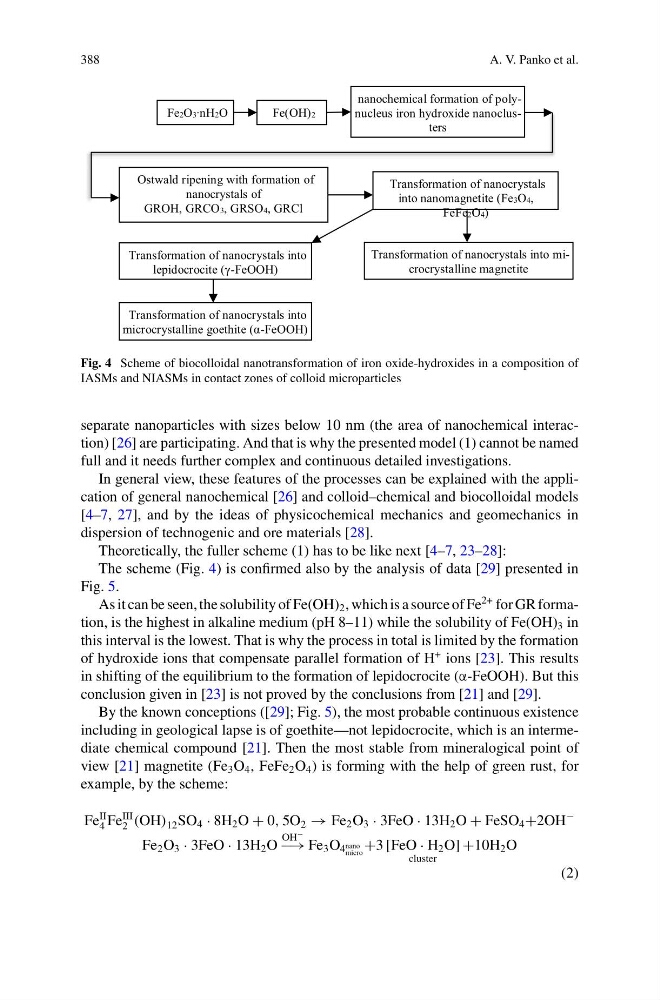
Fig. 4 Scheme of biocolloidal nanotransformation of iron oxide-hydroxides in a composition of
IASMs and NIASMs in contact zones of colloid microparticles
separate nanoparticles with sizes below 10 nm (the area of nanochemical interaction) [26] are participating. And that is why the presented model (1) cannot be named
full and it needs further complex and continuous detailed investigations.
In general view, these features of the processes can be explained with the application of general nanochemical [26] and colloid–chemical and biocolloidal models
[4–7, 27], and by the ideas of physicochemical mechanics and geomechanics in
dispersion of technogenic and ore materials [28].
Theoretically, the fuller scheme (1) has to be like next [4–7, 23–28]:
The scheme (Fig. 4) is confirmed also by the analysis of data [29] presented in
Fig. 5.
As it can be seen, the solubility of Fe(OH) 2 , which is a source of Fe
2+ for GR formation, is the highest in alkaline medium (pH 8–11) while the solubility of Fe(OH) 3 in
this interval is the lowest. That is why the process in total is limited by the formation
of hydroxide ions that compensate parallel formation of H
+ ions [23]. This results
in shifting of the equilibrium to the formation of lepidocrocite (α-FeOOH). But this
conclusion given in [23] is not proved by the conclusions from [21] and [29].
By the known conceptions ([29]; Fig. 5), the most probable continuous existence
including in geological lapse is of goethite—not lepidocrocite, which is an intermediate chemical compound [21]. Then the most stable from mineralogical point of
view [21] magnetite (Fe 3 O 4 , FeFe 2 O 4 ) is forming with the help of green rust, for
example, by the scheme:
Fe
II
4 Fe
III
2 (OH) 12 SO 4 · 8H 2 O + 0, 5O 2 → Fe 2 O 3 · 3FeO · 13H 2 O + FeSO 4 +2OH
−
Fe 2 O 3 · 3FeO · 13H 2 O
OH
−
−→ Fe 3 O 4
nano
micro
+3 [FeO · H 2 O]
cluster
+10H 2 O
(2)
A. V. Panko et al.
Fe(OH)2
nanochemical formation of polynucleus iron hydroxide nanoclusters
Transformation of nanocrystals into microcrystalline magnetite
Ostwald ripening with formation of
nanocrystals of
GROH, GRCO3, GRSO4, GRCl
Transformation of nanocrystals
into nanomagnetite (Fe3O4,
FeFe2O4)
Transformation of nanocrystals into
lepidocrocite (γ-FeOOH)
Transformation of nanocrystals into
microcrystalline goethite (α-FeOOH)
Fe2O3∙nH2O
Fig. 4 Scheme of biocolloidal nanotransformation of iron oxide-hydroxides in a composition of
IASMs and NIASMs in contact zones of colloid microparticles
separate nanoparticles with sizes below 10 nm (the area of nanochemical interaction) [26] are participating. And that is why the presented model (1) cannot be named
full and it needs further complex and continuous detailed investigations.
In general view, these features of the processes can be explained with the application of general nanochemical [26] and colloid–chemical and biocolloidal models
[4–7, 27], and by the ideas of physicochemical mechanics and geomechanics in
dispersion of technogenic and ore materials [28].
Theoretically, the fuller scheme (1) has to be like next [4–7, 23–28]:
The scheme (Fig. 4) is confirmed also by the analysis of data [29] presented in
Fig. 5.
As it can be seen, the solubility of Fe(OH) 2 , which is a source of Fe
2+ for GR formation, is the highest in alkaline medium (pH 8–11) while the solubility of Fe(OH) 3 in
this interval is the lowest. That is why the process in total is limited by the formation
of hydroxide ions that compensate parallel formation of H
+ ions [23]. This results
in shifting of the equilibrium to the formation of lepidocrocite (α-FeOOH). But this
conclusion given in [23] is not proved by the conclusions from [21] and [29].
By the known conceptions ([29]; Fig. 5), the most probable continuous existence
including in geological lapse is of goethite—not lepidocrocite, which is an intermediate chemical compound [21]. Then the most stable from mineralogical point of
view [21] magnetite (Fe 3 O 4 , FeFe 2 O 4 ) is forming with the help of green rust, for
example, by the scheme:
Fe
II
4 Fe
III
2 (OH) 12 SO 4 · 8H 2 O + 0, 5O 2 → Fe 2 O 3 · 3FeO · 13H 2 O + FeSO 4 +2OH
−
Fe 2 O 3 · 3FeO · 13H 2 O
OH
−
−→ Fe 3 O 4
nano
micro
+3 [FeO · H 2 O]
cluster
+10H 2 O
(2)