

Catastrophic Phenomena on Marine Slopes and in Artificial Dams …
387
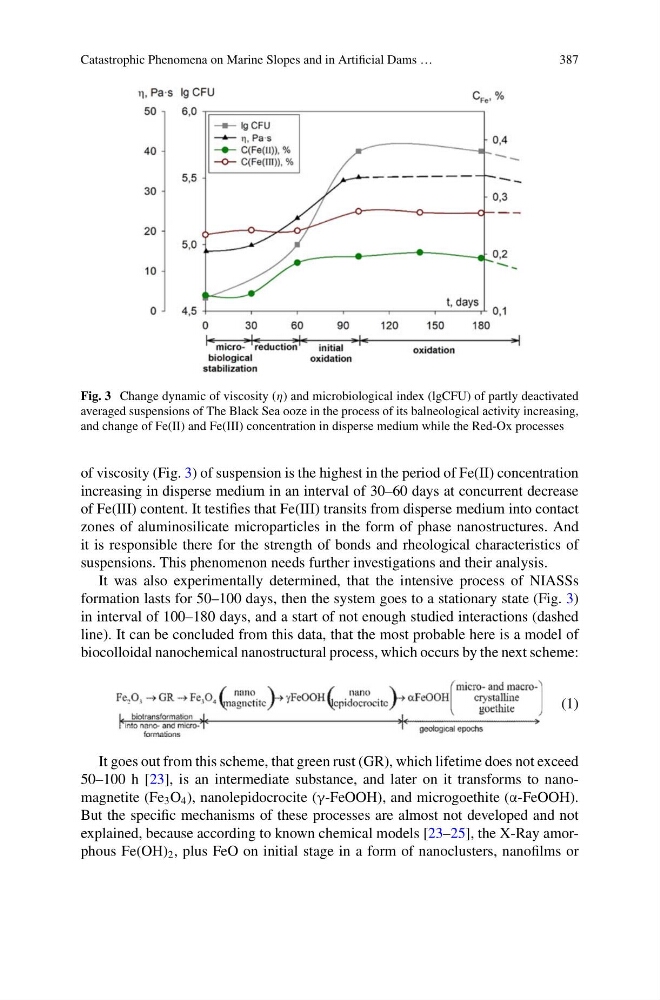
Fig. 3 Change dynamic of viscosity (η) and microbiological index (lgCFU) of partly deactivated
averaged suspensions of The Black Sea ooze in the process of its balneological activity increasing,
and change of Fe(II) and Fe(III) concentration in disperse medium while the Red-Ox processes
of viscosity (Fig. 3) of suspension is the highest in the period of Fe(II) concentration
increasing in disperse medium in an interval of 30–60 days at concurrent decrease
of Fe(III) content. It testifies that Fe(III) transits from disperse medium into contact
zones of aluminosilicate microparticles in the form of phase nanostructures. And
it is responsible there for the strength of bonds and rheological characteristics of
suspensions. This phenomenon needs further investigations and their analysis.
It was also experimentally determined, that the intensive process of NIASSs
formation lasts for 50–100 days, then the system goes to a stationary state (Fig. 3)
in interval of 100–180 days, and a start of not enough studied interactions (dashed
line). It can be concluded from this data, that the most probable here is a model of
biocolloidal nanochemical nanostructural process, which occurs by the next scheme:
(1)
It goes out from this scheme, that green rust (GR), which lifetime does not exceed
50–100 h [23], is an intermediate substance, and later on it transforms to nanomagnetite (Fe 3 O 4 ), nanolepidocrocite (γ-FeOOH), and microgoethite (α-FeOOH).
But the specific mechanisms of these processes are almost not developed and not
explained, because according to known chemical models [23–25], the X-Ray amorphous Fe(OH) 2 , plus FeO on initial stage in a form of nanoclusters, nanofilms or
387
Fig. 3 Change dynamic of viscosity (η) and microbiological index (lgCFU) of partly deactivated
averaged suspensions of The Black Sea ooze in the process of its balneological activity increasing,
and change of Fe(II) and Fe(III) concentration in disperse medium while the Red-Ox processes
of viscosity (Fig. 3) of suspension is the highest in the period of Fe(II) concentration
increasing in disperse medium in an interval of 30–60 days at concurrent decrease
of Fe(III) content. It testifies that Fe(III) transits from disperse medium into contact
zones of aluminosilicate microparticles in the form of phase nanostructures. And
it is responsible there for the strength of bonds and rheological characteristics of
suspensions. This phenomenon needs further investigations and their analysis.
It was also experimentally determined, that the intensive process of NIASSs
formation lasts for 50–100 days, then the system goes to a stationary state (Fig. 3)
in interval of 100–180 days, and a start of not enough studied interactions (dashed
line). It can be concluded from this data, that the most probable here is a model of
biocolloidal nanochemical nanostructural process, which occurs by the next scheme:
(1)
It goes out from this scheme, that green rust (GR), which lifetime does not exceed
50–100 h [23], is an intermediate substance, and later on it transforms to nanomagnetite (Fe 3 O 4 ), nanolepidocrocite (γ-FeOOH), and microgoethite (α-FeOOH).
But the specific mechanisms of these processes are almost not developed and not
explained, because according to known chemical models [23–25], the X-Ray amorphous Fe(OH) 2 , plus FeO on initial stage in a form of nanoclusters, nanofilms or