

20
The literature on CCA offers no universal conceptual framework which appropriately addresses
the impact of climate change on youth in small
island communities, in that there the frameworks
are not designed to explain the complexities
between CCA and sustainable development for
youth and their communities in SIDS (Jopp et al.
2010; Calgarro 2011). In essence, the literature
offers no tangible and sustainable model on
which adaptation can take place among youth in
SIDS. Gaps in the body of knowledge deny policymakers and practitioners in SIDS a practical
set of tools and strategies on Climate Change
Education and adaptation strategies to prepare
young people to build their resilience to adapt to
the impact of climate change in the future
(Fig. 2.1).
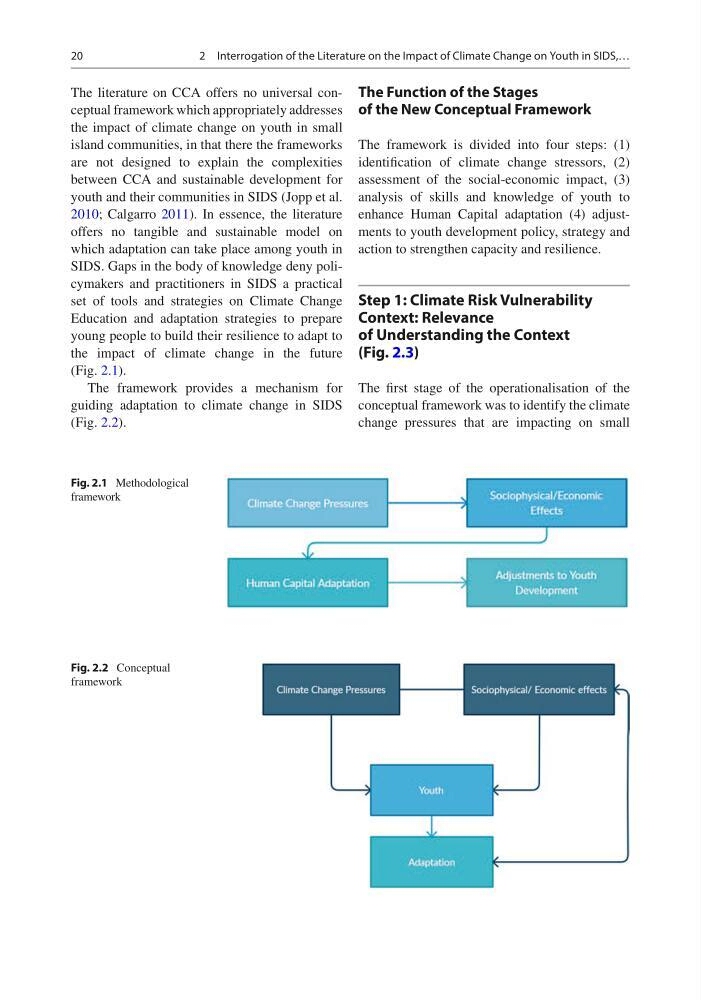
The framework provides a mechanism for
guiding adaptation to climate change in SIDS
(Fig. 2.2).
The Function of the Stages
of the New Conceptual Framework
The framework is divided into four steps: (1)
identification of climate change stressors, (2)
assessment of the social-economic impact, (3)
analysis of skills and knowledge of youth to
enhance Human Capital adaptation (4) adjustments to youth development policy, strategy and
action to strengthen capacity and resilience.
Step 1: Climate Risk Vulnerability
Context: Relevance
of Understanding the Context
(Fig. 2.3)
The first stage of the operationalisation of the
conceptual framework was to identify the climate
change pressures that are impacting on small
Fig. 2.1 Methodological
framework
Fig. 2.2 Conceptual
framework
2 Interrogation of the Literature on the Impact of Climate Change on Youth in SIDS,…
The literature on CCA offers no universal conceptual framework which appropriately addresses
the impact of climate change on youth in small
island communities, in that there the frameworks
are not designed to explain the complexities
between CCA and sustainable development for
youth and their communities in SIDS (Jopp et al.
2010; Calgarro 2011). In essence, the literature
offers no tangible and sustainable model on
which adaptation can take place among youth in
SIDS. Gaps in the body of knowledge deny policymakers and practitioners in SIDS a practical
set of tools and strategies on Climate Change
Education and adaptation strategies to prepare
young people to build their resilience to adapt to
the impact of climate change in the future
(Fig. 2.1).
The framework provides a mechanism for
guiding adaptation to climate change in SIDS
(Fig. 2.2).
The Function of the Stages
of the New Conceptual Framework
The framework is divided into four steps: (1)
identification of climate change stressors, (2)
assessment of the social-economic impact, (3)
analysis of skills and knowledge of youth to
enhance Human Capital adaptation (4) adjustments to youth development policy, strategy and
action to strengthen capacity and resilience.
Step 1: Climate Risk Vulnerability
Context: Relevance
of Understanding the Context
(Fig. 2.3)
The first stage of the operationalisation of the
conceptual framework was to identify the climate
change pressures that are impacting on small
Fig. 2.1 Methodological
framework
Fig. 2.2 Conceptual
framework
2 Interrogation of the Literature on the Impact of Climate Change on Youth in SIDS,…